What China’s PLA says it is learning from the Iran war
19:19 · August 17, 2026 · Breaking Defense
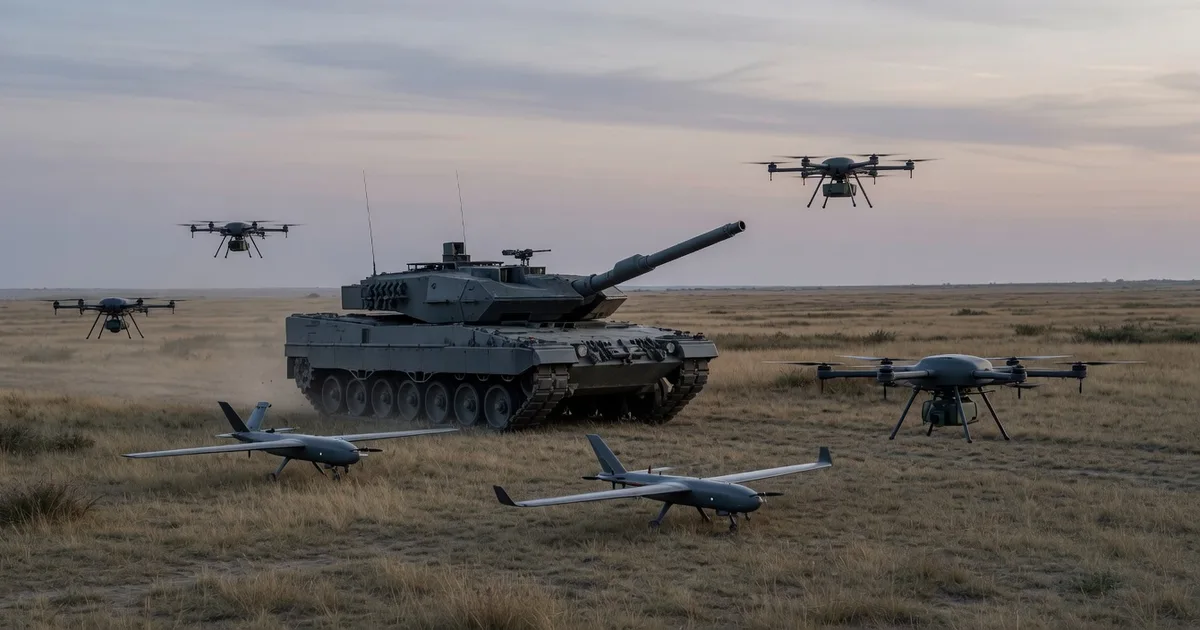
From AI integration to the economics of air and missile defense, Chinese military commentators are paying especially close attention to the US-Israel war in Iran.
Summary
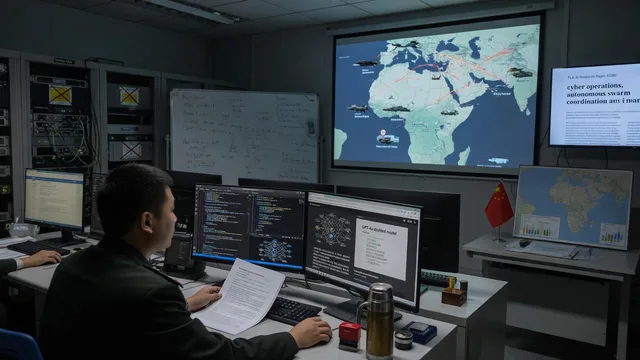
Chinese military researchers have turned to the recent US-Israel conflict with Iran as a proxy for testing concepts that have shaped the People’s Liberation Army’s modernization drive. With no major combat experience since the late 1970s, PLA analysts at institutions such as the Academy of Military Science treat the campaign as an opportunity to compare ongoing investments in “intelligentized” warfare against observable battlefield outcomes.
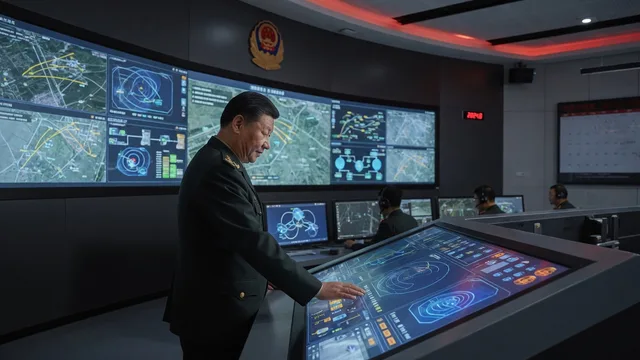
A recurring theme in their commentary is the move from platform-centric engagements to systems competition. Analysts describe future advantage as arising from the speed and resilience of networks that link sensors, decision nodes, weapons, logistics and data flows. They highlight distributed command arrangements, attacks on critical enabling nodes, and what they term “systems guerrilla warfare,” in which lower-cost assets are used to degrade an opponent’s ability to generate combat power rather than to match individual platforms one-for-one.
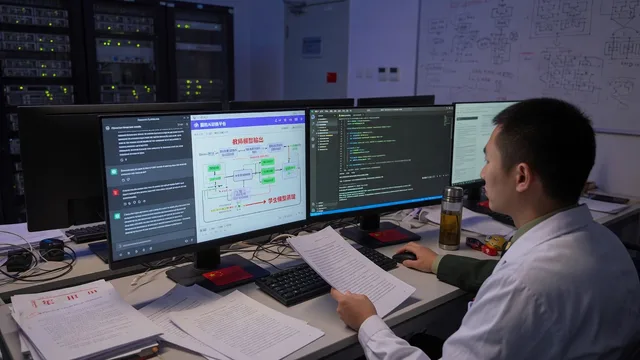
Artificial intelligence features centrally in these assessments, yet PLA writers stress that algorithms require extensive pre-positioned intelligence preparation. They point to the accumulation of human intelligence, pattern-of-life data and technical collection that reportedly fed US targeting systems, arguing that stale or deceptive inputs sharply reduce the value of AI-assisted kill webs. References to systems such as the Maven Smart System illustrate how AI is applied across intelligence fusion, route planning, autonomous engagement and manned-unmanned teaming rather than at a single decision point.
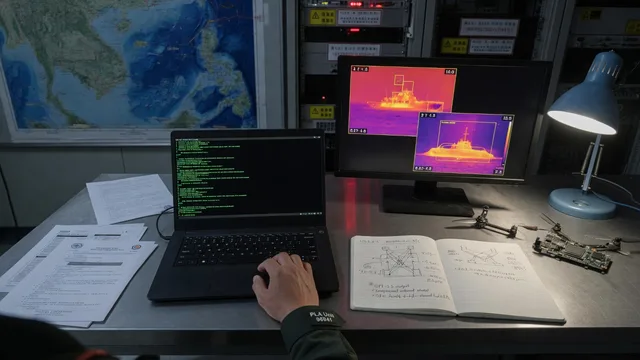
The conflict has also sharpened attention to the economics of air and missile defense. Chinese observers note Iran’s employment of inexpensive unmanned systems to exhaust far more costly interceptors, reinforcing earlier PLA studies on saturation attacks, limited defensive coverage and the need for mixed defensive layers that include electronic warfare, lasers and high-power microwaves. Parallel discussions examine how distributed nodes and dynamic rerouting can preserve overall system function when individual elements are lost.
Taken together, these analyses show Chinese researchers using the Iran campaign to validate and refine an existing framework rather than to derive entirely new doctrine. The emphasis remains on prewar preparation, resilient networked architectures and cost-imposing combinations of advanced and low-cost systems—priorities already embedded in PLA procurement and force-development plans.
Why it matters
Directly addresses AI-enabled military systems, autonomous platforms, and defense economics relevant to NATO-aligned defense professionals and AI/ML engineers developing dual-use technologies.