AI News selected for Professionals and Decision Makers
Defense Artificial Intelligence

New White House strategy clarifies military tech priorities: undersea, outer space and AI

13:55 · August 20, 2026 · Breaking Defense
New White House strategy clarifies military tech priorities: undersea, outer space and AI

The National Security Science & Technology Strategy (NSSTS) also outlines an array of second-tier or longer-term technologies to watch, notably quantum and biotech.

Summary

The White House has issued the National Security Science & Technology Strategy, a 24-page document that imposes a four-tier hierarchy on military technology priorities. At the top sit three domains singled out for battlefield dominance and power projection: artificial intelligence and autonomy, undersea systems, and outer space capabilities. The strategy calls for clear technological superiority in the latter two areas, while seeking only a competitive advantage in AI, reflecting the view that these fields already form core elements of the current U.S. arsenal yet face sustained pressure from competitors such as China.

A second tier lists three supporting areas described as critical: airpower built on stealth, electronic warfare and missile defense; long-range precision strike able to penetrate layered defenses; and C5ISR—the integrated command, control, communications, computing, cyber, intelligence, surveillance and reconnaissance infrastructure that functions as the force’s nervous system. These domains overlap heavily, since aircraft and missiles depend on the same sensing and decision networks.

The third tier comprises key enabling technologies that underpin the higher priorities. These include advanced manufacturing methods such as additive production, hypersonic flight, nuclear power sources, and semiconductor fabrication. An appendix expands the list into a formal catalogue of critical and emerging technologies maintained by the Office of Science and Technology Policy.

At the base of the framework the document identifies a fourth category of potentially transformative technologies whose timelines and strategic effects remain uncertain. It singles out biotechnology for human-performance enhancement and biodefense, quantum computing, sensing and communications, and artificial general intelligence capable of surpassing human cognition. The strategy pairs this long-term watch list with a pragmatic acquisition stance that endorses both large numbers of lower-cost, attritable autonomous platforms and continued investment in high-end, “exquisite” systems—an updated version of the classic hi-lo mix first articulated in the 1970s.

Why it matters

This article is highly relevant for defense strategists and technologists as it outlines the US military's top technology priorities, heavily featuring AI and autonomy. Understanding these priorities is crucial for European and Dutch defense professionals to ensure NATO interoperability, guide local R&D investments, and anticipate future defense market demands.
More in this beat
additive-manufacturingautonomous-weaponschinaelectronic-warfaremilitary-ainsstspentagonstrategic-frameworks
What China’s PLA says it is learning from the Iran war

19:19 · August 17, 2026

What China’s PLA says it is learning from the Iran war

Directly addresses AI-enabled military systems, autonomous platforms, and defense economics relevant to NATO-aligned defense professionals and AI/ML engineers developing dual-use technologies.

Relevance 65 · Audience 85

Confronting the Barriers to AI Diffusion in the U.S. Military

14:00 · August 10, 2026

Confronting the Barriers to AI Diffusion in the U.S. Military

Although focused on the U.S. military, the identified bottlenecks in AI diffusion provide critical strategic insights for Dutch defense technologists and doctrine developers. Understanding these barriers helps European defense industries navigate similar bureaucratic and technical challenges within NATO frameworks.

Relevance 75 · Audience 85

China’s military unveils AI system for coordinating air strikes

14:55 · August 4, 2026

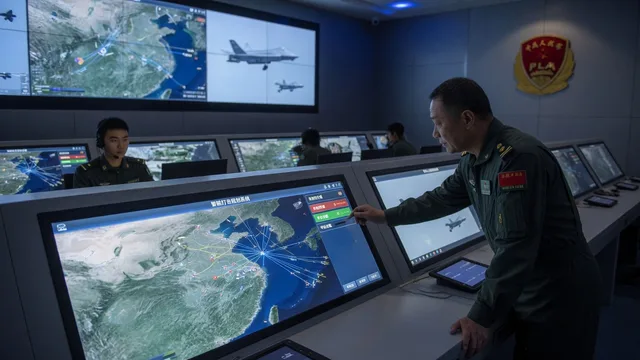
China’s military unveils AI system for coordinating air strikes

This article is highly relevant for defense strategists, military officers, and technologists as it highlights significant advancements in adversary AI capabilities. Understanding China's AI strike coordination systems is crucial for NATO and European defense professionals to develop counter-strategies, inform doctrine, and guide domestic AI military R&D.

Relevance 85 · Audience 90

How US military funding propelled China’s robot dogs

18:01 · August 18, 2026

How US military funding propelled China’s robot dogs

Directly addresses military and dual-use quadruped robots, US-China technology competition, and supply-chain vulnerabilities that affect NATO defense planners, AI engineers, and Dutch defense industry stakeholders focused on autonomous systems.

Relevance 82 · Audience 88

Top Northcom general adds to drumbeat of warnings about weak drone defenses in the homeland

00:30 · August 15, 2026

Top Northcom general adds to drumbeat of warnings about weak drone defenses in the homeland

This article highlights critical vulnerabilities in counter-UAS capabilities and sensor networks, which are top priorities for NATO and European defense strategies. Dutch defense technologists and strategists can leverage these insights to develop interoperable, AI-driven detection and mitigation systems for drone swarms.

Relevance 75 · Audience 85

Army opens test ranges to private industry

22:59 · August 12, 2026

Army opens test ranges to private industry

It highlights a major shift in lowering barriers for private industry to test autonomous and counter-drone systems in realistic electronic warfare environments. While US-centric, it sets a benchmark for NATO allied acquisition strategies and offers potential testing avenues for European defense tech companies.

Relevance 65 · Audience 85

BAE Systems and TUALCOM Partner on Autonomous Air Technologies

18:53 · August 12, 2026

BAE Systems and TUALCOM Partner on Autonomous Air Technologies

This partnership highlights key developments in autonomous military aviation within the broader European and NATO defense industry. It is highly relevant for defense technologists and strategists monitoring advancements in electronic warfare, resilient communications, and autonomous systems integration.

Relevance 75 · Audience 85

Northrop Grumman says Project Talon is accelerating military autonomy with YFQ-48A Talon Blue and Talon IQ for future missions

19:59 · August 10, 2026

Northrop Grumman says Project Talon is accelerating military autonomy with YFQ-48A Talon Blue and Talon IQ for future missions

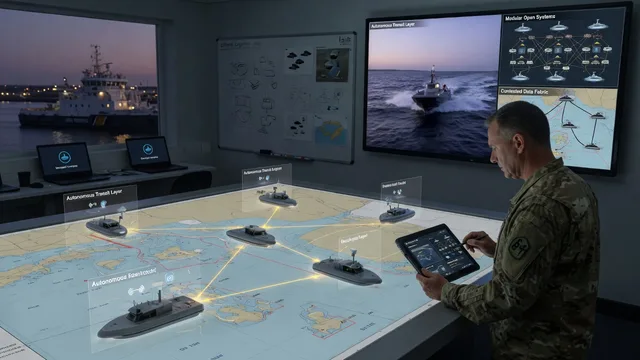
This article highlights major advancements in military autonomous systems and human-machine teaming by a leading defense contractor. It provides critical insights for defense technologists and strategists into open-architecture AI testbeds and the shift towards connected autonomous ecosystems, which are key priorities for NATO and European defense modernization.

Relevance 85 · Audience 90

The Drone Age Demands a New Theory of Military Protection

07:00 · August 10, 2026

The Drone Age Demands a New Theory of Military Protection

This article is highly relevant for defense strategists and technologists as it challenges traditional force design paradigms in the face of autonomous warfare. It provides critical insights into how NATO and European defense industries must adapt their manufacturing, software development, and deployment strategies for AI-driven autonomous systems.

Relevance 85 · Audience 95

The drone age demands a new theory of military protection

07:30 · August 7, 2026

The drone age demands a new theory of military protection

Directly addresses autonomous systems and drone warfare doctrine, relevant to NATO-aligned defense planners and industry. Touches on production, regeneration, and counter-drone dynamics that affect European defense priorities.

Relevance 75 · Audience 80

China Harnesses US AI Models to Advance Military Capabilities: Report

10:22 · August 5, 2026

China Harnesses US AI Models to Advance Military Capabilities: Report

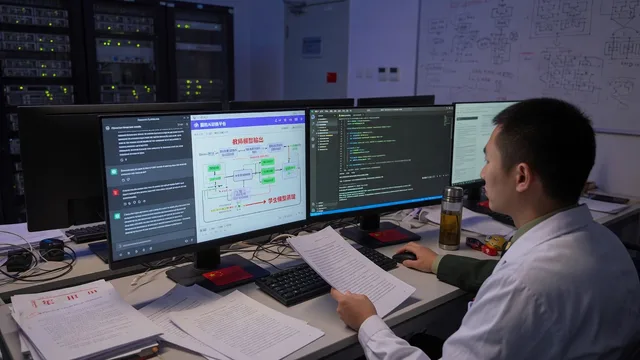
This article highlights critical adversary capabilities and technical methods, specifically model distillation for edge AI, which directly impact NATO and Dutch defense strategies. It provides valuable insights for AI/ML engineers and strategists developing or countering autonomous systems and edge computing in military contexts.

Relevance 85 · Audience 90