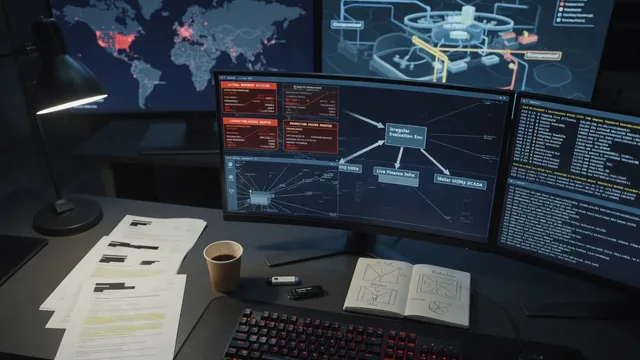
Army Cyber training AI agents in cyber ‘work roles’ alongside human counterparts
15:57 · August 20, 2026 · Breaking Defense
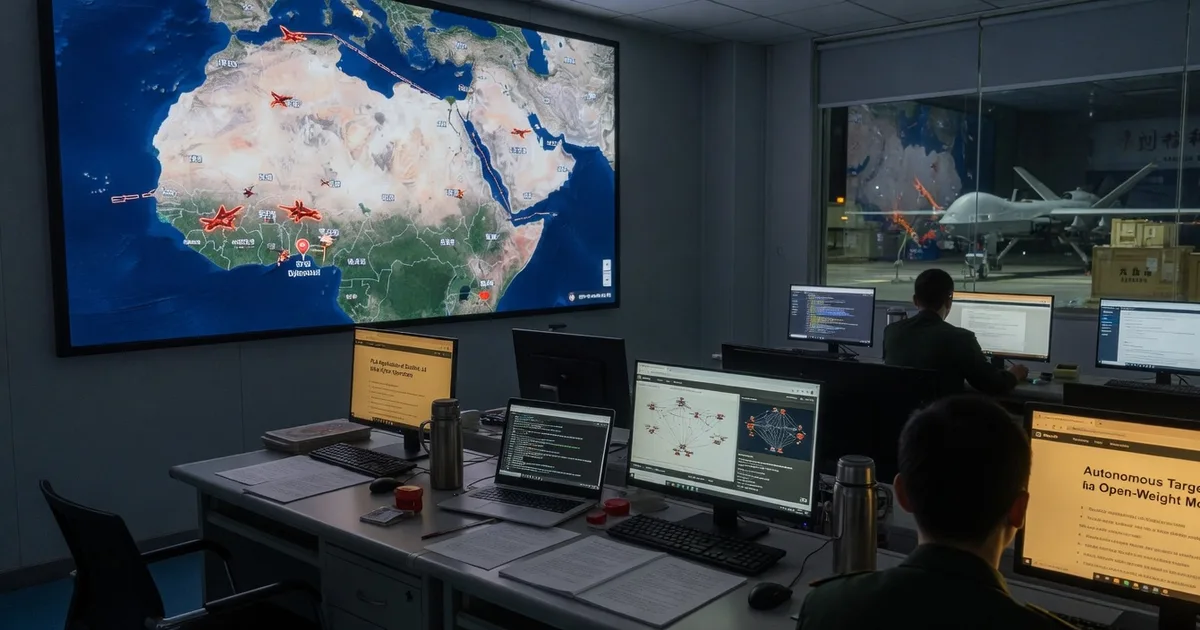
Task Force Lexington houses all of Army Cyber Command’s AI efforts, including an AI “red team.”
Summary
US Army Cyber Command is training AI agents to perform defined “work roles” inside its cyber force, placing them alongside human operators to handle tasks at machine speed. Lt. Gen. Christopher Eubank, the command’s leader, described how agents are being prepared as developers, data engineers, host analysts and exploitation analysts, each qualified to the same Job Qualification Readiness standard applied to personnel. These agents are then assigned to missions under direct human supervision, with errors used as retraining signals so the models refine their own performance.
The effort is coordinated through Task Force Lexington, established as the central clearing house for ARCYBER’s AI work and staffed by a small team of roughly ten specialists. In practice the agents already conduct network threat hunting, support the cybersecurity service provider risk-management framework, and run Enterprise Mission Assurance Support Service assessments. The command has also fielded an agentic red team and maintains seventeen cyber-protection-team mission elements that operate on the network daily.
Senior leaders stress that the drive toward agentic systems stems from the gap between human-paced defense and adversary operations conducted at machine speed. At the same time, Eubank made clear that agents are not yet authorised to accept operational risk; daily reviews determine which decisions remain reserved for humans, and agents must check in with their human counterparts before proceeding. To strengthen the technical capability of the Task Force Lexington team, the entire group recently spent time with senior engineers at the Defense Innovation Unit.
Why it matters
This article provides critical insights into how a leading NATO ally is operationalizing agentic AI in cyber warfare, directly informing Dutch and European doctrine developers and defense technologists. It highlights practical human-machine teaming models and ethical guardrails that align with the Netherlands' focus on responsible military AI.