AI News selected for Professionals and Decision Makers
Defense Artificial Intelligence

Lithuania seeks AI-powered air defence network after drone incidents

08:22 · August 3, 2026 · RSS APP - Defense Artificial Intelligence

Lithuania seeks AI-powered air defence network after drone incidents

Lithuania’s Defence Ministry and military are pursuing an ambitious plan to integrate mobile phones, surveillance camera...

Summary

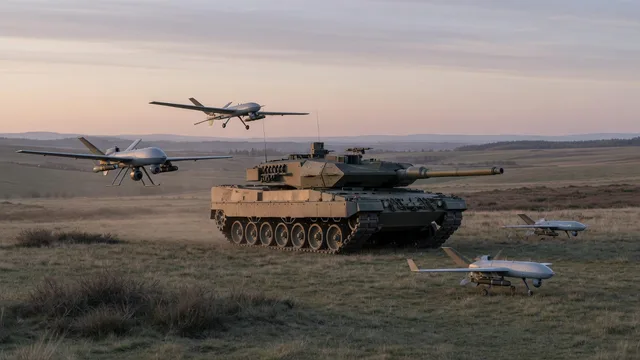
Lithuania’s Defence Ministry is advancing plans for an integrated air-defence network that combines mobile-phone cameras and microphones, fixed surveillance cameras, radars and additional sensors under a single artificial-intelligence layer. The effort follows repeated low-altitude drone incursions, including Russian-made Gerbera drones that entered Lithuanian airspace last year and Ukrainian drones that crossed the border this year, some of which vanished from radar and were located only after civilian cameras recorded their crashes.

Defence Minister Robertas Kaunas has stated that Ukrainian specialists reviewed the concept and confirmed its direction, after which the ministry tasked domestic industry with building the software and sensor-fusion architecture. The system is intended to detect and track small aerial targets at ranges and altitudes where conventional radars lose resolution, potentially covering areas as small as one square kilometre up to 3 000 metres. Vilnius Gediminas Technical University is already contributing to a related NATO project with US and Ukrainian partners that applies AI to early object identification.

Industry representatives describe the sensor-fusion goals as ambitious by global standards, noting that the main technical hurdles lie in integrating heterogeneous existing assets without wholesale replacement of infrastructure and in adapting algorithms to Lithuania’s compact geography. The ministry has allocated at least €2 billion for air defence over the next four years, though opposition voices argue that additional funding will be required to achieve layered coverage of cities and critical sites. Prototypes could appear within a year, yet full operational integration is expected to take longer.

Why it matters

Directly addresses AI-enabled military air defense, dual-use sensor networks and NATO-relevant drone countermeasures, offering insights for defense technologists, AI/ML engineers and military planners on real-world integration and funding priorities.
More in this beat
air-defenceGerbera dronesLithuaniamilitary-aimilitary-dronesnatosensor-fusion
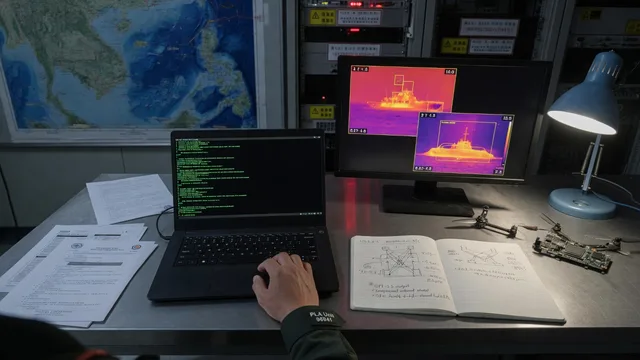
What China’s PLA says it is learning from the Iran war

19:19 · August 17, 2026

What China’s PLA says it is learning from the Iran war

Directly addresses AI-enabled military systems, autonomous platforms, and defense economics relevant to NATO-aligned defense professionals and AI/ML engineers developing dual-use technologies.

Relevance 65 · Audience 85

Top Northcom general adds to drumbeat of warnings about weak drone defenses in the homeland

00:30 · August 15, 2026

Top Northcom general adds to drumbeat of warnings about weak drone defenses in the homeland

This article highlights critical vulnerabilities in counter-UAS capabilities and sensor networks, which are top priorities for NATO and European defense strategies. Dutch defense technologists and strategists can leverage these insights to develop interoperable, AI-driven detection and mitigation systems for drone swarms.

Relevance 75 · Audience 85

Archer Buys Three Boeing Units to Push Physical AI for Defense

16:12 · August 13, 2026

Archer Buys Three Boeing Units to Push Physical AI for Defense

This acquisition is highly relevant as it signals a major market shift in autonomous military aviation and physical AI, directly impacting the supply chain and technological landscape for NATO allies. Dutch defense technologists and strategists must understand these market dynamics, especially since systems like Insitu's are utilized by European armed forces.

Relevance 85 · Audience 90

Peraso (NASDAQ: PRSO) Jam-Resistant 60GHz Module Drives Paradigm Shifts Across Military Defense, Drones, eVTOL and Autonomous Systems

20:10 · August 12, 2026

Peraso (NASDAQ: PRSO) Jam-Resistant 60GHz Module Drives Paradigm Shifts Across Military Defense, Drones, eVTOL and Autonomous Systems

High-bandwidth, jam-resistant communication is a critical infrastructure enabler for deploying AI-driven autonomous systems and edge computing in contested military environments. Defense technologists and AI engineers can leverage such mmWave modules to ensure reliable data transfer for ISR and drone-to-drone networking.

Relevance 75 · Audience 85

Confronting the Barriers to AI Diffusion in the U.S. Military

14:00 · August 10, 2026

Confronting the Barriers to AI Diffusion in the U.S. Military

Although focused on the U.S. military, the identified bottlenecks in AI diffusion provide critical strategic insights for Dutch defense technologists and doctrine developers. Understanding these barriers helps European defense industries navigate similar bureaucratic and technical challenges within NATO frameworks.

Relevance 75 · Audience 85

Modular Counter-UAS Systems for Military Vehicles

13:26 · August 10, 2026

Modular Counter-UAS Systems for Military Vehicles

Directly addresses AI autonomy and fire control for military counter-UAS systems, aligning with NATO defense priorities and dual-use tech relevant to Dutch and European defense professionals.

Relevance 85 · Audience 90

The Drone Age Demands a New Theory of Military Protection

07:00 · August 10, 2026

The Drone Age Demands a New Theory of Military Protection

This article is highly relevant for defense strategists and technologists as it challenges traditional force design paradigms in the face of autonomous warfare. It provides critical insights into how NATO and European defense industries must adapt their manufacturing, software development, and deployment strategies for AI-driven autonomous systems.

Relevance 85 · Audience 95

The drone age demands a new theory of military protection

07:30 · August 7, 2026

The drone age demands a new theory of military protection

Directly addresses autonomous systems and drone warfare doctrine, relevant to NATO-aligned defense planners and industry. Touches on production, regeneration, and counter-drone dynamics that affect European defense priorities.

Relevance 75 · Audience 80

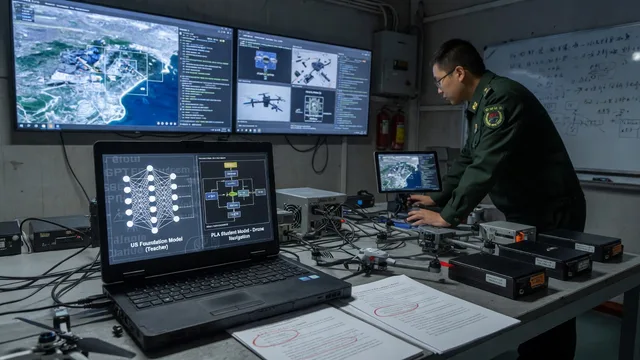
China Harnesses US AI Models to Advance Military Capabilities: Report

10:22 · August 5, 2026

China Harnesses US AI Models to Advance Military Capabilities: Report

This article highlights critical adversary capabilities and technical methods, specifically model distillation for edge AI, which directly impact NATO and Dutch defense strategies. It provides valuable insights for AI/ML engineers and strategists developing or countering autonomous systems and edge computing in military contexts.

Relevance 85 · Audience 90

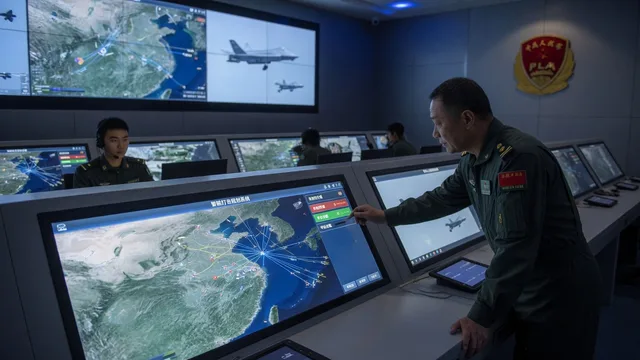
China’s military unveils AI system for coordinating air strikes

14:55 · August 4, 2026

China’s military unveils AI system for coordinating air strikes

This article is highly relevant for defense strategists, military officers, and technologists as it highlights significant advancements in adversary AI capabilities. Understanding China's AI strike coordination systems is crucial for NATO and European defense professionals to develop counter-strategies, inform doctrine, and guide domestic AI military R&D.

Relevance 85 · Audience 90

Former Mossad chief David Barnea joins Ondas Defense as global president

16:20 · August 3, 2026

Former Mossad chief David Barnea joins Ondas Defense as global president

This article highlights strategic leadership and market expansion in AI-powered defense systems targeting Europe. It provides insights into how defense companies are integrating AI, autonomous platforms, and intelligence into unified operational environments, which is crucial for NATO and European defense strategists.

Relevance 75 · Audience 85