The Drone Age Demands a New Theory of Military Protection
07:00 · August 10, 2026 · RSS APP - Military Autonomous Systems
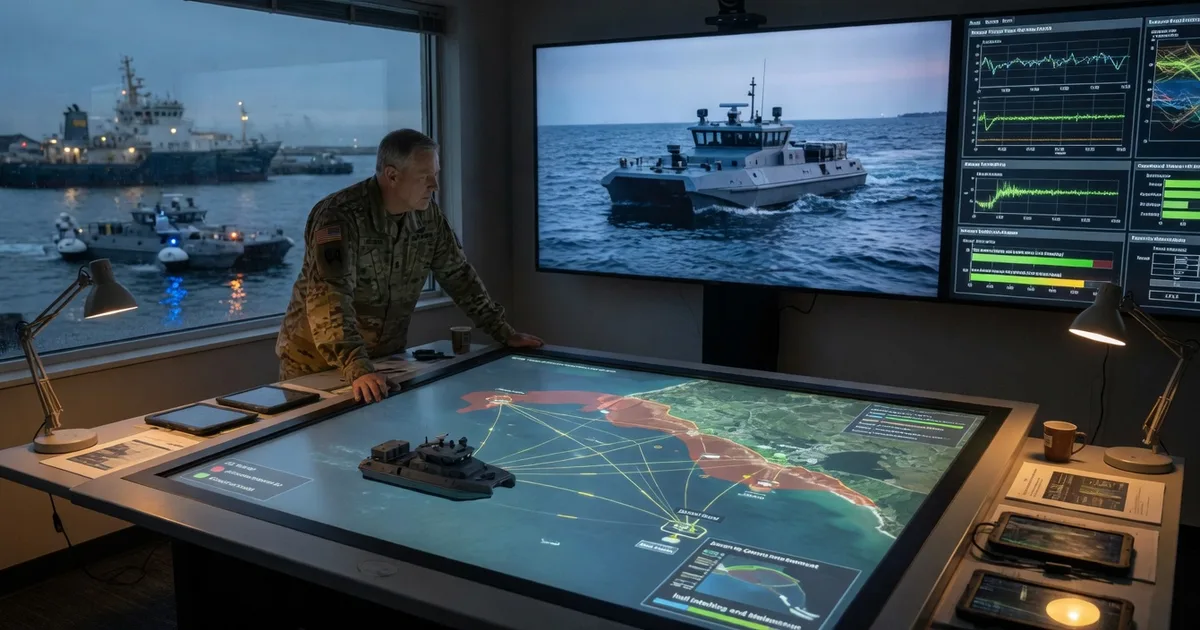
Military protection has never existed simply to keep soldiers alive or platforms intact. Its enduring purpose has always been to preserve freedom of action: the ability of a force to manoeuvre, fight
Summary
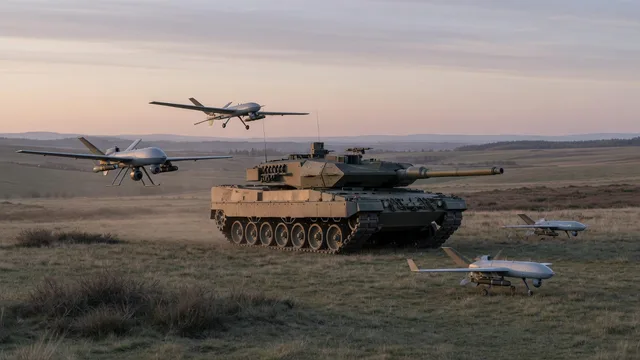
The article contends that the spread of autonomous systems and drones across modern battlefields requires a fundamental rethinking of military protection. Protection has long served to maintain a force’s freedom of action—the capacity to manoeuvre, strike and sustain operations despite enemy interference—rather than simply shielding individual platforms or personnel. For crewed systems such as tanks, aircraft and warships, this historically translated into layered armour, active defences and electronic warfare measures, because both the platforms and their trained operators were scarce and slow to replace.
Autonomous platforms invert that logic. Without onboard crews, the decision to invest in survivability becomes a technical trade-off among weight, power, payload, mobility, endurance and unit cost. An autonomous ground vehicle, for instance, may achieve higher mission success by carrying additional sensors or batteries instead of extra armour, provided it can complete its task before being lost. The relevant metric therefore shifts from platform longevity to the probability of mission accomplishment and the speed at which lost capability can be restored.
Regeneration—rapid production, repair, modular replacement and software reconstitution—emerges as a complementary mechanism alongside traditional protection, deception, dispersion and electronic warfare. Ukraine’s experience illustrates the point: success increasingly depends on combining concealment, rapid industrial output and continuous tactical adaptation rather than on maximising the survival of any single system. Because countermeasures evolve quickly, heavy investment in individual-platform survivability risks diminishing returns when the same resources could instead expand production capacity and accelerate replacement cycles.
Consequently, industrial resilience, supply-chain redundancy and software-update pipelines become integral components of protection doctrine. Military planners must therefore evaluate combinations of selective hardening and regeneration that best preserve combat power over the duration of a campaign, rather than defaulting to maximising the survivability of every autonomous unit.
Why it matters
This article is highly relevant for defense strategists and technologists as it challenges traditional force design paradigms in the face of autonomous warfare. It provides critical insights into how NATO and European defense industries must adapt their manufacturing, software development, and deployment strategies for AI-driven autonomous systems.