AI News selected for Professionals and Decision Makers
Defense Artificial Intelligence

The drone age demands a new theory of military protection

07:30 · August 7, 2026 · RSS APP - Military Autonomous Systems
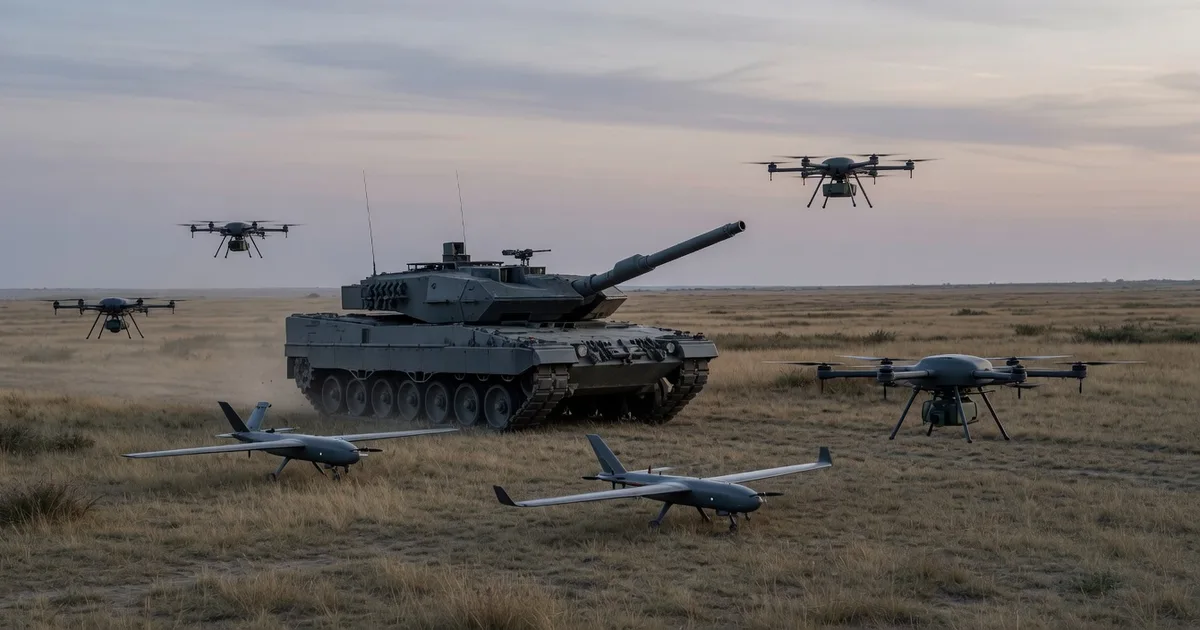
The drone age demands a new theory of military protection

Military protection has never existed simply to keep soldiers alive or platforms intact. Its enduring purpose has always been to preserve freedom of action: the ability of a force to manoeuvre, fight and impose its ...

Summary

The article contends that the proliferation of autonomous systems and drones is forcing a doctrinal re-evaluation of military protection. Its traditional focus on maximising the survivability of individual platforms must give way to a broader set of mechanisms—regeneration through production and repair, rapid adaptation, and industrial resilience—if forces are to retain freedom of action under sustained enemy pressure. Drawing on operational patterns observed in Ukraine and the Red Sea, the analysis distinguishes between crewed and uncrewed systems and explores the resulting implications for force design.

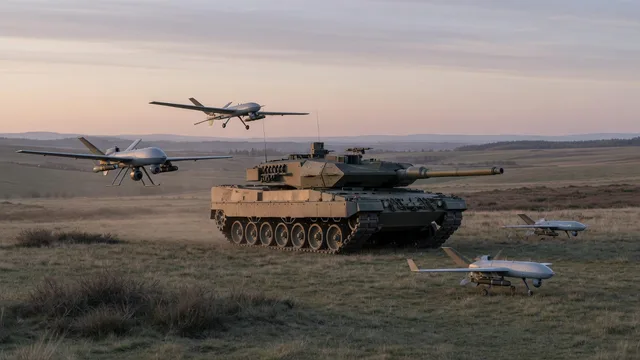
Protection has historically served to preserve combat power by enabling manoeuvre despite hostile action. Armour, layered defences, electronic warfare and deception were all calibrated to keep scarce, high-value assets and their trained personnel in the fight. Autonomous platforms invert this calculus. Once human operators are removed, protection becomes a design trade-off among weight, power, payload, cost and endurance rather than a moral imperative. A reconnaissance drone intended for a single sortie, for example, warrants different investment decisions from a logistics vehicle expected to support operations over weeks.

The piece argues that regeneration should therefore join protection, deception, dispersion and electronic warfare as an explicit means of sustaining capability. In environments where countermeasures evolve as quickly as the systems they target, the force that restores combat power fastest may outperform the one that loses the fewest platforms. Ukraine illustrates the shift: success increasingly depends on combining concealment, modular replacement and accelerated industrial output rather than on hardening every airframe or ground vehicle.

These considerations extend beyond the battlefield. If regeneration is treated as integral to protection, then supply-chain resilience, distributed manufacturing and software-update pipelines become core elements of military planning. The author concludes that planners should ask which combination of survivability mechanisms best preserves freedom of action across an entire campaign, rather than defaulting to maximising the endurance of every autonomous asset.

Why it matters

Directly addresses autonomous systems and drone warfare doctrine, relevant to NATO-aligned defense planners and industry. Touches on production, regeneration, and counter-drone dynamics that affect European defense priorities.
More in this beat
autonomous-weaponsdrone-swarmsintelligent-militarymilitary-aimilitary-dronesukraine
The Drone Age Demands a New Theory of Military Protection

07:00 · August 10, 2026

The Drone Age Demands a New Theory of Military Protection

This article is highly relevant for defense strategists and technologists as it challenges traditional force design paradigms in the face of autonomous warfare. It provides critical insights into how NATO and European defense industries must adapt their manufacturing, software development, and deployment strategies for AI-driven autonomous systems.

Relevance 85 · Audience 95

German drone maker Helsing enlists Rakuten to broker Japan military deal

20:16 · August 17, 2026

German drone maker Helsing enlists Rakuten to broker Japan military deal

This article is highly relevant as it highlights the global expansion and market dominance of Helsing, Europe's leading defense AI startup. Defense professionals and strategists in the Netherlands must monitor these developments to understand the evolving landscape of autonomous systems, drone swarm coordination, and international defense procurement.

Relevance 75 · Audience 85

Confronting the Barriers to AI Diffusion in the U.S. Military

14:00 · August 10, 2026

Confronting the Barriers to AI Diffusion in the U.S. Military

Although focused on the U.S. military, the identified bottlenecks in AI diffusion provide critical strategic insights for Dutch defense technologists and doctrine developers. Understanding these barriers helps European defense industries navigate similar bureaucratic and technical challenges within NATO frameworks.

Relevance 75 · Audience 85

China’s military unveils AI system for coordinating air strikes

14:55 · August 4, 2026

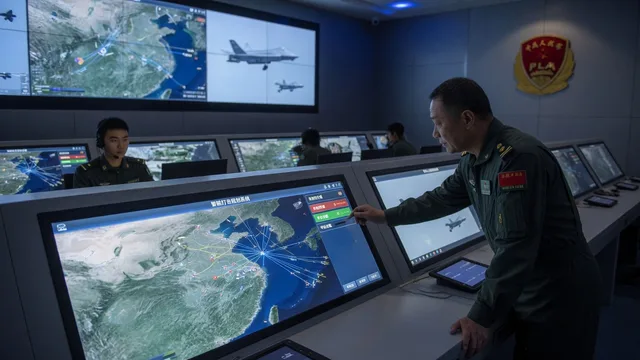
China’s military unveils AI system for coordinating air strikes

This article is highly relevant for defense strategists, military officers, and technologists as it highlights significant advancements in adversary AI capabilities. Understanding China's AI strike coordination systems is crucial for NATO and European defense professionals to develop counter-strategies, inform doctrine, and guide domestic AI military R&D.

Relevance 85 · Audience 90

New White House strategy clarifies military tech priorities: undersea, outer space and AI

13:55 · August 20, 2026

New White House strategy clarifies military tech priorities: undersea, outer space and AI

This article is highly relevant for defense strategists and technologists as it outlines the US military's top technology priorities, heavily featuring AI and autonomy. Understanding these priorities is crucial for European and Dutch defense professionals to ensure NATO interoperability, guide local R&D investments, and anticipate future defense market demands.

Relevance 80 · Audience 90

SOCOM planning to test new mission autonomy software for unmanned systems program

20:42 · August 18, 2026

SOCOM planning to test new mission autonomy software for unmanned systems program

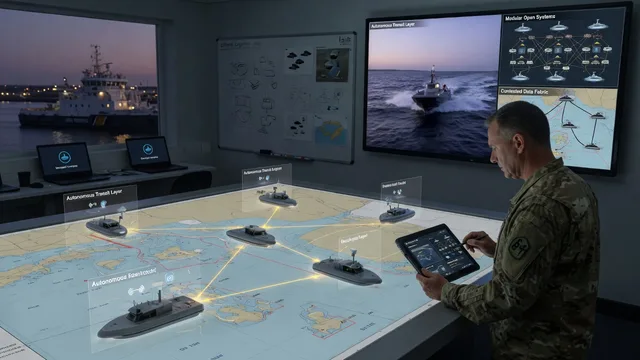
This article is highly relevant as it highlights cutting-edge requirements for decentralized mission autonomy and drone interoperability in contested environments. Dutch and NATO defense technologists, strategists, and AI engineers can leverage these insights to align local R&D with US/NATO interoperability standards and open-architecture trends.

Relevance 85 · Audience 90

Top Northcom general adds to drumbeat of warnings about weak drone defenses in the homeland

00:30 · August 15, 2026

Top Northcom general adds to drumbeat of warnings about weak drone defenses in the homeland

This article highlights critical vulnerabilities in counter-UAS capabilities and sensor networks, which are top priorities for NATO and European defense strategies. Dutch defense technologists and strategists can leverage these insights to develop interoperable, AI-driven detection and mitigation systems for drone swarms.

Relevance 75 · Audience 85

Archer Buys Three Boeing Units to Push Physical AI for Defense

16:12 · August 13, 2026

Archer Buys Three Boeing Units to Push Physical AI for Defense

This acquisition is highly relevant as it signals a major market shift in autonomous military aviation and physical AI, directly impacting the supply chain and technological landscape for NATO allies. Dutch defense technologists and strategists must understand these market dynamics, especially since systems like Insitu's are utilized by European armed forces.

Relevance 85 · Audience 90

US Navy Creates New Post to Oversee Robotic and Autonomous Systems Programs

14:14 · August 11, 2026

US Navy Creates New Post to Oversee Robotic and Autonomous Systems Programs

This article is relevant for defense strategists and industry professionals as it highlights a major shift in how the US military procures and manages autonomous systems. Understanding these structural changes is vital for NATO allies and European defense contractors aiming to align with US standards or enter the US defense market.

Relevance 65 · Audience 80

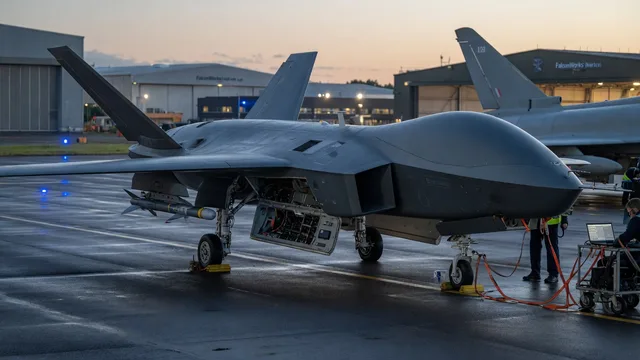
Northrop Grumman says Project Talon is accelerating military autonomy with YFQ-48A Talon Blue and Talon IQ for future missions

19:59 · August 10, 2026

Northrop Grumman says Project Talon is accelerating military autonomy with YFQ-48A Talon Blue and Talon IQ for future missions

This article highlights major advancements in military autonomous systems and human-machine teaming by a leading defense contractor. It provides critical insights for defense technologists and strategists into open-architecture AI testbeds and the shift towards connected autonomous ecosystems, which are key priorities for NATO and European defense modernization.

Relevance 85 · Audience 90

Modular Counter-UAS Systems for Military Vehicles

13:26 · August 10, 2026

Modular Counter-UAS Systems for Military Vehicles

Directly addresses AI autonomy and fire control for military counter-UAS systems, aligning with NATO defense priorities and dual-use tech relevant to Dutch and European defense professionals.

Relevance 85 · Audience 90

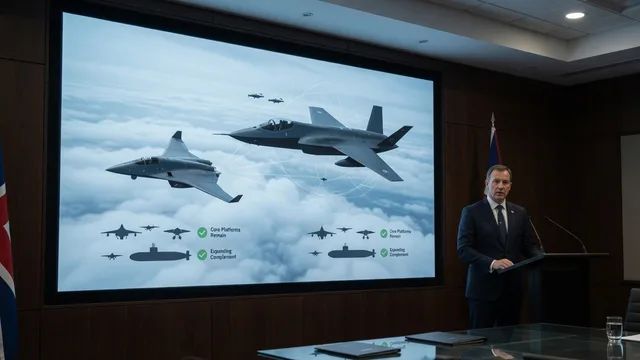
BAE Systems CEO says autonomous combat aircraft and low-cost drones will complement major platforms and support long-term growth

12:18 · August 5, 2026

BAE Systems CEO says autonomous combat aircraft and low-cost drones will complement major platforms and support long-term growth

This article is highly relevant as it outlines the strategic direction of a major European defense contractor regarding autonomous systems and AI integration. It provides valuable insights for defense strategists and industry professionals on how uncrewed assets will complement traditional platforms in future NATO and European military doctrines.

Relevance 85 · Audience 90