BAE Bets on Sovereignty, Unveils Brontanax Loyal Wingman to British Military in Search of 'Storm Fighter'
21:46 · July 27, 2026 · RSS APP - Military Autonomous Systems
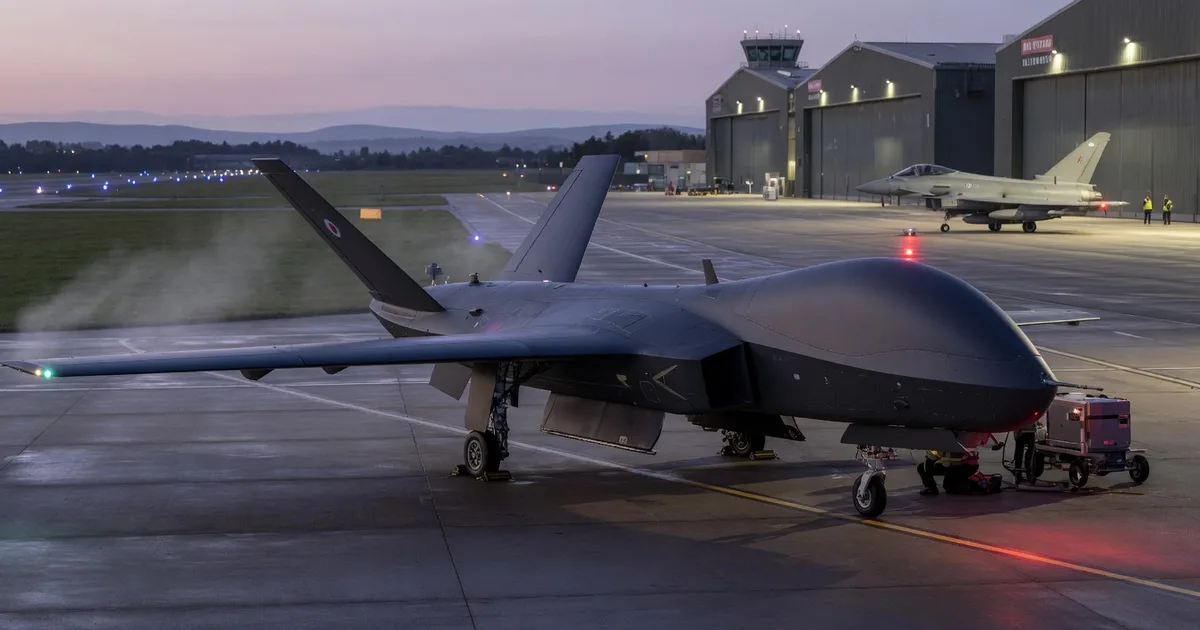
BAE Systems unveiled a Loyal Wingman drone fighter called Brontanax at the UK’s Farnborough airshow: a prototype the company’s FalconWorks branch began secr
Summary
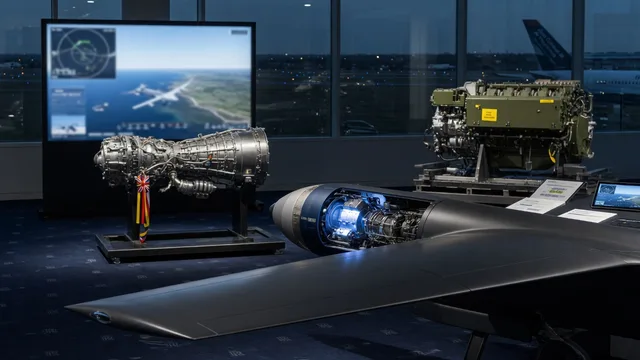
BAE Systems has unveiled the Brontanax, a prototype Loyal Wingman drone developed in secret since 2022 by its FalconWorks division at Warton. The aircraft, roughly the size of a Hawk trainer and weighing about 5.5 tons, features a stealth-oriented fuselage with serpentine inlets, trapezoidal wings, and internal weapons bays sized for current RAF munitions such as the Meteor air-to-air missile, Paveway II bombs, Brimstone, and SPEAR 3, though not the longer Storm Shadow. Powered initially by a Williams turbofan, the design can accommodate a Rolls-Royce Orpheus and incorporates modular open architecture aligned with the UK Ministry of Defence’s Pyramid avionics reference.
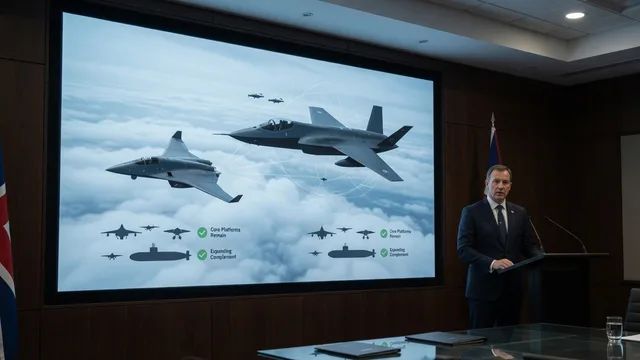
Intended to operate alongside Typhoon fighters, Brontanax provides air-to-air, precision air-to-surface, and electronic-warfare support while employing goal-based autonomy that allows high-level tasking from either airborne pilots or ground stations. BAE states the system can execute 70–80 percent of a Typhoon’s missions at roughly one-quarter the cost, positioning it as an affordable means to increase combat mass. Ground testing is scheduled at Warton ahead of a first flight targeted for the second quarter of 2027 and participation in NATO’s Steadfast Defender exercise later that year.
The public debut coincides with the Ministry of Defence’s launch of the Storm Fighter program, backed by an initial £300 million allocation within a broader £5 billion autonomous-systems investment. The effort seeks multi-role Collaborative Combat Aircraft to serve as both “attack dog” and “guardian angel” for the Royal Air Force, following the earlier cancellation of the Mosquito project. BAE positions Brontanax as a domestically developed option that could integrate directly with Typhoon fleets and potentially support carrier operations through relatively straightforward airframe modifications.
In a European market increasingly focused on sovereign Collaborative Combat Aircraft, Brontanax competes with established U.S. and Australian designs such as the MQ-28 Ghost Bat and the U.S. Air Force’s FQ-42 and FQ-44. While political preference for UK-built platforms may favor the program, success will depend on timely flight testing, demonstrated performance, and sustained funding to move beyond prototypes into production quantities.
Why it matters
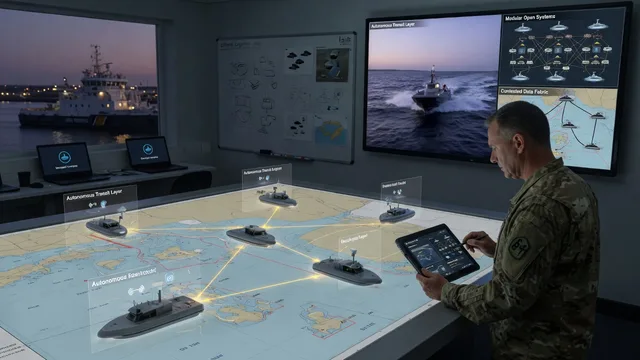
This article is highly relevant as it details the development of autonomous combat drones and goal-based autonomy within the European defense sector. It provides critical insights into NATO-aligned CCA procurement strategies, competitive market dynamics, and the integration of AI-driven unmanned systems with existing fighter fleets, which are key interests for defense technologists and strategists.