Grabette: an open system to record robot-manipulation data
02:00 · July 21, 2026 · Hugging Face Blog
Summary
Pollen Robotics has released Grabette, an open-source handheld device that records robot manipulation demonstrations without any robot hardware present. The system addresses the persistent shortage of diverse real-world data needed to train visuomotor policies by letting a human operator perform tasks while the device captures synchronized observations and 6-DoF trajectories. Demonstrations are stored in a standard format that downstream training pipelines can consume directly.
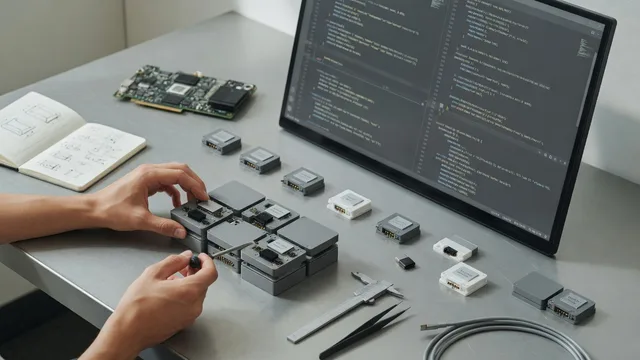
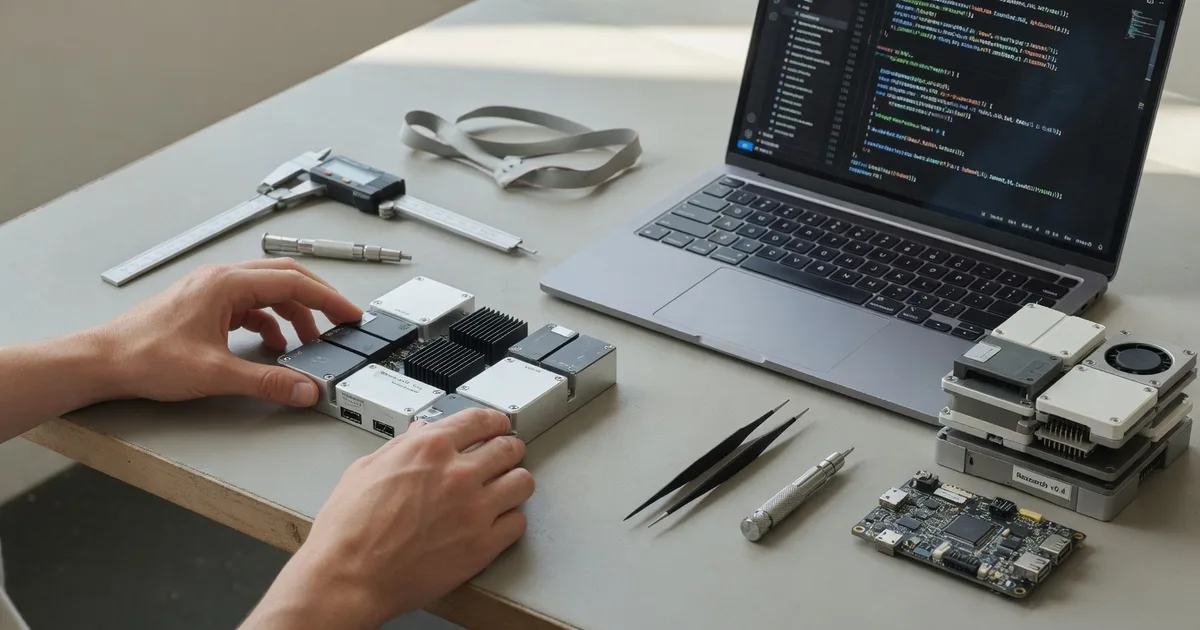
The hardware relies on readily available parts: a Raspberry Pi, a fisheye camera for a wide wrist-mounted view, an OAK-D RGB-D camera that supplies depth and IMU data for robust pose tracking via SLAM, and magnetic encoders on the gripper. A single button press starts and stops recording; all streams share a common clock to maintain temporal alignment. Post-processing occurs through a browser-based dashboard that converts raw episodes into LeRobot datasets ready for upload to the Hugging Face Hub.
Grabette draws explicit inspiration from Stanford’s Universal Manipulation Interface yet keeps every component open and robot-agnostic. The resulting Cartesian poses plus gripper state can therefore drive different arms once a matching end-effector, called Gripette, is mounted on the target platform. An accompanying example shows 200 recorded demonstrations used to train a policy, illustrating the full loop from capture to model without requiring specialized teleoperation rigs or laboratory facilities.
The project’s stated aim is to lower the barrier so that contributors outside established labs can add episodes to a shared, growing manipulation dataset. Future extensions mentioned include complementary capture devices, but the current release focuses on making field recording and dataset contribution practical for anyone with basic assembly skills.
Why it matters
Grabette addresses the significant data bottleneck in robot learning by providing ML engineers with an accessible, open-source data collection pipeline. Dutch AI practitioners and robotics SMEs can leverage this low-cost hardware to rapidly build datasets and train manipulation models without investing in expensive teleoperation rigs.