The State of Simulation for Physical AI: An Overview
22:00 · July 21, 2026 · Hugging Face Blog
Summary
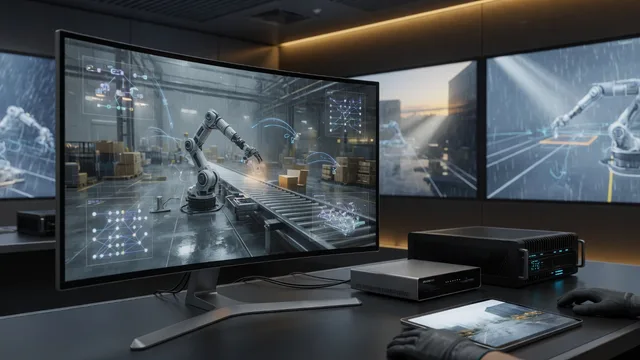
The core obstacle for physical AI remains the scarcity of suitable training data. Unlike language or vision models that draw on internet-scale corpora, robots must learn the outcomes of physical interactions such as slipping objects, compliant contacts, or unstable grasps. Real-world collection of such experience is slow, costly, and often unsafe, so simulation has become the primary source of scalable, physically grounded trajectories. Developers now generate thousands of parallel episodes through GPU batching, turning simulation into an integral part of policy training rather than a post-design verification step.
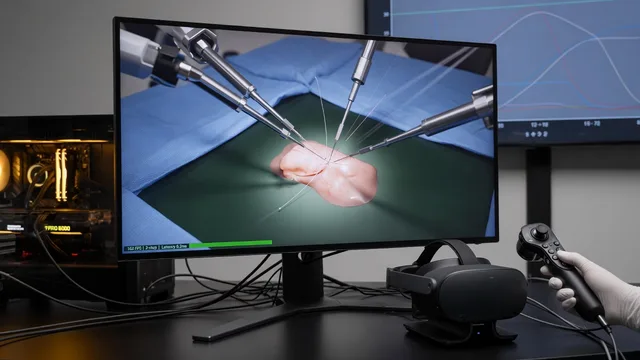
This change in role has produced a new generation of engines optimized for throughput and reinforcement learning. MuJoCo continues to supply accurate contact-rich dynamics and generalized-coordinate modeling on CPU, while its GPU counterpart, MuJoCo Warp, ports the same articulated-body physics into batched CUDA kernels suited for large-scale policy optimization. NVIDIA Isaac Sim supplies high-fidelity PhysX dynamics together with RTX rendering and sensor simulation inside an OpenUSD scene graph. Isaac Lab 3.0 decouples the learning framework from any single renderer or physics backend, allowing users to switch between photorealistic and lightweight headless modes. Newton, developed jointly by NVIDIA, DeepMind, and Disney Research under Linux Foundation governance, supplies a modular, differentiable physics layer that integrates MuJoCo Warp and multiple additional solvers, giving frameworks such as Isaac Lab a common substrate for high-throughput, simulator-agnostic training.
The article notes that the ecosystem is coalescing around open, GPU-accessible infrastructure. Shared abstractions for physics, differentiation, and data exchange now matter more than raw speed alone, because they let specialized engines interoperate while remaining accessible on consumer hardware. This open layer is presented as the practical foundation for moving embodied models from static datasets to sustained physical interaction.
Why it matters
It offers ML Engineers a critical evaluation of modern simulation tools required for training physical AI and reinforcement learning models. Given the strong Dutch focus on robotics in agriculture, logistics, and high-tech manufacturing, understanding these GPU-accelerated simulation stacks is essential for local AI practitioners.