AI News selected for Professionals and Decision Makers
Defense Artificial Intelligence

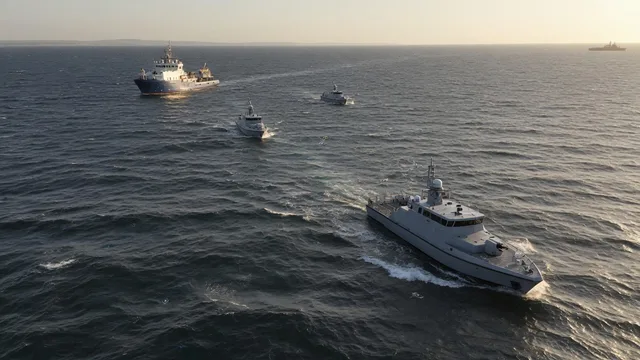
Army G-4 Charts the Course for Autonomous Watercraft

18:51 · July 28, 2026 · RSS APP - Military Autonomous Systems
Army G-4 Charts the Course for Autonomous Watercraft

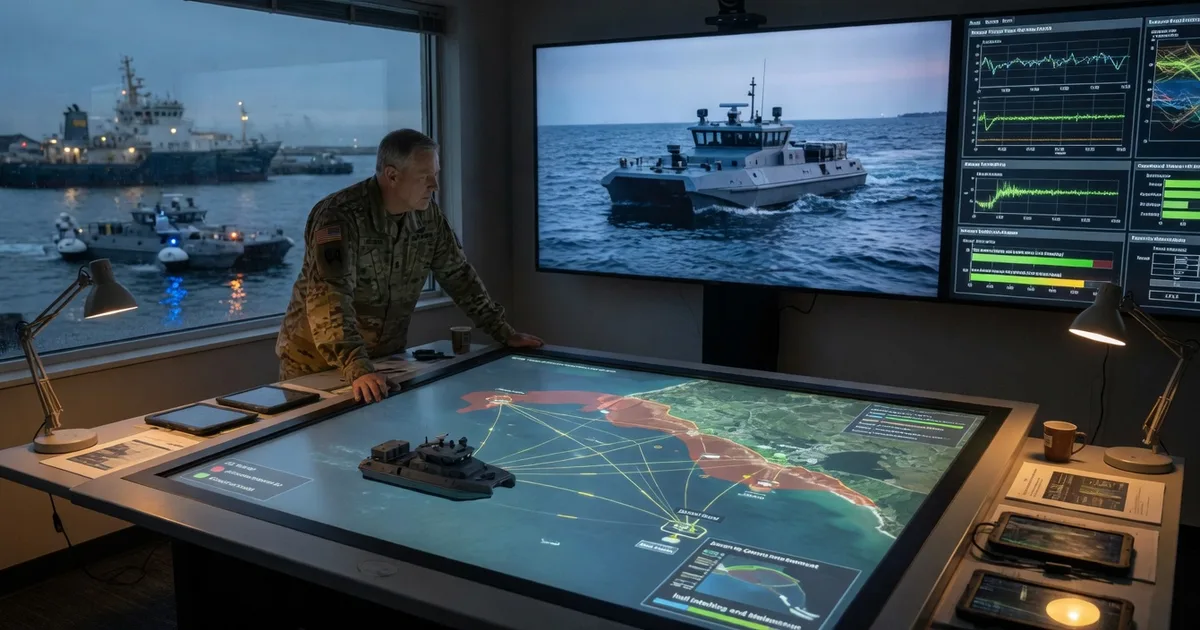
In vast and highly contested littoral environments, traditional maritime supply lines will be targeted from day one. To maintain a decisive edge, the Ar...

Summary

The US Army G-4 is pursuing a modernization program that integrates autonomous maritime systems into its watercraft fleet to sustain logistics operations in contested littoral zones. Rather than replacing crew, the approach uses autonomy to remove personnel from high-risk, extended transits, freeing Army mariners for tactical decision-making, joint coordination, and command functions. Real-world observations from conflicts such as Ukraine have shown that fixed logistics nodes are rapidly targeted, prompting a shift toward distributed, harder-to-strike autonomous resupply.

A central requirement is a resilient digital architecture that supports continuous, secure data exchange among vessels, shore commands, and joint partners. The Army is moving toward modular open-systems designs that enable rapid insertion of new sensors, software, and analytics without dependence on single vendors. This unified data fabric is intended to maintain visibility and responsiveness across domains even when individual links are contested or degraded.

To support these capabilities, the G-4 is expanding collaboration with non-traditional defense firms, universities, and commercial technology providers. The goal is accelerated progress in artificial intelligence, sensor fusion, predictive maintenance, and materials suited to maritime environments. In parallel, the service is replacing fixed calendar-based maintenance with condition-based telematics that trigger repairs according to actual system state, and it is revising mariner training to emphasize data literacy, robotic-system control, and cyber defense. Partnerships with industry are also being used to lease commercial vessels in the near term while the Army works with international bodies to influence regulatory frameworks for military autonomous craft.

Why it matters

Directly addresses military autonomous systems and AI integration for logistics, aligning with NATO defense priorities and dual-use technologies relevant to Dutch and European defense professionals.

More in this beat
Army G-4autonomous-watercraftcyber-physical-systemsindustry-breakthroughsphysical-aipredictive maintenancerobotics
U.S. Army Selects Dire Wolf UGV for Autonomous Logistics in Contested Environments

10:06 · July 27, 2026

U.S. Army Selects Dire Wolf UGV for Autonomous Logistics in Contested Environments

This article is relevant for defense technologists and strategists as it highlights a major allied investment in autonomous logistics and robotic ground vehicles. Understanding U.S. Army procurement trends in AI-driven sustainment provides valuable insights for NATO interoperability and European defense modernization efforts.

Relevance 75 · Audience 85

Into the Omniverse: How Open World Models Push the Frontier of Physical AI

15:00 · August 6, 2026

Into the Omniverse: How Open World Models Push the Frontier of Physical AI

The release of open-weight physical AI models by a major player like NVIDIA significantly lowers the barrier to entry for developing advanced robotics and autonomous systems. This is highly relevant for the Dutch market, which features strong logistics, agriculture, and high-tech manufacturing sectors that can leverage these transparent, open-source tools for innovation.

Relevance 75 · Audience 70

US tech helps unmanned surface vessel spot target autonomously

03:52 · August 3, 2026

US tech helps unmanned surface vessel spot target autonomously

This demonstrates advanced autonomous maritime capabilities and multi-agent coordination, which are critical for modern naval operations and NATO defense strategies. It provides valuable insights for defense technologists and military strategists in the Netherlands looking to integrate AI into maritime security and unmanned naval systems.

Relevance 85 · Audience 90

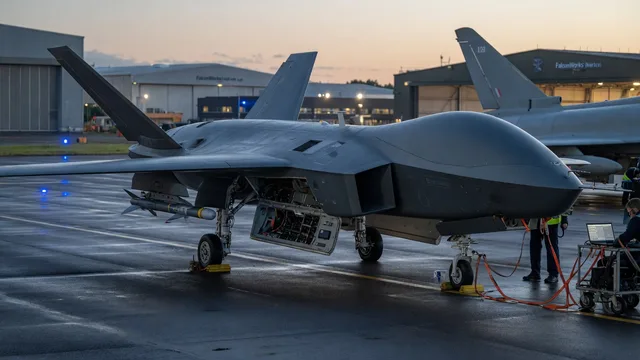
BAE Bets on Sovereignty, Unveils Brontanax Loyal Wingman to British Military in Search of 'Storm Fighter'

21:46 · July 27, 2026

BAE Bets on Sovereignty, Unveils Brontanax Loyal Wingman to British Military in Search of 'Storm Fighter'

This article is highly relevant as it details the development of autonomous combat drones and goal-based autonomy within the European defense sector. It provides critical insights into NATO-aligned CCA procurement strategies, competitive market dynamics, and the integration of AI-driven unmanned systems with existing fighter fleets, which are key interests for defense technologists and strategists.

Relevance 85 · Audience 95

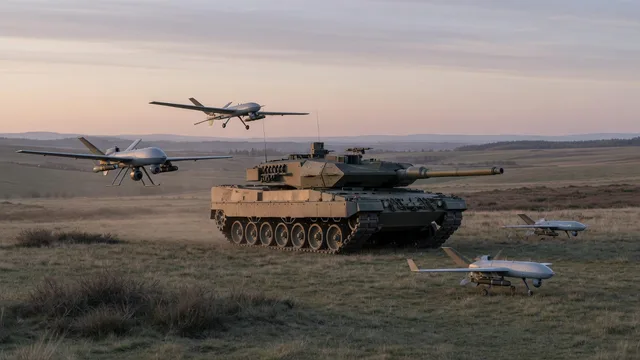
Ukrainian-Danish Venture to Build 12,000 SAKER Military Drones Annually

15:19 · July 27, 2026

Ukrainian-Danish Venture to Build 12,000 SAKER Military Drones Annually

This article is relevant as it highlights the scaling of autonomous military systems and defense production within Europe, directly impacting NATO supply chains. It provides strategic insights for defense professionals regarding the integration and mass production of combat-proven Ukrainian drone technology in Western Europe.

Relevance 75 · Audience 85

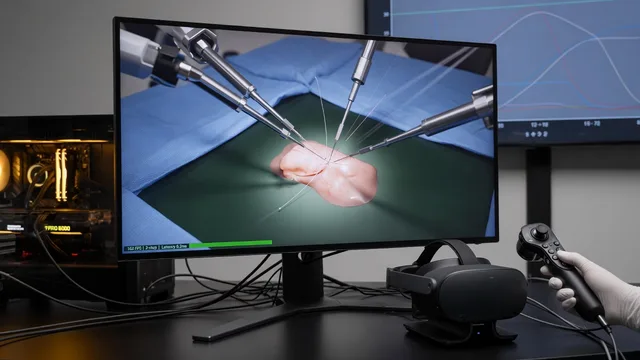
NVIDIA Cosmos-H-Dreams: Bringing Real-Time Generative Simulation to Surgical Robotics

11:32 · July 27, 2026

NVIDIA Cosmos-H-Dreams: Bringing Real-Time Generative Simulation to Surgical Robotics

Provides concrete implementation details on distillation, autoregressive rollout stability, few-step diffusion, and low-latency serving that directly address production constraints for ML engineers. Includes actionable training recipes and quantitative performance gains applicable to Dutch teams working on generative models or robotics.

Relevance 78 · Audience 85

The State of Simulation for Physical AI: An Overview

22:00 · July 21, 2026

The State of Simulation for Physical AI: An Overview

It offers ML Engineers a critical evaluation of modern simulation tools required for training physical AI and reinforcement learning models. Given the strong Dutch focus on robotics in agriculture, logistics, and high-tech manufacturing, understanding these GPU-accelerated simulation stacks is essential for local AI practitioners.

Relevance 85 · Audience 90

Grabette: an open system to record robot-manipulation data

02:00 · July 21, 2026

Grabette: an open system to record robot-manipulation data

Grabette addresses the significant data bottleneck in robot learning by providing ML engineers with an accessible, open-source data collection pipeline. Dutch AI practitioners and robotics SMEs can leverage this low-cost hardware to rapidly build datasets and train manipulation models without investing in expensive teleoperation rigs.

Relevance 65 · Audience 70

Introducing Cosmos 3 Edge

17:58 · July 20, 2026

Introducing Cosmos 3 Edge

This article provides ML Engineers with actionable, open-source tooling and checkpoints for deploying state-of-the-art vision-language and world models on edge hardware. It directly addresses implementation challenges like memory constraints and real-time latency, which are highly applicable to the strong Dutch logistics, agriculture, and smart infrastructure sectors.

Relevance 85 · Audience 95

At SIGGRAPH, NVIDIA Advances Graphics and Simulation With Agentic and Physical AI

17:00 · July 20, 2026

At SIGGRAPH, NVIDIA Advances Graphics and Simulation With Agentic and Physical AI

The article showcases significant AI breakthroughs in creative workflows, robotics, and media verification. The Synthetic Video Detector is highly relevant to the Dutch market's focus on ethical and transparent AI, while the accessible agentic AI tools support the high rate of AI adoption among Dutch SMEs.

Relevance 85 · Audience 80

AI-Generated Exploit Scripts Target Siemens S7 PLCs in U.S. Critical Infrastructure

18:59 · August 20, 2026

AI-Generated Exploit Scripts Target Siemens S7 PLCs in U.S. Critical Infrastructure

This article highlights a critical evolution in offensive AI capabilities targeting industrial control systems (ICS) like Siemens S7 PLCs, which are heavily utilized in Dutch critical infrastructure and manufacturing. Security professionals in the Netherlands must understand these AI-driven threat vectors to defend operational technology (OT) environments effectively.

Relevance 85 · Audience 95