AI News selected for Professionals and Decision Makers
Defense Artificial Intelligence

U.S. Tests More Than 35 Autonomous Systems for Future Indo-Pacific Naval Warfare

14:00 · August 2, 2026 · RSS APP - Military Autonomous Systems
U.S. Tests More Than 35 Autonomous Systems for Future Indo-Pacific Naval Warfare

RIMPAC 2026 evaluates 35+ autonomous systems to strengthen Indo-Pacific naval operations through drones AI logistics and ISR.

Summary

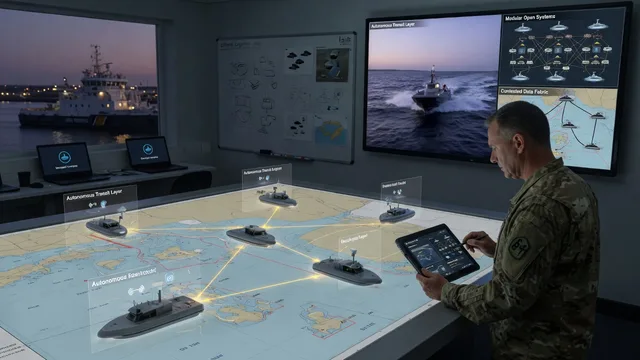
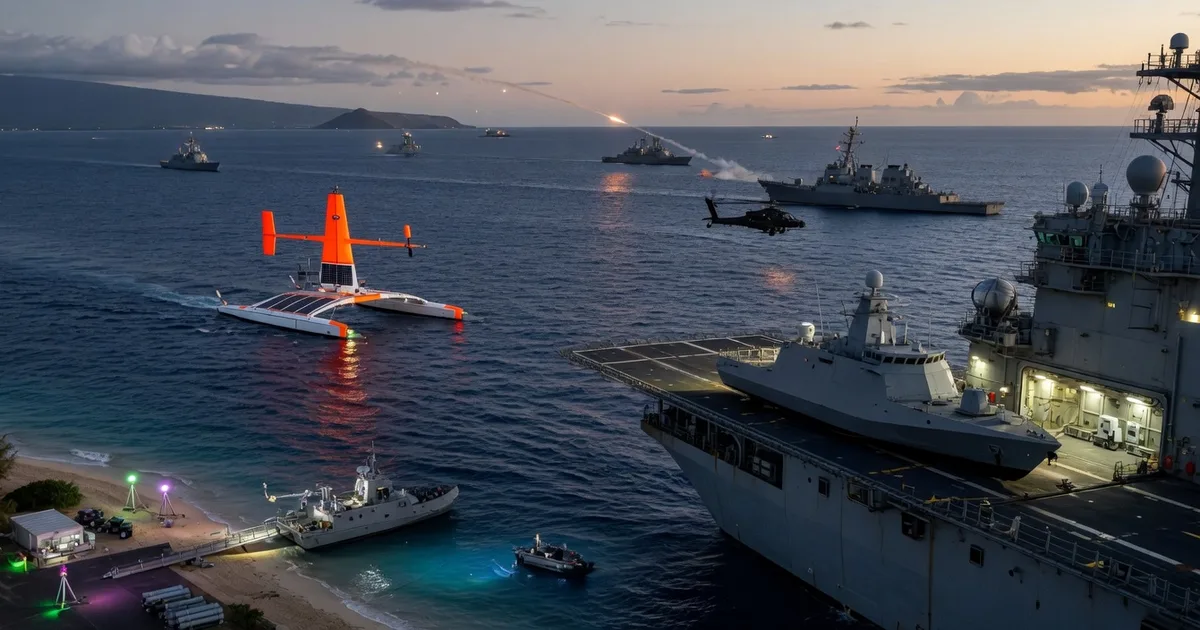
RIMPAC 2026 incorporates more than 35 experiments that place unmanned systems inside multinational fleet operations around Hawaii rather than isolating them in controlled tests. The trials examine how autonomous platforms can extend intelligence, surveillance and reconnaissance coverage, support aerial threat detection, enable shipboard additive manufacturing, and conduct undersea missions while remaining interoperable with crewed warships, aircraft and submarines from 30 participating nations.

Logistics experiments demonstrate end-to-end workflows in which additive manufacturing equipment aboard naval vessels produces components on demand, after which digitally crewed surface craft deliver the parts to other units, including the 25th Infantry Division’s Lightning Lab. One sequence completed production, transport and operational testing in under 24 hours; a Typhoon unmanned surface vessel also demonstrated autonomous entry into the well deck of the amphibious assault ship USS Essex, using an existing ship interface without crew intervention.

Maritime surveillance trials include the Saildrone Surveyor SD-3001, which extends sensor reach beyond crewed platforms. In the undersea domain, autonomous underwater vehicles simulate intelligence, surveillance and targeting tasks in contested waters. At Schofield Barracks, spectral imaging sensors paired with 3D-printed rockets are tested for counter-unmanned aircraft sequences, combining detection and interception elements within an operational setting.

These autonomous capabilities operate alongside existing strike systems, such as AH-64 Apache helicopters firing Spike missiles and allied destroyers launching Naval Strike and Harpoon missiles during SINKEX events. The overall architecture tested at RIMPAC disperses sensors, logistics nodes and effectors across a wide area to reduce dependence on concentrated platforms and long supply lines, while stressing multinational data sharing and command integration in a theater characterized by distance and contested communications.

Why it matters

Directly addresses defense AI, autonomous systems, and edge logistics relevant to NATO/EU defense priorities and Dutch military tech adoption. Provides insights for technologists and officers on interoperability and operational testing of unmanned platforms.
More in this beat
additive-manufacturingautonomous logisticsautonomous-watercraftIndo-Pacificmilitary-aimilitary-dronesRIMPAC 2026saildrone
New White House strategy clarifies military tech priorities: undersea, outer space and AI

13:55 · August 20, 2026

New White House strategy clarifies military tech priorities: undersea, outer space and AI

This article is highly relevant for defense strategists and technologists as it outlines the US military's top technology priorities, heavily featuring AI and autonomy. Understanding these priorities is crucial for European and Dutch defense professionals to ensure NATO interoperability, guide local R&D investments, and anticipate future defense market demands.

Relevance 80 · Audience 90

Archer Buys Three Boeing Units to Push Physical AI for Defense

16:12 · August 13, 2026

Archer Buys Three Boeing Units to Push Physical AI for Defense

This acquisition is highly relevant as it signals a major market shift in autonomous military aviation and physical AI, directly impacting the supply chain and technological landscape for NATO allies. Dutch defense technologists and strategists must understand these market dynamics, especially since systems like Insitu's are utilized by European armed forces.

Relevance 85 · Audience 90

Confronting the Barriers to AI Diffusion in the U.S. Military

14:00 · August 10, 2026

Confronting the Barriers to AI Diffusion in the U.S. Military

Although focused on the U.S. military, the identified bottlenecks in AI diffusion provide critical strategic insights for Dutch defense technologists and doctrine developers. Understanding these barriers helps European defense industries navigate similar bureaucratic and technical challenges within NATO frameworks.

Relevance 75 · Audience 85

The Drone Age Demands a New Theory of Military Protection

07:00 · August 10, 2026

The Drone Age Demands a New Theory of Military Protection

This article is highly relevant for defense strategists and technologists as it challenges traditional force design paradigms in the face of autonomous warfare. It provides critical insights into how NATO and European defense industries must adapt their manufacturing, software development, and deployment strategies for AI-driven autonomous systems.

Relevance 85 · Audience 95

The drone age demands a new theory of military protection

07:30 · August 7, 2026

The drone age demands a new theory of military protection

Directly addresses autonomous systems and drone warfare doctrine, relevant to NATO-aligned defense planners and industry. Touches on production, regeneration, and counter-drone dynamics that affect European defense priorities.

Relevance 75 · Audience 80

China Harnesses US AI Models to Advance Military Capabilities: Report

10:22 · August 5, 2026

China Harnesses US AI Models to Advance Military Capabilities: Report

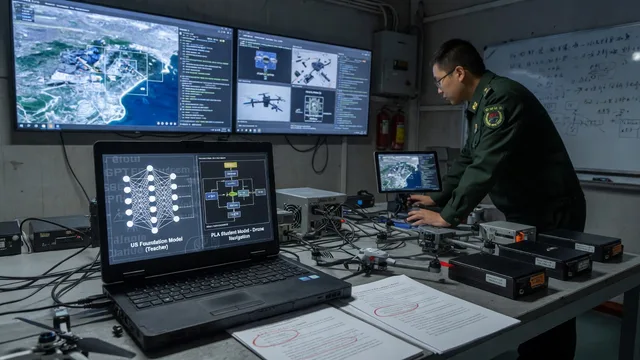
This article highlights critical adversary capabilities and technical methods, specifically model distillation for edge AI, which directly impact NATO and Dutch defense strategies. It provides valuable insights for AI/ML engineers and strategists developing or countering autonomous systems and edge computing in military contexts.

Relevance 85 · Audience 90

China’s military unveils AI system for coordinating air strikes

14:55 · August 4, 2026

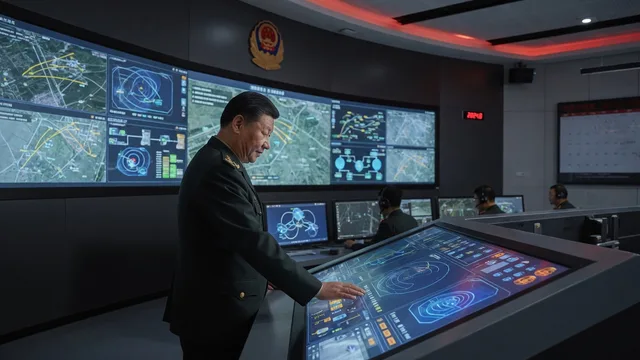
China’s military unveils AI system for coordinating air strikes

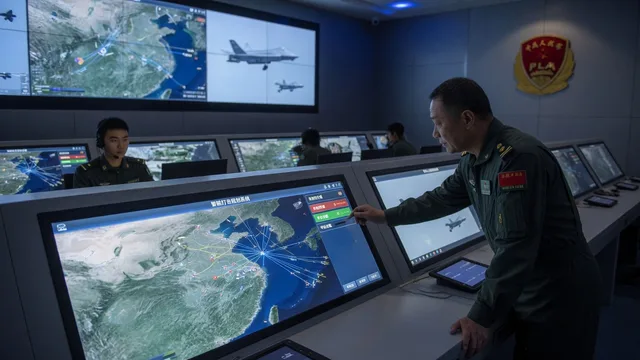
This article is highly relevant for defense strategists, military officers, and technologists as it highlights significant advancements in adversary AI capabilities. Understanding China's AI strike coordination systems is crucial for NATO and European defense professionals to develop counter-strategies, inform doctrine, and guide domestic AI military R&D.

Relevance 85 · Audience 90

Former Mossad chief David Barnea joins Ondas Defense as global president

16:20 · August 3, 2026

Former Mossad chief David Barnea joins Ondas Defense as global president

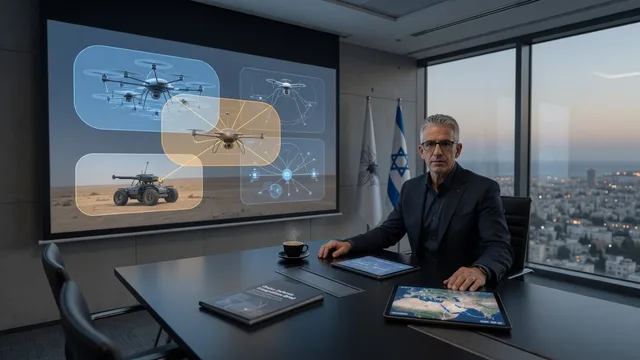
This article highlights strategic leadership and market expansion in AI-powered defense systems targeting Europe. It provides insights into how defense companies are integrating AI, autonomous platforms, and intelligence into unified operational environments, which is crucial for NATO and European defense strategists.

Relevance 75 · Audience 85

Lithuania seeks AI-powered air defence network after drone incidents

08:22 · August 3, 2026

Lithuania seeks AI-powered air defence network after drone incidents

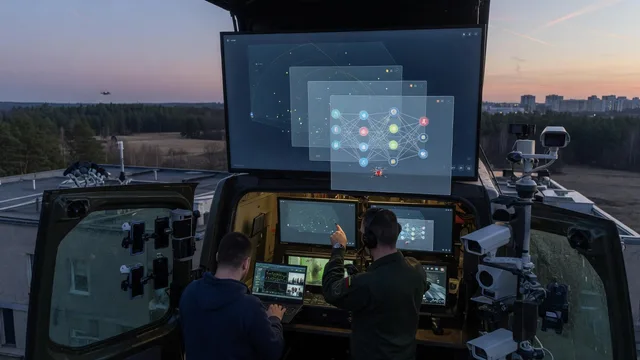
Directly addresses AI-enabled military air defense, dual-use sensor networks and NATO-relevant drone countermeasures, offering insights for defense technologists, AI/ML engineers and military planners on real-world integration and funding priorities.

Relevance 80 · Audience 85

US tech helps unmanned surface vessel spot target autonomously

03:52 · August 3, 2026

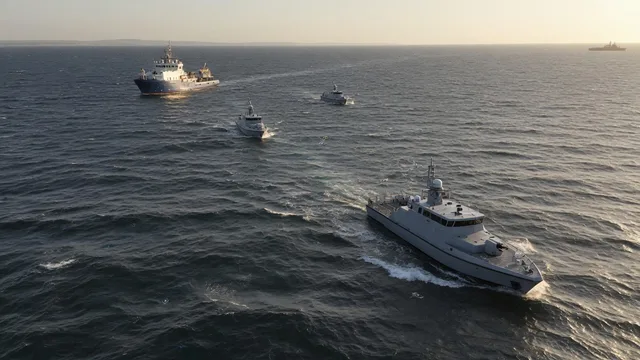
US tech helps unmanned surface vessel spot target autonomously

This demonstrates advanced autonomous maritime capabilities and multi-agent coordination, which are critical for modern naval operations and NATO defense strategies. It provides valuable insights for defense technologists and military strategists in the Netherlands looking to integrate AI into maritime security and unmanned naval systems.

Relevance 85 · Audience 90

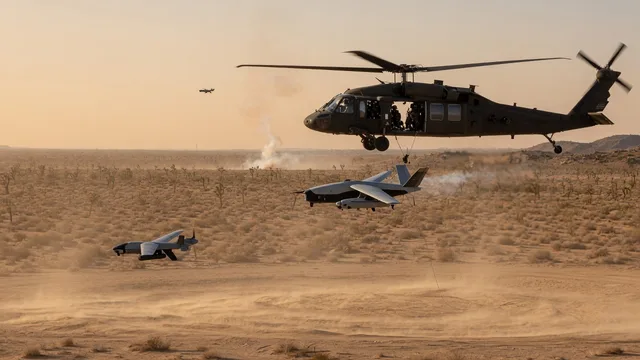
U.S. Army Demonstrates UH-60 Helicopter Air-Launched Effects System to Control Multiple Combat Drones

14:00 · August 1, 2026

U.S. Army Demonstrates UH-60 Helicopter Air-Launched Effects System to Control Multiple Combat Drones

This article is highly relevant as it demonstrates advanced manned-unmanned teaming and one-to-many autonomous drone control, which are critical areas of interest for NATO and European defense technologists. It provides actionable insights into how AI and edge computing are being operationalized in combat scenarios, directly impacting future military doctrine and defense procurement strategies.

Relevance 85 · Audience 90