AI News selected for Professionals and Decision Makers
Defense Artificial Intelligence

U.S. Army Demonstrates UH-60 Helicopter Air-Launched Effects System to Control Multiple Combat Drones

14:00 · August 1, 2026 · RSS APP - Military Autonomous Systems

U.S. Army Demonstrates UH-60 Helicopter Air-Launched Effects System to Control Multiple Combat Drones

U.S. Army expands UH-60 Black Hawk combat role by launching and controlling multiple Air-Launched Effects drones during Project Convergence.

Summary

The U.S. Army has demonstrated an Increment 1 Air-Launched Effects (A-LE) capability from an H-60M Black Hawk helicopter during Project Convergence Capstone 6 in the Mojave Desert. The test showed that a single crew can launch and maintain simultaneous control over multiple small unmanned aerial systems, using them for reconnaissance, targeting, electronic warfare, and precision strike tasks while the helicopter remains at standoff range. This shifts the Black Hawk from a primarily transport and direct-support role to a distributed launch and command node within a networked architecture.

The A-LE systems extend the reach of onboard sensors and weapons by operating as semi-autonomous force multipliers. They relay intelligence, identify targets, and can deliver effects through the Long-Range Precision Munition (LRPM) variant, enabling coordinated attacks from multiple directions against time-sensitive objectives. The demonstration confirmed reliable performance under high temperatures and validated government-developed software and interfaces that avoid proprietary constraints, allowing future integration of additional sensors, payloads, and autonomy levels without vendor lock-in.

Beyond simple launch-and-forget operations, the modified helicopter functions as an airborne gateway that distributes situational awareness data across aviation, ground, and fires units. This supports one-to-many control, where one operator directs several systems, and improves resilience in contested electromagnetic environments by providing over-the-horizon connectivity. The approach aligns with broader Army efforts to combine manned platforms with autonomous systems for deeper penetration of integrated air defenses while reducing exposure of crewed aircraft.

Why it matters

This article is highly relevant as it demonstrates advanced manned-unmanned teaming and one-to-many autonomous drone control, which are critical areas of interest for NATO and European defense technologists. It provides actionable insights into how AI and edge computing are being operationalized in combat scenarios, directly impacting future military doctrine and defense procurement strategies.

More in this beat
Air-Launched Effectslaunched-effectsLong-Range Precision Munitionmilitary-aimilitary-dronesproject-convergenceUH-60 Black Hawku-s-army
UK’s GEREON Ground Drones Endure Punishing Six-Day Desert Trial

15:46 · August 11, 2026

UK’s GEREON Ground Drones Endure Punishing Six-Day Desert Trial

This article is relevant because it highlights the operational testing of autonomous ground systems in extreme environments during a major NATO-allied exercise. It provides valuable insights for defense technologists and strategists regarding UGV endurance, electronic warfare integration, and minimal-intervention autonomy.

Relevance 75 · Audience 85

Archer Buys Three Boeing Units to Push Physical AI for Defense

16:12 · August 13, 2026

Archer Buys Three Boeing Units to Push Physical AI for Defense

This acquisition is highly relevant as it signals a major market shift in autonomous military aviation and physical AI, directly impacting the supply chain and technological landscape for NATO allies. Dutch defense technologists and strategists must understand these market dynamics, especially since systems like Insitu's are utilized by European armed forces.

Relevance 85 · Audience 90

Army opens test ranges to private industry

22:59 · August 12, 2026

Army opens test ranges to private industry

It highlights a major shift in lowering barriers for private industry to test autonomous and counter-drone systems in realistic electronic warfare environments. While US-centric, it sets a benchmark for NATO allied acquisition strategies and offers potential testing avenues for European defense tech companies.

Relevance 65 · Audience 85

Confronting the Barriers to AI Diffusion in the U.S. Military

14:00 · August 10, 2026

Confronting the Barriers to AI Diffusion in the U.S. Military

Although focused on the U.S. military, the identified bottlenecks in AI diffusion provide critical strategic insights for Dutch defense technologists and doctrine developers. Understanding these barriers helps European defense industries navigate similar bureaucratic and technical challenges within NATO frameworks.

Relevance 75 · Audience 85

The Drone Age Demands a New Theory of Military Protection

07:00 · August 10, 2026

The Drone Age Demands a New Theory of Military Protection

This article is highly relevant for defense strategists and technologists as it challenges traditional force design paradigms in the face of autonomous warfare. It provides critical insights into how NATO and European defense industries must adapt their manufacturing, software development, and deployment strategies for AI-driven autonomous systems.

Relevance 85 · Audience 95

The drone age demands a new theory of military protection

07:30 · August 7, 2026

The drone age demands a new theory of military protection

Directly addresses autonomous systems and drone warfare doctrine, relevant to NATO-aligned defense planners and industry. Touches on production, regeneration, and counter-drone dynamics that affect European defense priorities.

Relevance 75 · Audience 80

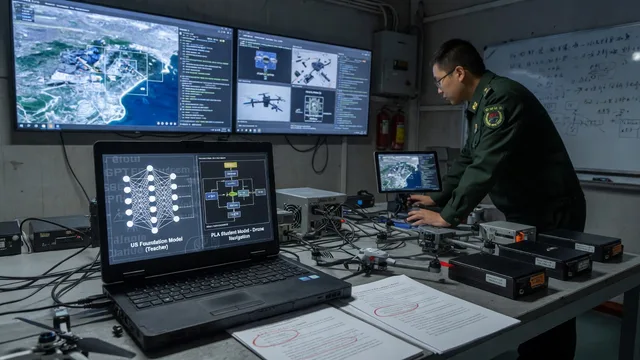
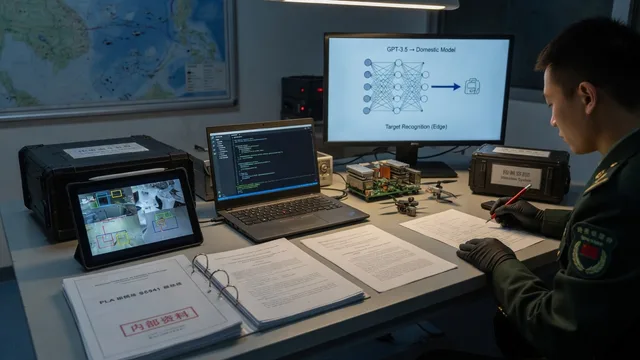
China Harnesses US AI Models to Advance Military Capabilities: Report

10:22 · August 5, 2026

China Harnesses US AI Models to Advance Military Capabilities: Report

This article highlights critical adversary capabilities and technical methods, specifically model distillation for edge AI, which directly impact NATO and Dutch defense strategies. It provides valuable insights for AI/ML engineers and strategists developing or countering autonomous systems and edge computing in military contexts.

Relevance 85 · Audience 90

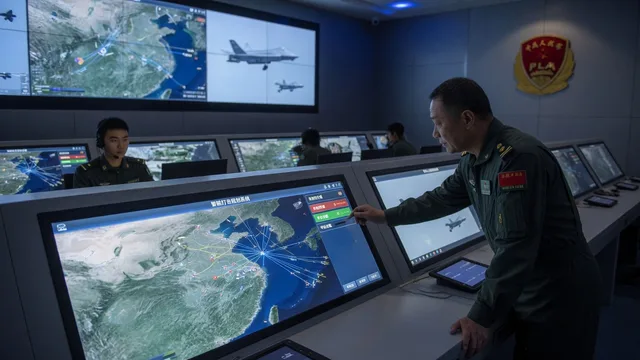
China’s military unveils AI system for coordinating air strikes

14:55 · August 4, 2026

China’s military unveils AI system for coordinating air strikes

This article is highly relevant for defense strategists, military officers, and technologists as it highlights significant advancements in adversary AI capabilities. Understanding China's AI strike coordination systems is crucial for NATO and European defense professionals to develop counter-strategies, inform doctrine, and guide domestic AI military R&D.

Relevance 85 · Audience 90

Former Mossad chief David Barnea joins Ondas Defense as global president

16:20 · August 3, 2026

Former Mossad chief David Barnea joins Ondas Defense as global president

This article highlights strategic leadership and market expansion in AI-powered defense systems targeting Europe. It provides insights into how defense companies are integrating AI, autonomous platforms, and intelligence into unified operational environments, which is crucial for NATO and European defense strategists.

Relevance 75 · Audience 85

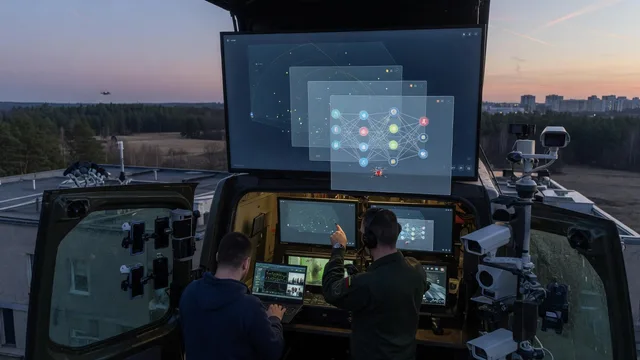
Lithuania seeks AI-powered air defence network after drone incidents

08:22 · August 3, 2026

Lithuania seeks AI-powered air defence network after drone incidents

Directly addresses AI-enabled military air defense, dual-use sensor networks and NATO-relevant drone countermeasures, offering insights for defense technologists, AI/ML engineers and military planners on real-world integration and funding priorities.

Relevance 80 · Audience 85