Army cyber chief reveals AI task force building agents to ‘hunt’ in the DOD network
02:26 · August 20, 2026 · Defense Scoop
“Each and every day, we sit down as a group, we figure out the guardrails we're going to apply to these agents, [and] we ask ourselves: Is it risk that a human should be answering, or is it risk that an agent can answer?” Lt. Gen. Christopher Eubank said. “And right now, today, humans are all responsible for risk. We have not turned any agents loose to assume risk on their own behalf.” The post Army cyber chief reveals AI task force building agents to ‘hunt’ in the DOD network appeared first on DefenseScoop.
Summary
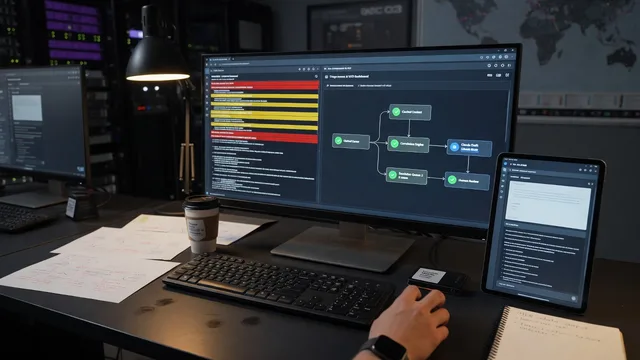
The U.S. Army Cyber Command has formed Task Force Lexington to develop specialized AI agents that support a range of cyber roles, from developers and data engineers to host and exploitation analysts. Established in April, the small unit of roughly eight to ten personnel has already produced agents that perform red-team operations and conduct daily scans of the Department of Defense Information Network through seventeen agentic mission and cyber-protection elements.
These agents are trained to replicate established human workflows and are held to the same qualification standards applied to personnel. When errors occur, the agents receive corrective instruction and are retrained before resuming tasks. All missions remain under direct human supervision, with risk decisions reserved exclusively for people rather than delegated to autonomous systems.
The command has deliberately avoided commercial frontier models, citing both token costs and the absence of adequate governance frameworks. Instead, it relies on smaller-scale, internally supported systems that can still deliver measurable operational value. Task Force Lexington continues to refine guardrails through daily reviews that weigh the speed advantage of agents against the need for accountable human oversight.
Why it matters
Covers defense AI agents for cyber defense with risk management and ethical guardrails, directly relevant to NATO-aligned defense professionals and EU AI governance discussions.