Saab shows off loyal wingman drone it hopes to offer Swedish Air Force
20:25 · August 24, 2026 · Breaking Defense

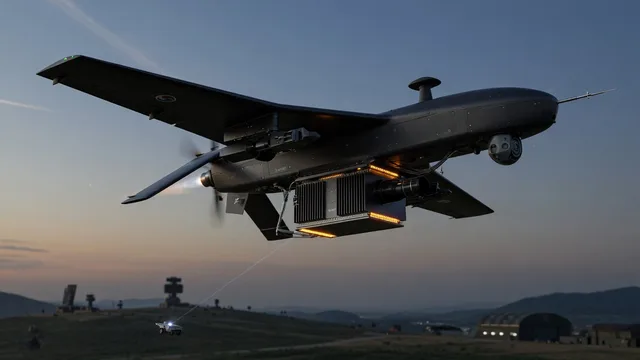
The A3, which Saab says may become the sales product, could enter service within ten years if the government decides to proceed with the aircraft.
Summary
Saab has unveiled a three-step development path for AI-enabled unmanned combat aircraft intended to operate as loyal wingmen alongside manned fighters. Announced at the Swedish Air Force centennial event at Malmen Air Base, the A1, A2 and A3 demonstrators are positioned as incremental prototypes leading to an operational Autonomous Collaborative Platform, or ACP. The effort forms part of Sweden’s longer-term planning to maintain fighter capability beyond 2040, when the Gripen E fleet will require replacement or supplementation.
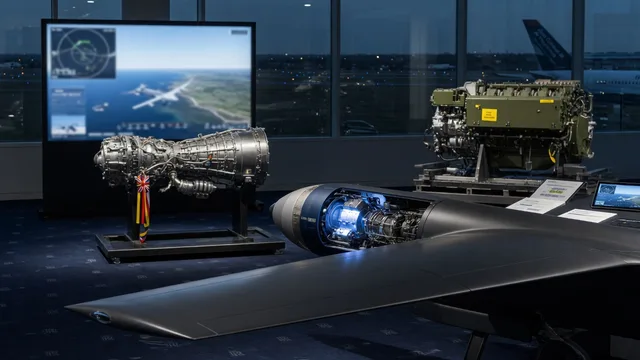
The A1 is a supersonic technology demonstrator powered by a GE F414 engine, the same unit used in the Gripen E/F, and will incorporate artificial-intelligence flight-control software. The A2 adds an internal weapons bay for payload carriage. Both aircraft are scheduled to fly within four years, with the first flight targeted inside fifteen months. The A3 configuration, shown as a full-scale model, is intended as the potential production article and could reach service within a decade once government funding is secured.
Swedish officials have described the ACP as a natural extension of the Gripen system, enabling mixed manned-unmanned formations for deeper strike and reconnaissance missions. Lifecycle cost estimates place a single A3 at roughly one-third that of a Gripen E, with initial acquisition costs about half as high. The Swedish Defence Materiel Administration has already placed study contracts with Saab and GKN Aerospace under the “Combat Aircraft Path Selection” program; a parliamentary decision on full development funding is expected between 2028 and 2030.
The initiative aligns with NATO interoperability requirements and reflects Sweden’s recent alliance membership, which has expanded export opportunities for Saab’s broader portfolio. While the aircraft share conceptual similarities with the U.S. Air Force Collaborative Combat Aircraft effort, Saab consistently uses the ACP designation to emphasize collaborative autonomy rather than simple remote piloting.
Why it matters
Directly addresses military autonomous systems and AI-driven collaborative combat platforms with clear NATO/European defense relevance, funding pathways, and industry implications for defense technologists and strategists.