Pentagon awards $318M contract for Dataminr alerting services technology
17:48 · August 27, 2026 · Defense Scoop
The deal provides situational awareness, force protection, and indications and warnings on global events, per the DOD announcement. The post Pentagon awards $318M contract for Dataminr alerting services technology appeared first on DefenseScoop.
Summary
The US Department of Defense has awarded Dataminr a $318 million contract to deliver AI-driven situational awareness and alerting services under the A2 Publicly Available Information Alerting program. The competitive award, issued by the Air Force after eight offers, covers work through June 2025 and is intended to scale across military services, combatant commands, and other DoD components. The contract focuses on near-real-time detection of emerging events from open sources, with alerts distributed via email, API, web applications, and mobile platforms while meeting enterprise scalability requirements.
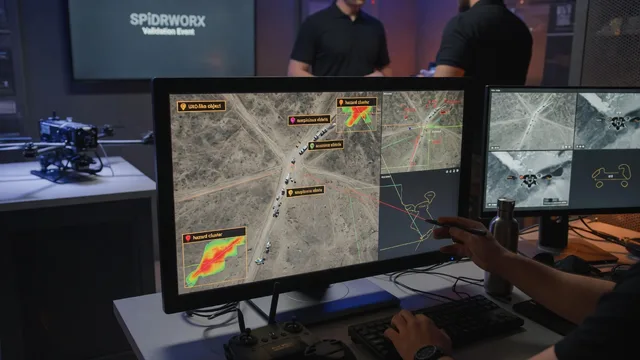
Dataminr’s First Alert Advanced platform supplies the core capability. It combines purpose-built large language models trained on historical event data with autonomous AI agents that scan publicly available information, gather corroborating signals, track event evolution, and generate user-specific context. The system also forecasts how events may develop over subsequent hours by referencing prior patterns. Additional agents assist users in refining watchlists, produce real-time briefs, support hyperlocal topic alerts, and enable historical searches through an advanced API.
A dedicated application on the Palantir Foundry Marketplace integrates First Alert outputs with government data layers already resident in Foundry. This connection supports agentic workflows that combine external open-source intelligence with internal records for contextual analysis and decision support. The overall arrangement positions the platform as a shared real-time alerting service for force protection and indications-and-warnings tasks across the department.
Why it matters
This article highlights a major US defense investment in AI-driven open-source intelligence (OSINT) and situational awareness. For Dutch and NATO defense professionals, it provides crucial insights into the operational deployment of specialized LLMs and autonomous agents in military intelligence, setting a benchmark for future European defense AI procurement.