Project Talon Portfolio puts mission autonomy at the center of future CCA operations
19:30 · August 17, 2026 · Breaking Defense
[Sponsored] Truly autonomous aircraft can make decisions without continuous human input.
Summary
Northrop Grumman’s Project Talon portfolio centers on mission autonomy that lets uncrewed aircraft perceive their environment, reason about mission goals, and execute actions without continuous human oversight. In an interview with Breaking Defense, vice president Craig Woolston described this capability as a shift from direct vehicle control to higher-level mission management, where operators set objectives and constraints while the system handles tactical execution and real-time adaptation. The approach draws on more than 500,000 autonomous flight hours accumulated across platforms such as Global Hawk and Triton, providing data that informs reliability and integration in contested airspace.
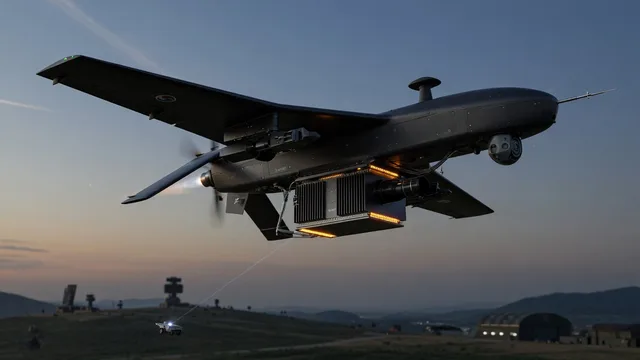
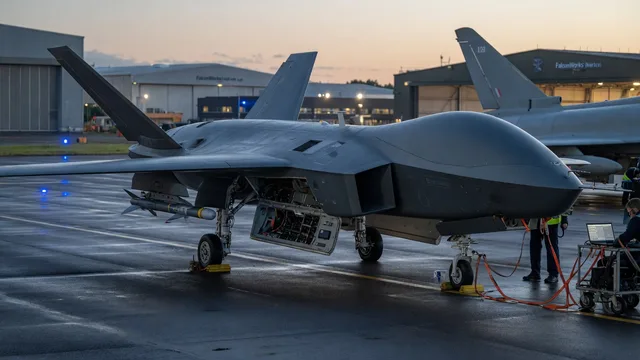
The portfolio combines three elements. Talon IQ serves as an open-architecture testbed built around the Model 437 aircraft, allowing multiple autonomy software stacks to be integrated, evaluated, and swapped in flight. Prism, Northrop Grumman’s own mission-autonomy software, has already flown on this airframe and demonstrated behaviors such as physical AI executing mission-critical tasks. Talon Blue is a self-funded collaborative combat aircraft demonstrator that starts from a fully autonomous baseline rather than a remotely piloted one, intended to validate independent mission execution, advanced sense-and-avoid, and human-autonomy teaming in realistic conditions.
Open architectures are presented as essential for interoperability across vendors and platforms, enabling software components to be reused and updated without hardware-specific redesigns. Woolston noted that this reduces development risk and supports the U.S. Air Force’s CCA marketplace goals. At the same time, he identified remaining engineering hurdles: standardizing interfaces and data models, certifying AI-driven behaviors for safety, maintaining resilient communications in contested electromagnetic environments, and building operator trust through transparent, explainable autonomy.
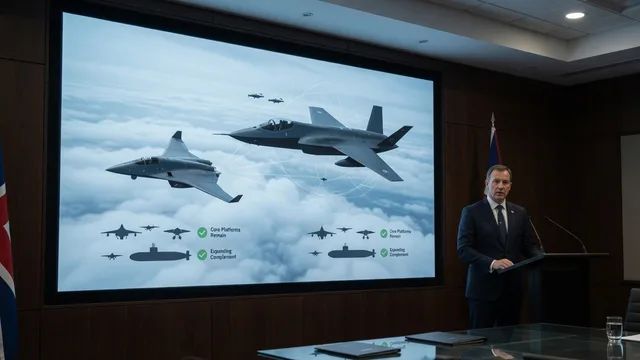
Taken together, the portfolio positions autonomy as a force multiplier that lets crewed assets focus on higher-level coordination while uncrewed platforms manage dynamic threats and separation tasks. The company argues that its accumulated flight experience allows new systems to reach operational readiness without first solving basic autonomous flight.
Why it matters
Directly addresses AI-driven autonomy technologies and open-architecture systems for collaborative combat aircraft with clear NATO/European defense applicability, including international market potential and interoperability standards relevant to Dutch defense technologists and industry.