From Assistive to Agentic: The AI Shift That's Redefining Threat Management
13:58 · June 19, 2026 · Hacker News AI Section

Introduction The average enterprise security team has 40 or more security tools, giving a lot of visibility into internal telemetry and asset data. But often, these tools are working in siloes, generating (overlapping) alerts and data. And yet, breach dwell times remain stubbornly long (~43 days), response windows keep closing before teams can act, and analysts burn out triaging noise instead
Summary
Enterprise security teams routinely contend with more than forty distinct tools whose outputs remain fragmented across silos. The resulting overlap in alerts and telemetry produces chronic noise, while breach dwell times hover around forty-three days and response windows close before coordinated action is possible. Analysts spend their time triaging redundant signals rather than containing threats, a pattern the article attributes not to insufficient effort but to an underlying architectural mismatch.
Legacy security programs were designed for slower-moving adversaries that permitted manual coordination. That assumption no longer holds as frontier AI models compress discovery-to-exploit timelines. Gartner’s Continuous Threat Exposure Management (CTEM) framework was introduced to replace episodic assessments with an iterative cycle of scoping, discovery, prioritization, validation, and mobilization. Yet most organizations cannot operationalize the full loop because the specialized tools—threat-intelligence platforms, vulnerability scanners, breach-and-attack simulation systems, and SIEMs—still exchange data only through manual handoffs.
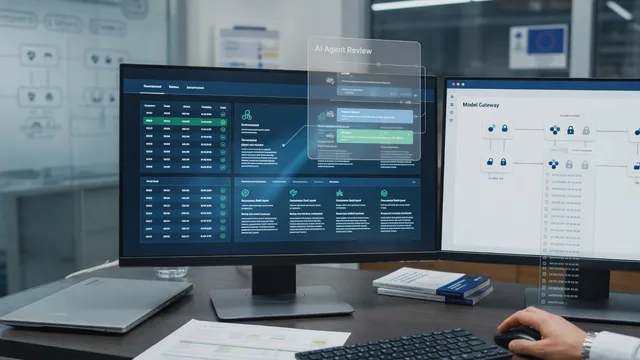
The article draws a sharp distinction between two classes of AI. Assistive systems respond to explicit queries by summarizing reports or retrieving information, thereby accelerating existing analyst workflows. Agentic systems, by contrast, maintain persistent context, set priorities autonomously, and execute multi-step processes across tools without waiting for human initiation. When these agentic capabilities are orchestrated through a dedicated contextual layer, the three core CTEM functions can operate as a closed loop: intelligence is continuously correlated with live exposure data, validation occurs at machine speed, and remediation priorities are surfaced while human analysts retain oversight for final decisions.
This shift converts CTEM from a strategic diagram into a continuously running operational model. Organizations that adopt such architectures first gain compounding advantages in data quality, analytical depth, and model tuning, because the agents themselves improve through sustained, context-rich operation rather than generic large-language-model prompts.
Why it matters
This article is highly relevant for security professionals as it addresses critical SOC challenges like alert fatigue and delayed incident response. The shift towards agentic AI offers actionable insights for Dutch enterprises looking to automate and enhance their threat detection and response capabilities within a complex security landscape.