AI News selected for Professionals and Decision Makers
Defense Artificial Intelligence

Securing the AI flank to provide trusted decision-making capabilities

14:24 · August 13, 2026 · Breaking Defense

Securing the AI flank to provide trusted decision-making capabilities

Explore how trustworthy AI, continuous cybersecurity, and secure digital supply chains can protect military AI systems and support trusted decision-making.

Summary

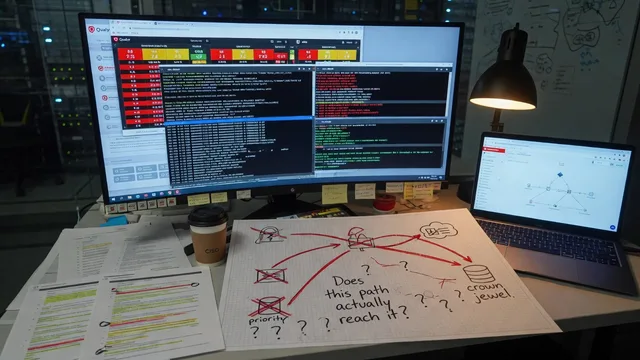
Trustworthy AI in military settings demands more than ethical guidelines. It requires systems that remain predictable, verifiable, explainable, and resilient when adversaries actively target them. Mandy Satterwhite, Managing Director and Cyber Lead at Accenture Federal Services, stresses that command-and-control tools must deliver recommendations grounded in traceable, untampered data. Without clear data provenance or an intelligible derivation path, operators cannot act on AI outputs when lives depend on the outcome.

Commercial foundation models introduce distinct supply-chain exposures. Fine-tuning a frontier model imports whatever poisoned training data or compromised weights it carries, and adversaries have already attempted direct manipulation of model files. Satterwhite notes that oversized general-purpose models are often unnecessary for specialized defense tasks. Instead, organizations should right-size models to mission requirements and audit every component—from source data through weights—before integration into secure environments.

Traditional periodic penetration testing no longer matches the pace of AI-specific threats such as prompt injection or weight tampering. Continuous, automated validation embedded in CI/CD pipelines is required, with AI-driven red-teaming running alongside development. For national-security systems, real-time checks against controls expressed in NIST’s OSCAL language help ensure designs remain secure by construction rather than through late-stage remediation.

Security integrated from the outset accelerates rather than impedes deployment. When validation occurs throughout the build process, late redesigns are avoided and accreditation proceeds more rapidly. At the same time, human authority is preserved through explicit architectural guardrails, OODA-loop checkpoints, and kill switches. AI can surface verified courses of action from sensor data, yet a human operator evaluates those options at defined decision points before any action is authorized.

Why it matters

Directly addresses AI security, adversarial resilience, and supply-chain integrity for defense applications, highly relevant to Dutch and NATO defense professionals focused on ethical, secure AI deployment.

More in this beat
accenturedata-provenanceexplainable-aimilitary-ainistOSCALprompt-injectionred-teaming
Auto mode is now the default in Claude Code for Pro, Max, and Team plans

02:00 · August 7, 2026

Auto mode is now the default in Claude Code for Pro, Max, and Team plans

Provides actionable implementation details, safety data, and configuration steps for an AI coding tool update directly usable by product teams and builders. Addresses workflow automation, risk mitigation, and observability in long-running AI tasks with specific model references.

Relevance 85 · Audience 90

New Cryptographic Context Injection Attack Could Let Web Pages Steal Grok Chat Data

16:36 · August 20, 2026

New Cryptographic Context Injection Attack Could Let Web Pages Steal Grok Chat Data

This article highlights a critical data exfiltration vulnerability in LLMs via context injection, which is highly relevant for security professionals defending AI systems. Understanding this attack vector is essential for Dutch enterprises to ensure GDPR compliance and protect user privacy when deploying AI chatbots.

Relevance 85 · Audience 95

New White House strategy clarifies military tech priorities: undersea, outer space and AI

13:55 · August 20, 2026

New White House strategy clarifies military tech priorities: undersea, outer space and AI

This article is highly relevant for defense strategists and technologists as it outlines the US military's top technology priorities, heavily featuring AI and autonomy. Understanding these priorities is crucial for European and Dutch defense professionals to ensure NATO interoperability, guide local R&D investments, and anticipate future defense market demands.

Relevance 80 · Audience 90

FraudBench: Stress-Testing Policy-Grounded Banking Agents Against Adaptive Fraud

06:00 · August 20, 2026

FraudBench: Stress-Testing Policy-Grounded Banking Agents Against Adaptive Fraud

This research is highly relevant for Dutch AI researchers and the strong local fintech and banking sector exploring customer-facing LLM agents. It provides a rigorous, reproducible framework to test agent compliance and security against fraud, aligning with strict EU financial and AI regulations.

Relevance 85 · Audience 95

SOCOM planning to test new mission autonomy software for unmanned systems program

20:42 · August 18, 2026

SOCOM planning to test new mission autonomy software for unmanned systems program

This article is highly relevant as it highlights cutting-edge requirements for decentralized mission autonomy and drone interoperability in contested environments. Dutch and NATO defense technologists, strategists, and AI engineers can leverage these insights to align local R&D with US/NATO interoperability standards and open-architecture trends.

Relevance 85 · Audience 90

How US military funding propelled China’s robot dogs

18:01 · August 18, 2026

How US military funding propelled China’s robot dogs

Directly addresses military and dual-use quadruped robots, US-China technology competition, and supply-chain vulnerabilities that affect NATO defense planners, AI engineers, and Dutch defense industry stakeholders focused on autonomous systems.

Relevance 82 · Audience 88