KAI installs domestic AI chip on drones to drive South Korea defense AI
09:00 · July 31, 2026 · RSS APP - Defense Artificial Intelligence
KAI installs domestic AI chip on drones to drive South Korea defense AI
Summary
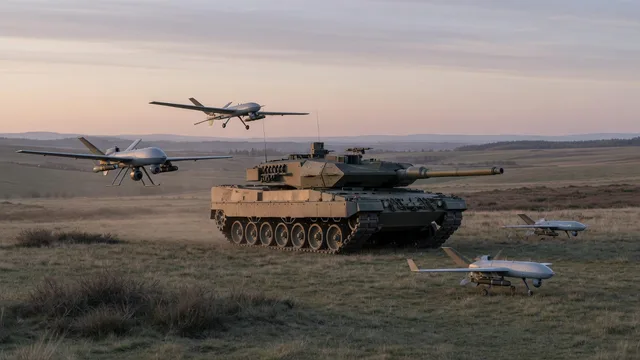
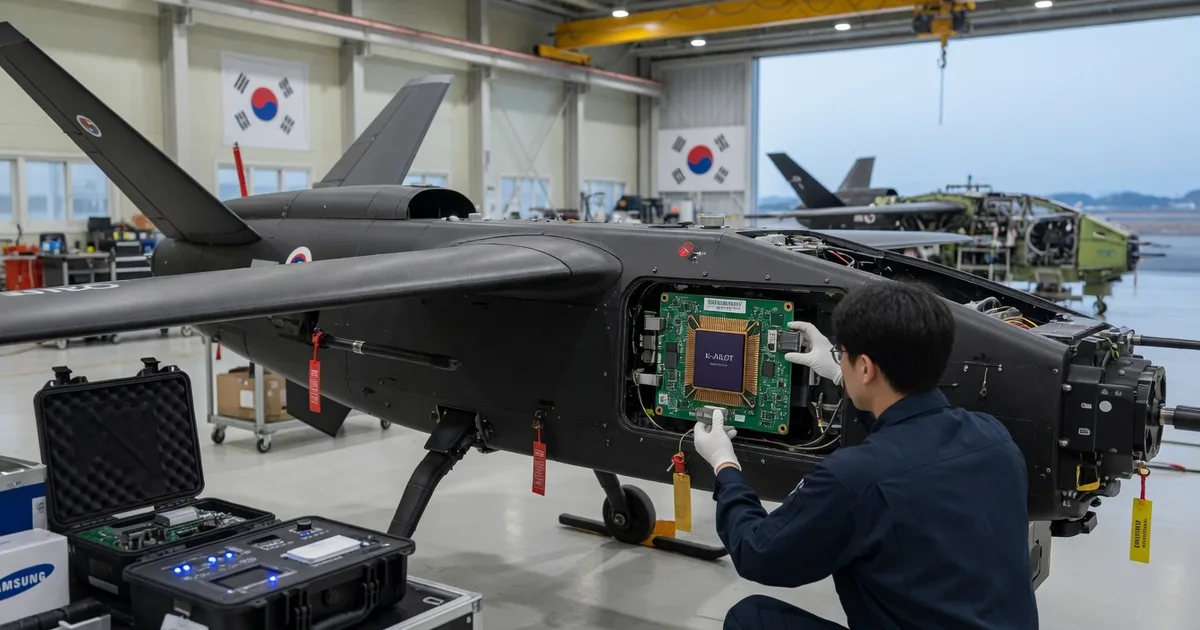
Korea Aerospace Industries (KAI) has been chosen to lead a five-year, 95.3 billion won defense project that will place a domestically designed AI semiconductor on an unmanned aircraft for the first time. The effort, funded by the Ministry of Trade, Industry and Resources, focuses on an on-device AI system capable of processing sensor data locally and executing autonomous flight decisions without continuous ground-station support. KAI will oversee overall integration and verification while developing a high-speed expendable aerial platform and its autonomous control system.
Samsung Electronics will handle semiconductor fabrication, and a consortium of Korean fabless design houses and AI-model developers will supply the system-on-chip architecture and supporting software. The resulting hardware is intended for KAI’s in-house “K-AILOT” AI pilot, which must interpret large volumes of battlefield data in real time to maintain flight stability and mission execution. Because the semiconductor operates directly on the platform, the approach reduces latency and dependence on overseas components that have historically dominated defense electronics.
The same technology is slated for extension to reconnaissance satellites, enabling on-board analysis of imagery before transmission. This step would link manned and unmanned aircraft, orbital assets, and ground units through a domestic AI and communications backbone, forming the basis of an “ultra-connected battlefield.” Project participants expect the work to accelerate localization of defense semiconductors and open a new application domain for Korean AI chip and model suppliers.
Why it matters
This article highlights significant advancements in edge AI and autonomous military systems by South Korea, a major global defense player. Dutch and European defense technologists and strategists should monitor these developments to benchmark domestic capabilities in AI semiconductors and unmanned aerial systems.