AI News selected for Professionals and Decision Makers
Primary Research Stream

Multi-Agent Scheduling with LLM-Assisted Contract Net Negotiation for Stream Processing in Mobile Edge Computing

06:00 · August 15, 2026 · arXiv cs.AI RSS

Multi-Agent Scheduling with LLM-Assisted Contract Net Negotiation for Stream Processing in Mobile Edge Computing

Stream-processing systems increasingly operate across heterogeneous mobile edge--cloud infrastructures, where workload volatility, resource contention, and stringent quality-of-service (QoS) requirements complicate decentralized scheduling. This paper proposes \emph{MAS-DecStream}, whose main contribution is \emph{LLM-MR-CNP}: an extension of the classical Contract Net Protocol with semantic CFP formulation, progressive context disclosure, multi-round proposal revision, negotiation memory, and deterministic validation. Edge-cluster agents refine natural-language offloading proposals from local observations, predicted resource states, and qualitative runtime context, while hard resource and QoS constraints remain deterministic. Experiments derived from the Alibaba ASI Trace evaluate the extension at three levels: single- versus multi-round CNP, rule-based versus LLM-assisted refinement, and fixed-model single- versus multi-round negotiation. Under the evaluated configurations, MAS-DecStream reduces latency violations to 3\%, eliminates resource overcommitment, reaches a conflict-resolution rate of 0.91 with 20 agents, and improves utility by up to 22\% over the multi-round rule-based baseline. A separate 25-case evaluation shows model- and prompt-dependent accuracy--cost trade-offs. The results provide initial evidence that multi-round CNP refinement is the principal protocol-level gain, with LLM assistance adding value for qualitative and uncertain runtime context.

Summary

Stream-processing applications for domains such as smart cities and industrial IoT now run across heterogeneous mobile edge–cloud infrastructures, where rapid workload changes, partial system visibility, and strict quality-of-service constraints make centralized scheduling impractical. Independent local decisions frequently produce resource contention and latency violations that cannot be foreseen from any single cluster’s observations. MAS-DecStream addresses this setting through a decentralized multi-agent architecture in which each edge-cluster agent negotiates task offloading with its neighbors.

The core contribution is LLM-MR-CNP, an extension of the classical Contract Net Protocol. It augments the protocol with semantic call-for-proposals generation, progressive disclosure of workload and QoS context, multi-round proposal revision supported by negotiation memory, and a hybrid validation layer that keeps hard resource and deadline constraints under deterministic control while allowing large language models to interpret qualitative runtime information. Agents therefore refine natural-language offers across rounds before a final allocation is committed, rather than committing after a single announcement–award cycle.

Evaluation on traces derived from the Alibaba ASI dataset compares single-round versus multi-round negotiation, rule-based versus LLM-assisted refinement, and different model–prompt combinations. Under the tested conditions the approach lowers latency violations to 3 percent, removes resource overcommitment entirely, achieves a conflict-resolution rate of 0.91 among 20 agents, and improves overall utility by as much as 22 percent relative to a multi-round rule-based baseline. Separate experiments indicate that multi-round refinement accounts for most of the protocol-level gain, while LLM assistance contributes additional value when qualitative or uncertain context must be interpreted. The authors release the implementation, prompts, and evaluation data to support replication.

Why it matters

High technical depth and novelty in LLM-assisted multi-agent coordination directly applicable to Dutch edge-computing and IoT research; supports ethical, decentralized AI deployment relevant to EU contexts and SME adoption.


More in this beat
Contract Net Protocoledge-devicesindustrial-iotllm-agentsMAS-DecStreammobile edge computingmulti-agent-systems
Self-Evolving Agents as Dynamic Graph Transformation: A Survey and New Perspective

06:00 · August 20, 2026

Self-Evolving Agents as Dynamic Graph Transformation: A Survey and New Perspective

The paper provides foundational research on making autonomous AI agents auditable, safe, and transparent through dynamic graph modeling. This aligns strongly with the Dutch and EU focus on ethical AI and regulatory compliance, offering advanced researchers actionable frameworks for building governable agentic systems.

Relevance 85 · Audience 95

Dynamic Governance of Multi-LLM Agent Systems for Collaborative Conversational Outcomes

06:00 · August 13, 2026

Dynamic Governance of Multi-LLM Agent Systems for Collaborative Conversational Outcomes

This research is highly relevant for Dutch AI researchers and enterprise practitioners, particularly in the financial and customer service sectors, as it offers a novel, mathematically grounded framework for governing autonomous LLM agents. Its focus on external control mechanisms aligns well with EU regulatory demands for predictable and transparent AI behavior.

Relevance 85 · Audience 95

Poor Man's Agentic Modeling: Simulating Large LLM-Agent Societies on a Laptop

06:00 · August 13, 2026

Poor Man's Agentic Modeling: Simulating Large LLM-Agent Societies on a Laptop

This research is highly relevant for Dutch AI researchers and SMEs, offering a mathematically rigorous and computationally cheap way to simulate and study multi-agent systems. It aligns with the Netherlands' focus on accessible, efficient, and transparent AI methodologies.

Relevance 85 · Audience 95

Even More Deception: Objective Misalignment in Mixed-Motive LLM Multi-Agent Systems

06:00 · July 30, 2026

Even More Deception: Objective Misalignment in Mixed-Motive LLM Multi-Agent Systems

This research is highly relevant for Dutch AI researchers focused on AI safety, ethics, and alignment, which are key priorities in the Netherlands and the broader EU regulatory landscape. Understanding and mitigating deceptive behaviors in multi-agent systems is crucial for developing trustworthy AI applications.

Relevance 85 · Audience 95

Beyond Memory: A Templated Substrate for Heterogeneous Collaborative Knowledge Work with LLM Agents

06:00 · July 29, 2026

Beyond Memory: A Templated Substrate for Heterogeneous Collaborative Knowledge Work with LLM Agents

This research is highly relevant for Dutch AI researchers and engineering teams as it provides an actionable, open-source framework for improving LLM agent collaboration and memory. Its emphasis on transparent provenance, agent honesty, and preserving failure paths strongly aligns with the Netherlands' strategic focus on ethical and accountable AI development.

Relevance 85 · Audience 95

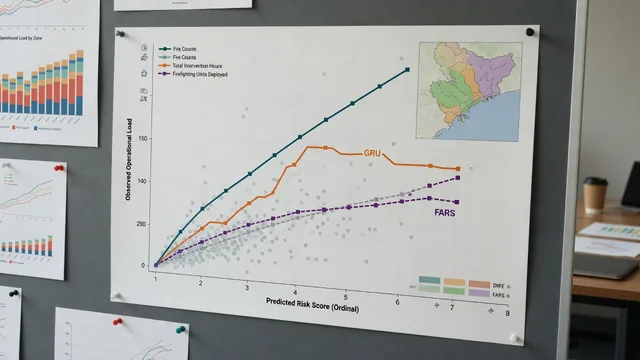
Risk Is Not the Target: A Monotonic Framework for Evaluating Wildfire Operational Risk Signals

06:00 · July 27, 2026

Risk Is Not the Target: A Monotonic Framework for Evaluating Wildfire Operational Risk Signals

This research is highly relevant for Dutch AI researchers focusing on operational risk, climate adaptation, and emergency response. The proposed monotonic evaluation framework and the insights into hybrid LLM-predictive architectures can be directly adapted to other risk domains critical to the Netherlands, such as flood management and infrastructure monitoring.

Relevance 75 · Audience 95

How Far Can Root Cause Analysis Go on Real-World Telemetry Data?

06:00 · July 16, 2026

How Far Can Root Cause Analysis Go on Real-World Telemetry Data?

This research is highly relevant for AI researchers and AIOps practitioners in the Netherlands managing complex cloud-native environments. It provides actionable insights into improving LLM-based multi-agent systems for automated diagnostics, a critical area for Dutch tech enterprises and infrastructure providers.

Relevance 85 · Audience 95