AI News selected for Professionals and Decision Makers
Hands On Model Tooling And Research Updates

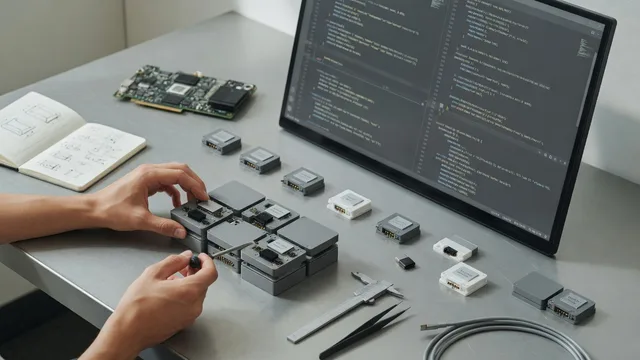
LFM2.5-VL-3B for Better and Faster Vision Capabilities for the Edge

16:00 · August 12, 2026 · Hugging Face Blog
LFM2.5-VL-3B for Better and Faster Vision Capabilities for the Edge

Summary

LFM2.5-VL-3B is a 3-billion-parameter vision-language model that pairs a SigLIP2 400M NaFlex vision encoder with the pre-trained backbone of the earlier LFM2.5-2.6B text model. Pre-training consumed roughly 34 trillion tokens and incorporated four times more vision data than prior releases, drawn from curated and synthetic sources covering image captioning, OCR, grounding, and instruction following. The tokenizer vocabulary was extended in place to 128K tokens to improve support for non-Latin scripts without full retraining.

Post-training proceeds in two stages. Supervised fine-tuning incorporates knowledge distillation from a larger teacher model together with Antidoom training, followed by multi-reward reinforcement learning. The resulting model is evaluated on both vision and text benchmarks, including multilingual visual comprehension, document and chart understanding, object grounding, multi-image reasoning, screen navigation, instruction following, and tool use. It leads comparable models on real-world image tasks and matches Gemma-4-E2B and Qwen3.5-2B on tool-calling performance.

Inference measurements show practical deployment characteristics. On-device throughput reaches 228 tokens per second on an M5 Max, 116 tokens per second on a Ryzen AI Max+ 395, and 20 tokens per second on a Galaxy S26 Ultra, with a memory footprint of approximately 3 GB. On an H100, the model sustains roughly 11K output tokens per second under high concurrency, roughly twice the rate of larger 4B-class models and sufficient to produce nearly one billion tokens per day on a single accelerator while maintaining low latency on multi-frame inputs.

Day-one integration is provided for llama.cpp, MLX, vLLM, SGLang, and ONNX, with example code available for multi-image, grounding, OCR, and tool-calling workflows. The model weights are released on Hugging Face.

Why it matters

Directly supplies ML Engineers with architectural details, quantitative benchmarks, latency/memory numbers, and runnable code for deploying efficient VLMs in production or on-device settings.
More in this beat
edge-deviceshugging-faceknowledge-distillationlfm2-5-2-6bLFM2.5-VL-3Bocrvision-language-modelsvllm
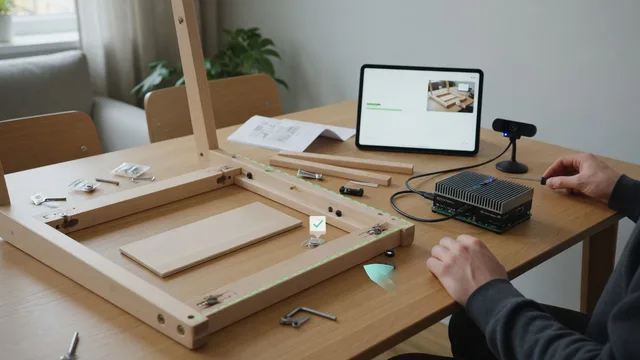
Deploy local agents everywhere with LFM2.5-2.6B

15:58 · August 4, 2026

Deploy local agents everywhere with LFM2.5-2.6B

Strong focus on production inference constraints, latency, token throughput, and agent tooling directly addresses ML Engineer needs for efficient local deployment. Benchmarks and ecosystem support offer actionable data for Dutch teams building privacy-preserving on-device AI solutions aligned with EU priorities.

Relevance 78 · Audience 85

Up to 3.2x Faster Inference with LFM2.5-DSpark

18:52 · August 20, 2026

Up to 3.2x Faster Inference with LFM2.5-DSpark

Directly addresses production inference challenges like memory-bound decode latency and GPU/edge deployment for ML Engineers, with quantitative benchmarks and open implementations applicable in Dutch AI workflows.

Relevance 85 · Audience 90

Meta is back with Muse Glimmer: local, agentic, multimodal, and open source

02:00 · August 10, 2026

Meta is back with Muse Glimmer: local, agentic, multimodal, and open source

Directly actionable for ML Engineers: concrete architecture specs, latency/memory trade-offs via speculative decoding, cross-vendor GPU support, fine-tuning recipes, and MLOps patterns that Dutch teams can apply immediately to local/agentic multimodal systems.

Relevance 85 · Audience 90

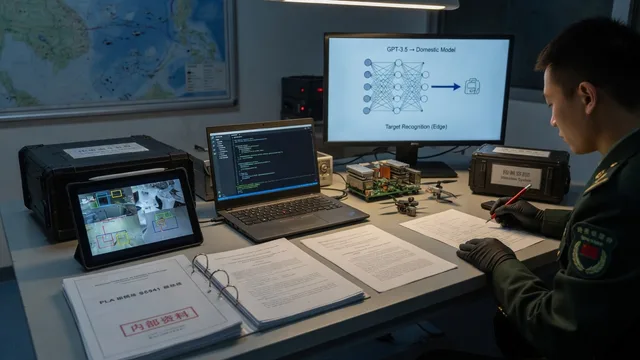
Chinese military researchers tap US AI models to train defense systems

14:34 · July 31, 2026

Chinese military researchers tap US AI models to train defense systems

Directly addresses military AI applications, dual-use model distillation, and NATO-relevant export control challenges, providing actionable insights for defense technologists and strategists on adversary capabilities and technology transfer risks.

Relevance 85 · Audience 90

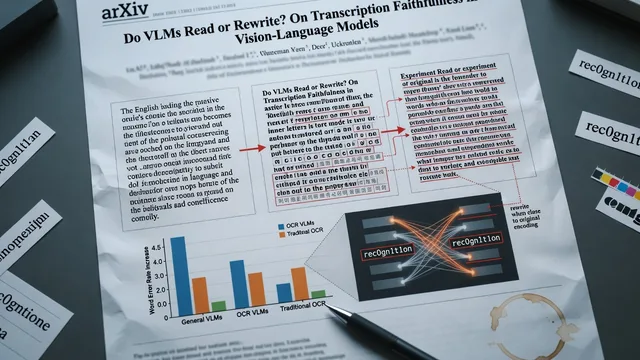
Do VLMs Read or Rewrite? On Transcription Faithfulness in Vision-Language Models

06:00 · July 27, 2026

Do VLMs Read or Rewrite? On Transcription Faithfulness in Vision-Language Models

This research is highly relevant for Dutch AI researchers and enterprises deploying VLMs for document understanding, particularly in sectors requiring strict transcription accuracy like legal, medical, and government digitization. It provides actionable insights into VLM hallucination mechanisms, aligning with EU AI Act requirements for model reliability and transparency.

Relevance 85 · Audience 95

LeRobot v0.6.0: Imagine, Evaluate, Improve

02:00 · July 7, 2026

LeRobot v0.6.0: Imagine, Evaluate, Improve

Directly actionable tooling and research updates for ML engineers working on robotics policies, benchmarks, and deployment pipelines; addresses production constraints like GPU memory, latency via Real-Time Chunking, and human-in-the-loop data collection.

Relevance 75 · Audience 85

Run a vLLM Server on HF Jobs in One Command

02:00 · June 26, 2026

Run a vLLM Server on HF Jobs in One Command

Directly actionable for ML engineers needing quick, production-adjacent model serving setups with explicit handling of VRAM constraints, distributed GPU configs, and pay-per-second costs; relevant for Dutch teams using HF tooling.

Relevance 72 · Audience 88

Beyond LoRA: Can you beat the most popular fine-tuning technique?

02:00 · June 18, 2026

Beyond LoRA: Can you beat the most popular fine-tuning technique?

Directly addresses ML Engineers' needs for parameter-efficient fine-tuning with concrete benchmarks on accuracy-vs-memory trade-offs, VRAM constraints, and MLOps considerations that Dutch teams can apply immediately via the open-source PEFT library.

Relevance 85 · Audience 90

GLM-5.2: Built for Long-Horizon Tasks

11:01 · June 17, 2026

GLM-5.2: Built for Long-Horizon Tasks

Provides concrete architectural details, ablation studies, production inference challenges, and benchmark comparisons directly usable by ML engineers deploying or fine-tuning long-context agents.

Relevance 85 · Audience 90