Record, train, and deploy from one place with Strands Agents, LeRobot, and Hugging Face Storage Buckets
19:16 · August 13, 2026 · Hugging Face Blog
Summary
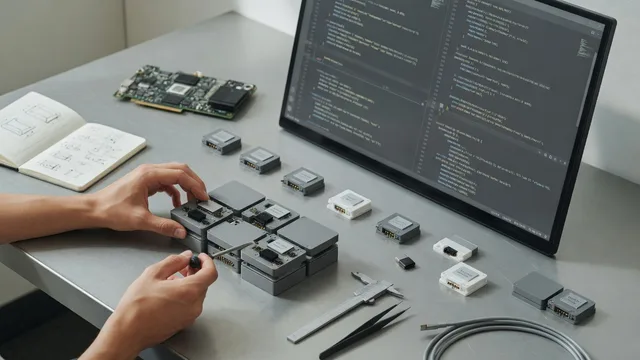
The workflow centers on a closed data loop that lets a single Strands Robots agent collect demonstrations, store them efficiently, train policies, and redeploy updated models without repeated full transfers. Strands Robots, an AWS open-source SDK, exposes robot abstractions and the LeRobot stack as composable AgentTools. It supports both simulated and physical arms such as the SO-101, writing data in the standard LeRobot format already used by tens of thousands of datasets on the Hugging Face Hub.
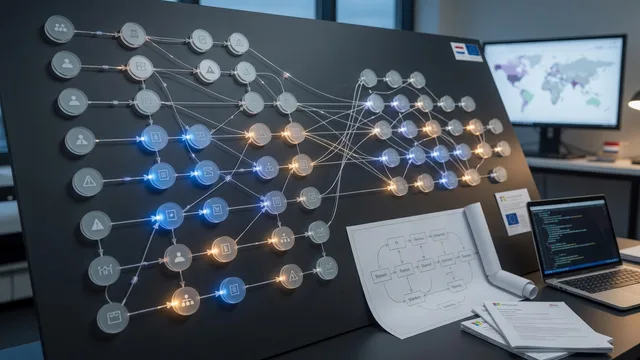
Recordings are first written to disk and then synced into a Hugging Face Storage Bucket, a mutable Xet-backed repository that lives in the same hf:// namespace as ordinary datasets. Xet performs content-defined chunking, so only the byte ranges that actually change are uploaded on subsequent syncs. This approach avoids the cost of re-transferring unchanged video and Parquet shards when new episodes are appended throughout the day.
For training, the same bucket serves as the source. Instead of copying the full dataset to local disk, LeRobot’s StreamingLeRobotDataset reads batches directly over byte-range requests. Only the small metadata folder is materialized locally; camera frames are decoded on the fly from remote MP4 shards. The resulting iterable can be passed to a standard PyTorch DataLoader or to LeRobot’s own trainer, eliminating GPU idle time that would otherwise occur while waiting for a complete download.
Once training finishes, the checkpoint is loaded back into the original Robot() object with a single mode switch from simulation to real hardware. Demonstrations collected by the updated policy return to the same bucket, restarting the cycle. The entire loop therefore runs inside one agent process, keeps data movement to the deduplicated delta, and maintains compatibility with any existing LeRobot tooling.
Why it matters
This article is highly relevant for ML Engineers as it provides a hands-on, production-ready MLOps pipeline for robotics and edge AI. It tackles concrete implementation challenges like GPU memory optimization, data transfer deduplication, and explicitly mentions EU data residency options which are crucial for Dutch enterprises.