AI News selected for Professionals and Decision Makers
Hands On Model Tooling And Research Updates

LeRobot v0.6.0: Imagine, Evaluate, Improve

02:00 · July 7, 2026 · Hugging Face Blog
LeRobot v0.6.0: Imagine, Evaluate, Improve

Summary

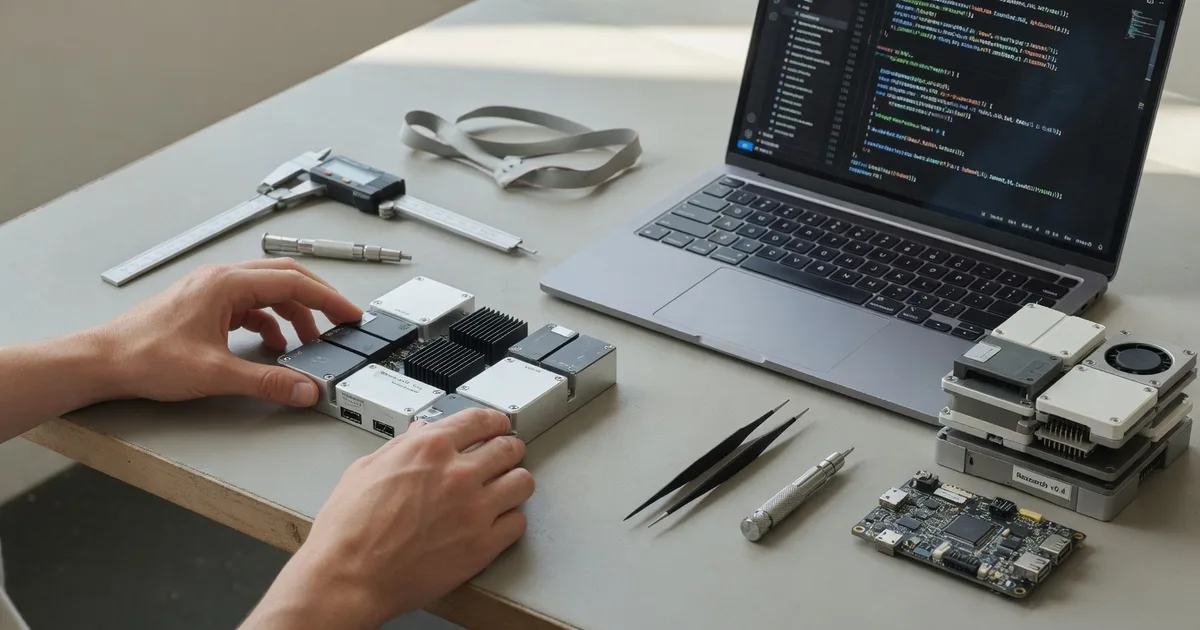
LeRobot v0.6.0 expands the open-source robotics toolkit with three world-model policies that incorporate future prediction during training. VLA-JEPA trains a compact Qwen3-VL-2B vision-language-action model to anticipate latent frames from its own actions, discarding the world-model component at inference so supervision adds no runtime overhead. LingBot-VA extends this idea into an autoregressive video-action model that generates future frames and actions in chunks while feeding real observations back for grounding, with optional video saving for inspection on a single 24–32 GB GPU. FastWAM pairs a large video-generation expert with a compact action expert inside one network, allowing the model to learn from its own imagined rollouts yet dropping the dreaming step entirely at deployment.

The release also integrates five additional VLAs. GR00T N1.7 updates the NVIDIA cross-embodiment model with a Cosmos-Reason2-2B backbone and flow-matching action head, maintaining parity with the original Isaac-GR00T implementation while making flash-attention optional. MolmoAct2, EO-1, EVO1, and the Multitask Diffusion Transformer each arrive with documented fine-tuning paths, checkpoint availability, and hardware footprints ranging from roughly 12 GB for inference to single 24 GB GPUs for LoRA adaptation.

A new unified reward-models interface adds Robometer, a 4B-parameter model pretrained on over a million trajectories to score progress and success from video and language, and TOPReward, a zero-shot wrapper that uses token log-probabilities from any capable VLM. Both integrate with labeling scripts that embed per-frame annotations directly into datasets for reward-aware training or quality checks.

Dataset handling gains depth-map support for RealSense cameras, stored as compact 12-bit streams and decoded to metric units at training time, plus an automatic VLM annotation pipeline that populates timestamped language labels, subtasks, and per-camera VQA pairs. Video encoding is now fully configurable, and data loading achieves up to 2× speedups through parallel multi-camera decoding, reduced inter-process memory, and persistent worker caches.

Evaluation consolidates six new simulation environments under a single lerobot-eval CLI alongside existing suites, each accompanied by Docker images and baseline checkpoints. Deployment shifts to a dedicated lerobot-rollout command that supports DAgger-style human corrections, continuous recording, and episode highlighting. Training adds FSDP sharding across GPUs with resumable single-file checkpoints and direct submission to Hugging Face Jobs for cloud execution on pay-as-you-go instances.

Why it matters

Directly actionable tooling and research updates for ML engineers working on robotics policies, benchmarks, and deployment pipelines; addresses production constraints like GPU memory, latency via Real-Time Chunking, and human-in-the-loop data collection.
More in this beat
embodied-agentsGR00Thugging-facelerobotnvidiaroboticsvision-language-modelsworld-models
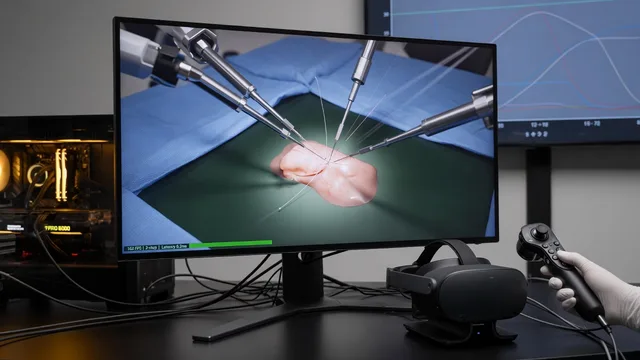
NVIDIA Cosmos-H-Dreams: Bringing Real-Time Generative Simulation to Surgical Robotics

11:32 · July 27, 2026

NVIDIA Cosmos-H-Dreams: Bringing Real-Time Generative Simulation to Surgical Robotics

Provides concrete implementation details on distillation, autoregressive rollout stability, few-step diffusion, and low-latency serving that directly address production constraints for ML engineers. Includes actionable training recipes and quantitative performance gains applicable to Dutch teams working on generative models or robotics.

Relevance 78 · Audience 85

Introducing Cosmos 3 Edge

17:58 · July 20, 2026

Introducing Cosmos 3 Edge

This article provides ML Engineers with actionable, open-source tooling and checkpoints for deploying state-of-the-art vision-language and world models on edge hardware. It directly addresses implementation challenges like memory constraints and real-time latency, which are highly applicable to the strong Dutch logistics, agriculture, and smart infrastructure sectors.

Relevance 85 · Audience 95

iFLYTEK-Embodied-Omni Technical Report

06:00 · July 7, 2026

iFLYTEK-Embodied-Omni Technical Report

This technical report is highly relevant for AI researchers and robotics engineers in the Netherlands, offering a novel, unified architecture for embodied AI that overcomes the limitations of cascaded pipelines. It provides advanced methodologies for integrating multimodal inputs into actionable robotic controls, directly applicable to Dutch R&D in autonomous systems.

Relevance 75 · Audience 90

Into the Omniverse: How Open World Models Push the Frontier of Physical AI

15:00 · August 6, 2026

Into the Omniverse: How Open World Models Push the Frontier of Physical AI

The release of open-weight physical AI models by a major player like NVIDIA significantly lowers the barrier to entry for developing advanced robotics and autonomous systems. This is highly relevant for the Dutch market, which features strong logistics, agriculture, and high-tech manufacturing sectors that can leverage these transparent, open-source tools for innovation.

Relevance 75 · Audience 70

The State of Simulation for Physical AI: An Overview

22:00 · July 21, 2026

The State of Simulation for Physical AI: An Overview

It offers ML Engineers a critical evaluation of modern simulation tools required for training physical AI and reinforcement learning models. Given the strong Dutch focus on robotics in agriculture, logistics, and high-tech manufacturing, understanding these GPU-accelerated simulation stacks is essential for local AI practitioners.

Relevance 85 · Audience 90

Grabette: an open system to record robot-manipulation data

02:00 · July 21, 2026

Grabette: an open system to record robot-manipulation data

Grabette addresses the significant data bottleneck in robot learning by providing ML engineers with an accessible, open-source data collection pipeline. Dutch AI practitioners and robotics SMEs can leverage this low-cost hardware to rapidly build datasets and train manipulation models without investing in expensive teleoperation rigs.

Relevance 65 · Audience 70

At SIGGRAPH, NVIDIA Advances Graphics and Simulation With Agentic and Physical AI

17:00 · July 20, 2026

At SIGGRAPH, NVIDIA Advances Graphics and Simulation With Agentic and Physical AI

The article showcases significant AI breakthroughs in creative workflows, robotics, and media verification. The Synthetic Video Detector is highly relevant to the Dutch market's focus on ethical and transparent AI, while the accessible agentic AI tools support the high rate of AI adoption among Dutch SMEs.

Relevance 85 · Audience 80

Hugging Face and Cerebras bring Gemma 4 to real-time voice AI

02:00 · July 1, 2026

Hugging Face and Cerebras bring Gemma 4 to real-time voice AI

This article is highly relevant for ML Engineers as it provides a practical, open-source architecture for solving critical latency bottlenecks in real-time voice AI. Dutch AI teams can directly implement this modular stack using the provided repositories to build responsive conversational agents and embodied AI solutions.

Relevance 80 · Audience 90