AI News selected for Professionals and Decision Makers
Defense Artificial Intelligence

Chinese military used OpenAI, Anthropic AI outputs to train their defence systems: Report

12:03 · July 31, 2026 · RSS APP - Defense Artificial Intelligence
Chinese military used OpenAI, Anthropic AI outputs to train their defence systems: Report

International News: Chinese military researchers have used outputs from leading US artificial intelligence models developed by OpenAI and Anthropic to train domestic AI s.

Summary

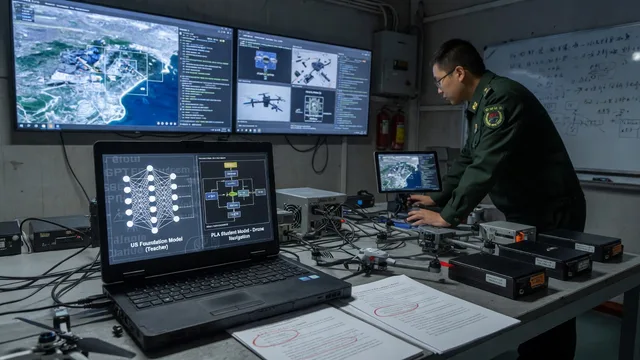
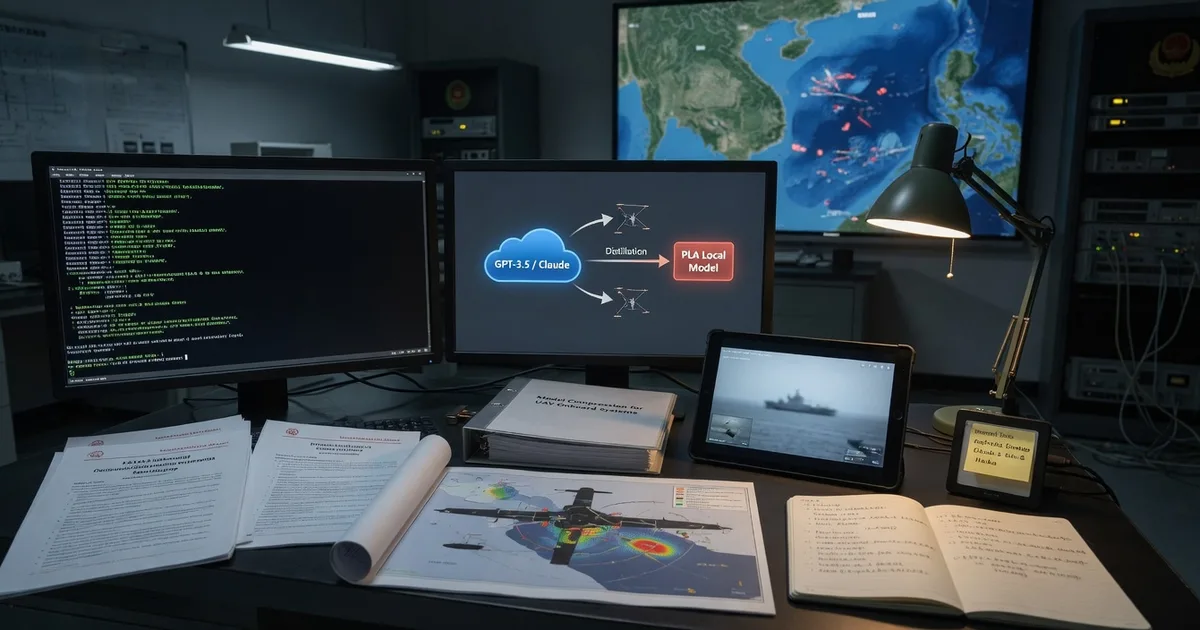
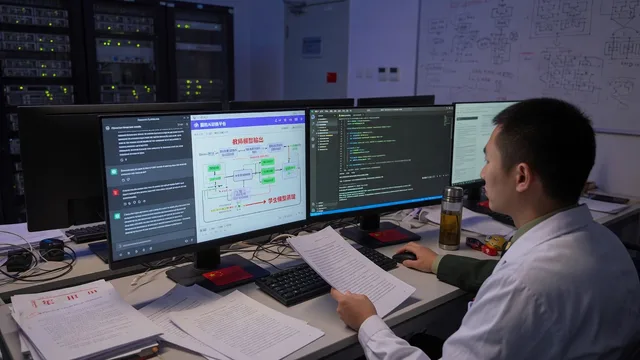
Chinese military researchers affiliated with the People’s Liberation Army have drawn on outputs from OpenAI and Anthropic models to build smaller, specialised domestic systems through model distillation. Reuters examined more than eighty academic papers and patents, supplemented by material from the Jamestown Foundation, and found repeated use of this technique to transfer capabilities from frontier models into systems that can run on constrained hardware without relying on restricted high-end chips.

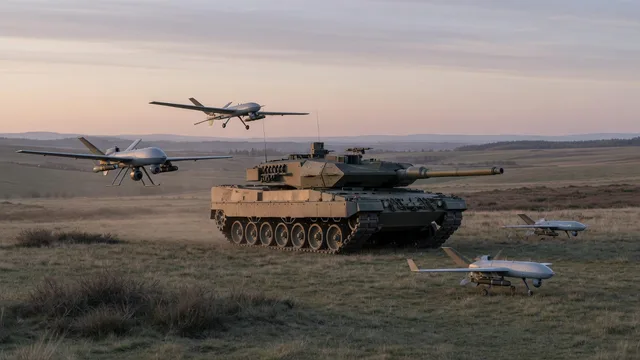
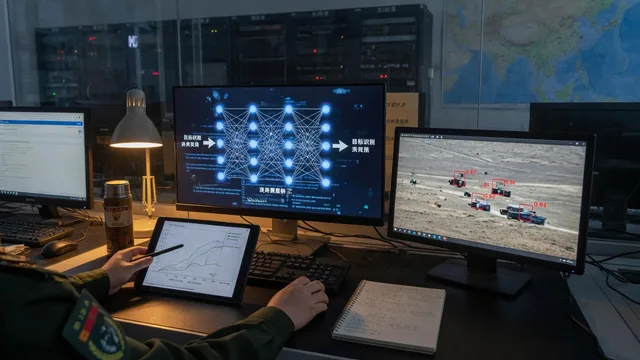
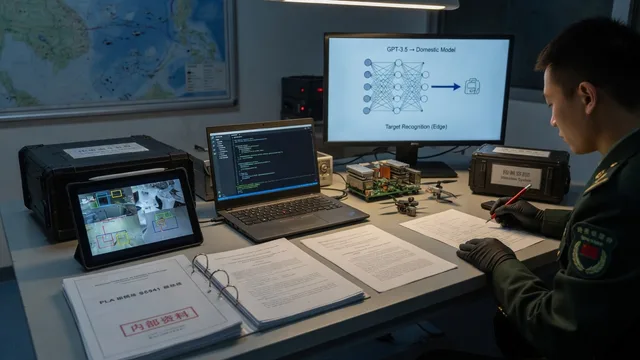
The papers describe distillation as a way to capture not only answers but also the underlying reasoning processes. One study from PLA Unit 96941 used GPT-3.5 to summarise sensitive military software code, then trained a local model on those summaries so the final system could operate entirely inside Chinese networks. Researchers at the PLA National University of Defense Technology applied similar methods to compress an image-processing model for unmanned aerial vehicles, enabling onboard video analysis for navigation and targeting when communications are lost. At the Academy of Military Sciences, distillation supported target-recognition models deployed on tactical hardware during simulated maritime operations involving drones, surface vessels and unmanned submarines.

Additional work at the North University of China used Claude 3 Haiku to generate synthetic data for social-media monitoring and content-moderation systems. Across these cases, distillation is presented as a practical response to US export controls on advanced semiconductors, allowing edge deployment on drones, satellites and other low-power platforms. At the same time, some Chinese researchers have begun studying distillation itself as a potential security risk, examining methods such as data-free distillation that could expose model behaviour through public outputs.

The findings coincide with separate allegations that large-scale queries were used to extract capabilities from Anthropic’s Claude models, underscoring ongoing concerns over unauthorised transfer of proprietary reasoning into systems beyond the original providers’ control.

Why it matters

Directly addresses military AI development, dual-use distillation techniques, and export-control circumvention relevant to NATO defense professionals tracking adversary capabilities and IP risks.
More in this beat
anthropicexport-controlsfrontier-modelsknowledge-distillationmilitary-aiopenaipeoples-liberation-army
Chinese military researchers tap US AI models to train defense systems

14:34 · July 31, 2026

Chinese military researchers tap US AI models to train defense systems

Directly addresses military AI applications, dual-use model distillation, and NATO-relevant export control challenges, providing actionable insights for defense technologists and strategists on adversary capabilities and technology transfer risks.

Relevance 85 · Audience 90

Chinese military researchers tap U.S. AI models to train defense systems

18:00 · July 31, 2026

Chinese military researchers tap U.S. AI models to train defense systems

This article is crucial for defense strategists and technologists as it demonstrates how adversaries leverage commercial Western AI models to accelerate their military capabilities through model distillation. It directly impacts NATO threat assessments, export control policies, and doctrine development regarding dual-use AI.

Relevance 85 · Audience 90

Chinese military researchers tap U.S. AI models to train defense systems

00:32 · August 2, 2026

Chinese military researchers tap U.S. AI models to train defense systems

This article is highly relevant for defense strategists, doctrine developers, and AI engineers as it highlights adversary tactics in AI development, specifically the use of model distillation to bypass technological gaps. Understanding these methods is crucial for NATO and Dutch defense professionals to develop countermeasures, shape AI security policies, and update military doctrines.

Relevance 75 · Audience 85

US restrictions failed to stop China from using American AI to strengthen its military, as Beijing expands arms sales across Africa

09:30 · August 1, 2026

US restrictions failed to stop China from using American AI to strengthen its military, as Beijing expands arms sales across Africa

This article is highly relevant for defense strategists and technologists as it highlights the limitations of hardware export controls and demonstrates how adversaries leverage open-source Western AI models for military applications. Understanding these dynamics is crucial for NATO and European defense professionals developing AI doctrines and security protocols.

Relevance 75 · Audience 85

China Harnesses US AI Models to Advance Military Capabilities: Report

10:22 · August 5, 2026

China Harnesses US AI Models to Advance Military Capabilities: Report

This article highlights critical adversary capabilities and technical methods, specifically model distillation for edge AI, which directly impact NATO and Dutch defense strategies. It provides valuable insights for AI/ML engineers and strategists developing or countering autonomous systems and edge computing in military contexts.

Relevance 85 · Audience 90

LivingArena: Do LLMs Know What Other LLMs Don't? Peer-Probing as Scalable Evaluation

06:00 · July 29, 2026

LivingArena: Do LLMs Know What Other LLMs Don't? Peer-Probing as Scalable Evaluation

This research provides Dutch AI researchers and developers with a novel, open-source framework for dynamically evaluating LLMs, addressing critical challenges like benchmark saturation and data contamination. Its rigorous, automated testing methodology aligns well with the EU's growing emphasis on robust AI evaluation and compliance.

Relevance 85 · Audience 95

OpenAI Pauses Frontier RL Training as It Tightens Defenses Against Unsafe AI Behavior

20:06 · August 19, 2026

OpenAI Pauses Frontier RL Training as It Tightens Defenses Against Unsafe AI Behavior

This article is highly relevant for security and privacy professionals as it highlights critical security vulnerabilities and the necessary defensive measures in frontier AI model training. Dutch enterprises relying on OpenAI models must understand these internal risks and governance challenges to ensure secure and compliant AI deployments under EU regulations.

Relevance 85 · Audience 95

How US military funding propelled China’s robot dogs

18:01 · August 18, 2026

How US military funding propelled China’s robot dogs

Directly addresses military and dual-use quadruped robots, US-China technology competition, and supply-chain vulnerabilities that affect NATO defense planners, AI engineers, and Dutch defense industry stakeholders focused on autonomous systems.

Relevance 82 · Audience 88