AI News selected for Professionals and Decision Makers
AI General Updates

NVIDIA Open Sources First GPU-Accelerated Medical Physics Simulation Framework

15:00 · July 22, 2026 · NVIDIA

NVIDIA Open Sources First GPU-Accelerated Medical Physics Simulation Framework

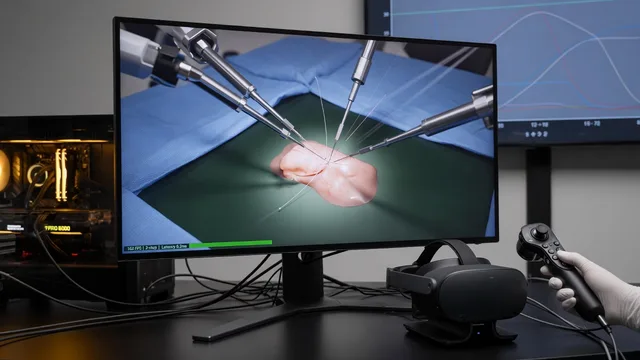
Before a healthcare robot can be useful in the real world, it has to learn how the physical world pushes back. Anatomy varies. Instruments bend, press, slip and interact with tissue. Imaging can be noisy or incomplete. And the rare, edge scenarios developers most need to understand don’t appear on schedule. That creates one of […]

Summary

NVIDIA has released an open-source Medical Physics Simulation framework as part of its Isaac for Healthcare platform. The toolkit targets a persistent bottleneck in medical robotics development: the difficulty of obtaining diverse, high-fidelity data that captures variable anatomy, device-tissue interactions, sensor noise and rare edge cases. By running on GPU hardware through CUDA and integrating NVIDIA Warp, Newton and Cosmos technologies, the framework lets developers generate large numbers of parallel simulation environments instead of constructing custom scenes for each workflow.

The simulation layer combines classical physics modeling of contact, friction and motion with generative AI physics via Cosmos-H Dreams. This hybrid approach produces both deterministic device behavior and learned visual scene dynamics. Reference workflows already demonstrate its use for vascular navigation with flexible instruments such as catheters and guidewires, simulated X-ray imaging and reinforcement-learning policy training. Benchmarks cited by NVIDIA show 8,192 robot-training environments running concurrently, reducing training time from more than five hours to under two minutes.

Because the code is open source, teams can inspect model weights, adapt the environment to proprietary devices and reproduce results across different anatomies. In regulated domains this transparency supports the generation of in-silico evidence required for clinical validation and regulatory submissions. Early adopters include CMR Surgical, which contributed anonymized procedural data to an open embodiment dataset; Johnson & Johnson MedTech, which is building digital twins of its MONARCH platform; and XCath and Medtronic, which are applying the framework to endovascular and structural-heart applications.

The framework operates as a modular component within the broader Isaac for Healthcare stack. It can be used independently or alongside digital-twin pipelines, medical sensor simulation and the Isaac Lab robot-learning environment, allowing developers to move from virtual testing to hardware prototypes with a shared set of models and data pipelines.

Why it matters

This development provides open-source, scalable simulation tools that align with the EU and Dutch focus on transparent and ethical AI. It offers significant opportunities for the strong Dutch health-tech sector to accelerate medical robotics development.

More in this beat
cudaIsaac for Healthcaremedical-ainvidiaNVIDIA Warproboticssimulation-models
The State of Simulation for Physical AI: An Overview

22:00 · July 21, 2026

The State of Simulation for Physical AI: An Overview

It offers ML Engineers a critical evaluation of modern simulation tools required for training physical AI and reinforcement learning models. Given the strong Dutch focus on robotics in agriculture, logistics, and high-tech manufacturing, understanding these GPU-accelerated simulation stacks is essential for local AI practitioners.

Relevance 85 · Audience 90

KernelArc: A Multi-Agent Framework for GPU Kernel Optimization

06:00 · August 19, 2026

KernelArc: A Multi-Agent Framework for GPU Kernel Optimization

High technical depth and novelty in multi-agent kernel search; directly actionable for Dutch AI/HPC teams working on performance engineering; IMEC affiliation adds EU relevance for advanced GPU workloads.

Relevance 78 · Audience 85

Into the Omniverse: How Open World Models Push the Frontier of Physical AI

15:00 · August 6, 2026

Into the Omniverse: How Open World Models Push the Frontier of Physical AI

The release of open-weight physical AI models by a major player like NVIDIA significantly lowers the barrier to entry for developing advanced robotics and autonomous systems. This is highly relevant for the Dutch market, which features strong logistics, agriculture, and high-tech manufacturing sectors that can leverage these transparent, open-source tools for innovation.

Relevance 75 · Audience 70

GPU Management: Why Idle GPUs Are the New Grounded Aircraft

17:09 · July 30, 2026

GPU Management: Why Idle GPUs Are the New Grounded Aircraft

It addresses critical MLOps and production challenges faced by ML Engineers, specifically GPU utilization, workload scheduling, and compute cost optimization. For Dutch enterprises and SMEs scaling AI, mastering these orchestration strategies is essential to remain cost-effective without relying on massive hardware budgets.

Relevance 75 · Audience 85

NVIDIA Cosmos-H-Dreams: Bringing Real-Time Generative Simulation to Surgical Robotics

11:32 · July 27, 2026

NVIDIA Cosmos-H-Dreams: Bringing Real-Time Generative Simulation to Surgical Robotics

Provides concrete implementation details on distillation, autoregressive rollout stability, few-step diffusion, and low-latency serving that directly address production constraints for ML engineers. Includes actionable training recipes and quantitative performance gains applicable to Dutch teams working on generative models or robotics.

Relevance 78 · Audience 85

Introducing Cosmos 3 Edge

17:58 · July 20, 2026

Introducing Cosmos 3 Edge

This article provides ML Engineers with actionable, open-source tooling and checkpoints for deploying state-of-the-art vision-language and world models on edge hardware. It directly addresses implementation challenges like memory constraints and real-time latency, which are highly applicable to the strong Dutch logistics, agriculture, and smart infrastructure sectors.

Relevance 85 · Audience 95

LeRobot v0.6.0: Imagine, Evaluate, Improve

02:00 · July 7, 2026

LeRobot v0.6.0: Imagine, Evaluate, Improve

Directly actionable tooling and research updates for ML engineers working on robotics policies, benchmarks, and deployment pipelines; addresses production constraints like GPU memory, latency via Real-Time Chunking, and human-in-the-loop data collection.

Relevance 75 · Audience 85

Auto-FL-Research: Agentic Search for Federated Learning Algorithms

06:00 · July 3, 2026

Auto-FL-Research: Agentic Search for Federated Learning Algorithms

Federated Learning is crucial for the Dutch AI market due to strict EU data privacy regulations (GDPR), especially in collaborative sectors like healthcare. This research provides advanced practitioners with an automated, agent-driven approach to optimize FL pipelines, directly supporting scalable and privacy-preserving AI development in the Netherlands.

Relevance 85 · Audience 95

FedPref: Federated Preference Learning for Structured Radiology Report Extraction

06:00 · August 19, 2026

FedPref: Federated Preference Learning for Structured Radiology Report Extraction

Strong actionability for Dutch/EU hospitals under GDPR constraints; directly addresses privacy-preserving collaboration on medical data with unequal distributions, high technical depth, novelty in combining federated learning with preference optimization, and full reproducibility via GitHub.

Relevance 82 · Audience 90

How US military funding propelled China’s robot dogs

18:01 · August 18, 2026

How US military funding propelled China’s robot dogs

Directly addresses military and dual-use quadruped robots, US-China technology competition, and supply-chain vulnerabilities that affect NATO defense planners, AI engineers, and Dutch defense industry stakeholders focused on autonomous systems.

Relevance 82 · Audience 88

FLOPs vs Real Work: The Importance of Replication in AI Efficiency Assessment

06:00 · August 18, 2026

FLOPs vs Real Work: The Importance of Replication in AI Efficiency Assessment

Directly relevant for Dutch AI researchers and advanced practitioners working on Green AI, model optimization, and reproducible efficiency metrics; authors are local, findings address EU energy concerns, and results are actionable for accurate cost assessment on modern GPUs.

Relevance 85 · Audience 90