AI News selected for Professionals and Decision Makers
Primary Research Stream

FLOPs vs Real Work: The Importance of Replication in AI Efficiency Assessment

06:00 · August 18, 2026 · arXiv cs.AI RSS
FLOPs vs Real Work: The Importance of Replication in AI Efficiency Assessment

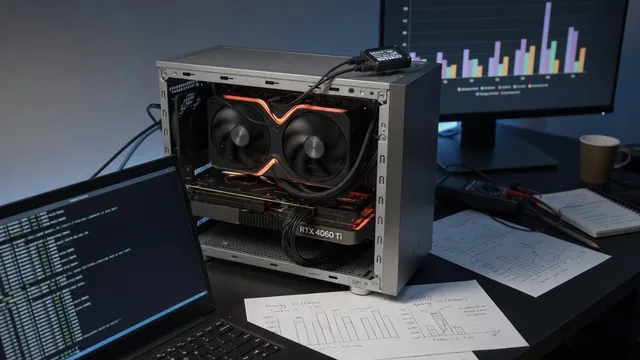
AI efficiency has recently taken the spotlight in both academy and industry due to massive model scales, high energy demands, and environmental costs. While reporting Floating Point Operations (FLOPs) is a traditional approach for assessing computational costs, the relationship between FLOPs and execution time is not straightforward, as layers with the same number of FLOPs may not have the same execution time because some operations are more easily parallelized than others. This paper sets out to replicate the original experiments from a study that proposed the $\alpha-FLOPs$ estimation formula to verify whether the results remain applicable on newer, more powerful hardware. During the replication process, we identify limitations in the replication materials provided by the original study, including a lack of specific dependency details and transparency regarding regression data. Our results validate the thesis that raw FLOPs alone are not an appropriate metric for execution time, as spatial dimensions remain more easily parallelized than kernel dimensions. However, fine-grained measurements reveal that the relationship is much less straightforward than previously shown, with newer hardware exhibiting instabilities and discontinuities in execution time, including jumps and oscillations, that the $\alpha-FLOPs$ formula generally underestimates. Ultimately, this work validates the empirical findings from the original study but shows negative results when applying the $\alpha-FLOPs$ estimation. We also highlight the critical need for complete and accurate replication packages for research on hardware-dependent efficiency assessment and provide a complete replication package for our implementation to facilitate further study.

Summary

A replication study by researchers at TU Delft revisits earlier work on measuring the computational cost of convolutional neural networks. The authors test whether counting raw floating-point operations remains a reliable predictor of execution time when models run on contemporary hardware such as the RTX 4090. Their experiments confirm that layers with identical theoretical FLOP counts can still differ markedly in runtime, because operations along spatial dimensions parallelize more readily than those involving kernel size or channel depth.

Fine-grained timing on the newer accelerator reveals behavior that the original study did not capture. Execution times exhibit instabilities, abrupt jumps, and oscillations that are absent from coarser measurements. As a result, the α-FLOPs correction formula derived from earlier regression data consistently underestimates observed runtimes. While the broad empirical claim—that raw FLOP counts alone are insufficient—holds, the quantitative adjustment proposed by the prior work does not transfer directly.

The replication effort also exposes shortcomings in the materials supplied by the original authors. Missing dependency specifications, undisclosed regression data, and incomplete experiment scripts hindered faithful reproduction. In response, the TU Delft team released a complete, self-contained replication package that includes both measurement code and analysis scripts, underscoring the importance of transparent artifacts when efficiency claims depend on specific hardware characteristics.

Why it matters

Directly relevant for Dutch AI researchers and advanced practitioners working on Green AI, model optimization, and reproducible efficiency metrics; authors are local, findings address EU energy concerns, and results are actionable for accurate cost assessment on modern GPUs.

More in this beat
energy-efficiencygpu-utilizationnvidiareproducibility-assetstraining-optimization
GPU Management: Why Idle GPUs Are the New Grounded Aircraft

17:09 · July 30, 2026

GPU Management: Why Idle GPUs Are the New Grounded Aircraft

It addresses critical MLOps and production challenges faced by ML Engineers, specifically GPU utilization, workload scheduling, and compute cost optimization. For Dutch enterprises and SMEs scaling AI, mastering these orchestration strategies is essential to remain cost-effective without relying on massive hardware budgets.

Relevance 75 · Audience 85

Accelerating Transformers Fine-Tuning with NVIDIA NeMo AutoModel

18:00 · June 24, 2026

Accelerating Transformers Fine-Tuning with NVIDIA NeMo AutoModel

Directly addresses hands-on tooling for ML engineers with specific algorithmic optimizations, benchmarks, and implementation patterns for large-scale MoE fine-tuning that Dutch AI practitioners can apply immediately.

Relevance 88 · Audience 95

NVIDIA Powers Over 400 of the World’s 500 Fastest Supercomputers

11:00 · June 23, 2026

NVIDIA Powers Over 400 of the World’s 500 Fastest Supercomputers

This article highlights the foundational hardware driving global and European AI advancements, which indirectly impacts the infrastructure available to the Dutch AI market. Understanding NVIDIA's dominance and the push for energy-efficient supercomputing is crucial for stakeholders tracking AI capabilities and sustainability.

Relevance 65 · Audience 75

Fastest, Largest, Strongest: NVIDIA Blackwell Sweeps MLPerf Training 6.0

17:00 · June 16, 2026

Fastest, Largest, Strongest: NVIDIA Blackwell Sweeps MLPerf Training 6.0

This article details crucial advancements in AI hardware infrastructure that dictate the speed and scale of future AI models. However, its heavy reliance on technical jargon makes it less accessible for a general audience, though the underlying trend impacts the entire AI ecosystem.

Relevance 65 · Audience 40

KernelArc: A Multi-Agent Framework for GPU Kernel Optimization

06:00 · August 19, 2026

KernelArc: A Multi-Agent Framework for GPU Kernel Optimization

High technical depth and novelty in multi-agent kernel search; directly actionable for Dutch AI/HPC teams working on performance engineering; IMEC affiliation adds EU relevance for advanced GPU workloads.

Relevance 78 · Audience 85

Same Cluster, 33 Points More Utilization: What Changed Was the Order

21:46 · August 17, 2026

Same Cluster, 33 Points More Utilization: What Changed Was the Order

Directly addresses production GPU orchestration challenges (contention, reservations, contiguous blocks, churn) with quantitative benchmarks and implementation details relevant to ML engineers running mixed training/inference workloads on shared hardware.

Relevance 78 · Audience 85

Why Scaling AI Compute Performance Requires a New Power Architecture

17:00 · August 11, 2026

Why Scaling AI Compute Performance Requires a New Power Architecture

Power consumption and grid congestion are critical bottlenecks for AI infrastructure, particularly in major European data center hubs like the Netherlands. This new 800 VDC architecture offers a more efficient, scalable solution that will directly impact how Dutch data centers and AI factories are built and upgraded.

Relevance 85 · Audience 65

NVIDIA and Local AI Community Fuel Open Source Models and Intelligent Agents

15:00 · August 11, 2026

NVIDIA and Local AI Community Fuel Open Source Models and Intelligent Agents

This article highlights significant advancements in local AI and open-source models, which are crucial for businesses looking to deploy cost-effective, privacy-preserving AI solutions. However, the heavy use of technical jargon makes it less accessible to a general audience.

Relevance 65 · Audience 40