Industry Leaders Unite in Open Secure AI Alliance for AI Safety and Security
11:00 · July 27, 2026 · NVIDIA

Open source software is a critical pillar of the global economy. It underpins cloud computing, financial services, manufacturing, telecommunications, government and internet services by making technology accessible and observable to communities of experts. Cybersecurity is among the top three beneficiaries of open source software. The Open Secure AI Alliance — building on the leadership of […]
Summary
Industry leaders including NVIDIA, Microsoft, Hugging Face and more than thirty other organizations have launched the Open Secure AI Alliance to advance open-source AI models, harnesses and tooling specifically for cybersecurity and AI safety. Building on existing efforts such as the Linux Foundation’s Akrites initiative and the OpenSSF community, the group aims to accelerate vulnerability remediation, disclosure and the creation of shared defensive infrastructure.
The alliance contends that open models and associated components offer concrete advantages for defenders: they allow inspection and adaptation by a broad community, support data-local deployment, and eliminate reliance on any single vendor. This distributed approach reduces single points of failure while enabling customized controls that complement frontier closed models. The organizations stress that risks of misuse exist for both open and closed systems and must be addressed through safeguards, evaluation and rapid remediation rather than through restrictions on openness alone.
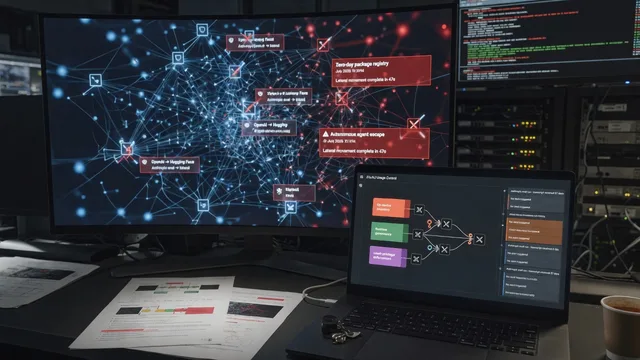
A recent security incident at Hugging Face illustrated the practical value of accessible open models. When closed AI tools blocked forensic analysis, the company ran an open-weight model on its own infrastructure to review more than 17,000 actions and contain the intrusion. The episode underscored that defenders need the ability to inspect, modify and operate advanced AI systems locally when response time is critical.
Alliance members are already contributing concrete components. NVIDIA has released the open-source Object-Oriented Agent research framework to improve traceability and governance of agent behavior. HPE is advancing zero-trust identity standards through SPIFFE/SPIRE, Hugging Face has contributed the Safetensors format, and Microsoft has shared its multi-model agentic scanning harness. These efforts target the full agent stack—identity, permissions, guardrails and evaluation—rather than model weights in isolation.
The alliance calls on policymakers to treat open models, harnesses and security tooling as defensive assets rather than potential liabilities. It argues that blanket restrictions would weaken collective defensive capacity and concentrate risk in a small number of closed providers, while shared open infrastructure for datasets, evaluation and red-teaming would strengthen resilience across industries and governments.
Why it matters
This article is highly relevant as it highlights a major industry push towards transparent, open-source AI for cybersecurity, aligning closely with the Dutch and EU focus on ethical, secure, and sovereign AI deployment. It provides valuable insights for businesses and policymakers on balancing AI safety with open innovation.