Deploy local agents everywhere with LFM2.5-2.6B
15:58 · August 4, 2026 · Hugging Face Blog
Summary
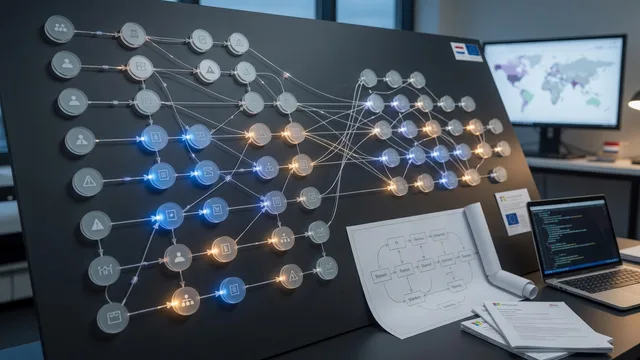
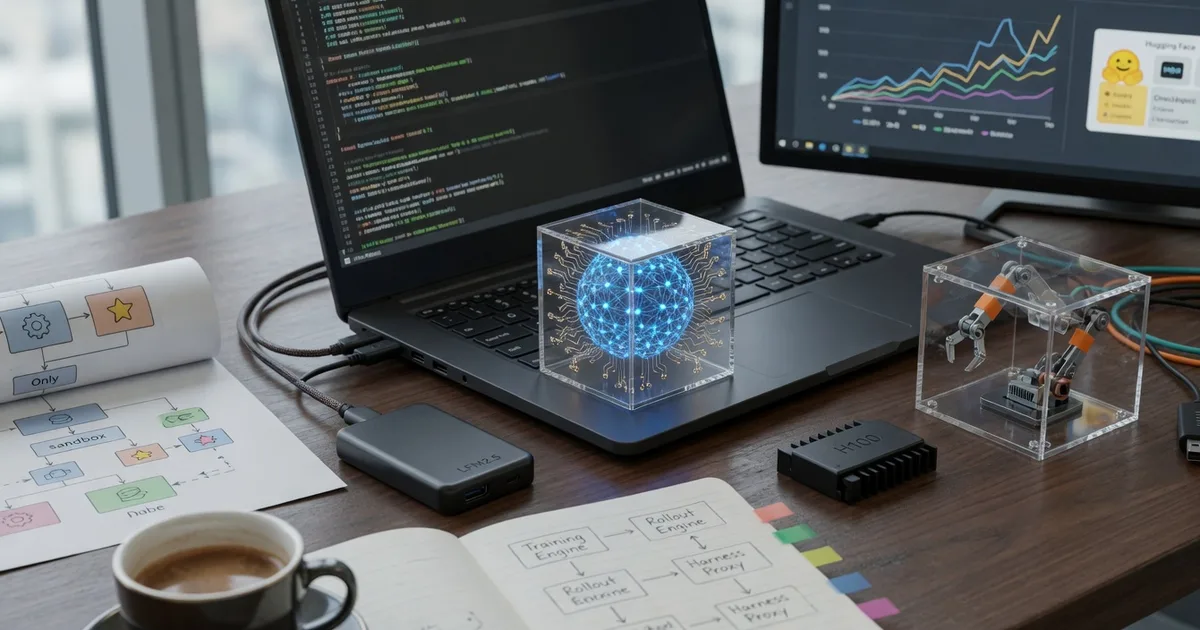
LFM2.5-2.6B is a 2.6-billion-parameter model pre-trained on roughly 34 trillion tokens, followed by a mid-training stage that extends its context window to 128K tokens. The subsequent post-training phase converts the base model into an agent through a four-stage reinforcement-learning pipeline focused on agentic behavior. This pipeline separates concerns across distinct components: a Training Engine that updates model weights, a Rollout Engine that generates actions from the current policy, and an RL framework that coordinates rollouts, collects trajectories with associated rewards, and drives iterative updates.
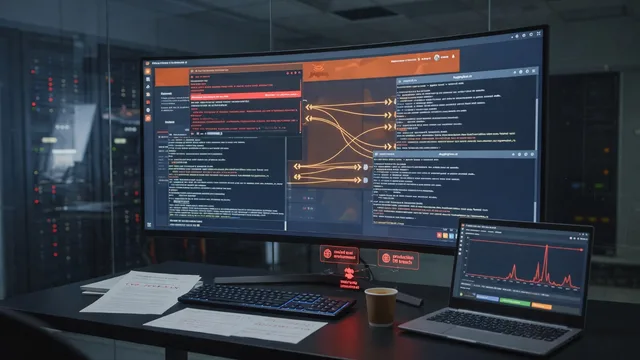
Actions produced by the agent run inside a Sandbox Service. A Blackbox Harness hosts the agent—examples include OpenClaw and Hermes Agent—and manages interactions with the task environment. A Harness Proxy treats these harnesses as opaque components, requiring no internal changes while still capturing the token-level trajectories needed to reconstruct and validate training samples.
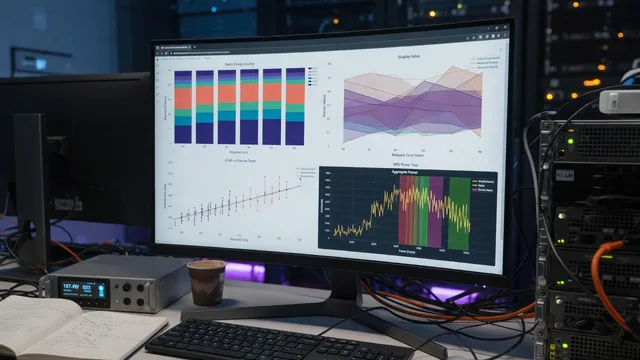
On benchmarks covering STEM knowledge, instruction following, tool use, and agentic tasks, the model is evaluated against systems up to four times its size. It leads or matches larger models on instruction-following and tool-use suites, remains competitive on knowledge and agentic scenarios, and trails only on coding. Inference performance benefits from the underlying LFM2 architecture: on CPU it reaches 220 tokens per second on an M5 Max and 113 tokens per second on a Ryzen AI Max+ 395, with usable agent speeds of around 30 tokens per second on phones. On GPU it sustains nearly 15 000 output tokens per second at high concurrency on a single H100. Day-one support is provided for llama.cpp, MLX, vLLM, SGLang, and ONNX, and both the base and post-trained checkpoints are available on Hugging Face.
Why it matters
Strong focus on production inference constraints, latency, token throughput, and agent tooling directly addresses ML Engineer needs for efficient local deployment. Benchmarks and ecosystem support offer actionable data for Dutch teams building privacy-preserving on-device AI solutions aligned with EU priorities.