AI News selected for Professionals and Decision Makers
AI Security And Privacy Updates

Why Modern SOCs Need Multi-Layered Detections

13:25 · July 22, 2026 · Hacker News AI Section

Why Modern SOCs Need Multi-Layered Detections

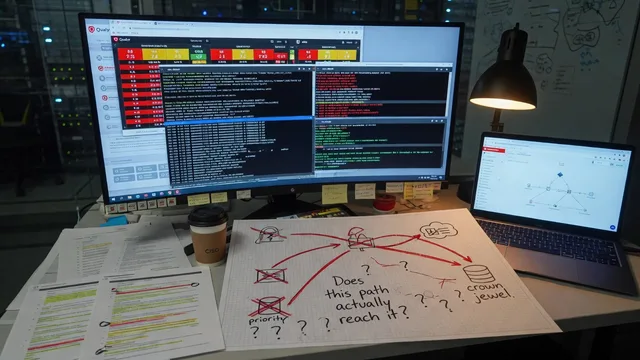
The cycle is over. For years, cybersecurity followed a familiar pattern: defenses improved, attackers adapted, and the back-and-forth continued. Today, AI-equipped attackers are simply outpacing defenses. Most intrusions now bypass endpoint and malware-based detection entirely. The CrowdStrike Global Threat Report estimates around 79% of attacks are malware-free, as threat actors rely on

Summary

The article argues that AI-augmented attackers have broken the long-standing cycle of incremental defense improvements by shifting to malware-free techniques such as credential theft and DLL side-loading. These methods routinely evade endpoint agents and signature-based controls, with the result that most intrusions now reach internal systems before host-level tools register activity. Once inside, adversaries can move laterally and exfiltrate data within seconds, aided by autonomous exploit models that compress the time between vulnerability discovery and successful compromise.

Traditional security stacks compound the problem by keeping endpoint, identity, and cloud telemetry in separate silos. Each source observes only a fragment of an attack chain, allowing adversaries to exploit the blind spots between them. Network Detection and Response (NDR) addresses this fragmentation by supplying an independent, out-of-band data layer that remains intact even when local agents are disabled. Because network traffic is immutable and spans the entire enterprise, it can validate individual alerts, reconstruct lateral movement, and confirm whether an exploit succeeded.

The effectiveness of any defensive AI system is bounded by the quality of its input data. Low-fidelity or incomplete telemetry produces false positives and missed detections regardless of model sophistication. Rich, correlated network telemetry supplies the verifiable context required for accurate triage, attack-path mapping, and automated response. When this telemetry is integrated through open data standards, SOC analysts and AI tools operate from a single, consistent view that reduces uncertainty and accelerates containment.

Modern NDR platforms consolidate signatures, packet-level analysis, and flow records into unified detection workflows, replacing the fragmented legacy tools that analysts previously had to consult separately. This consolidation is presented as essential for keeping pace with the operational tempo of current threats while preserving the evidence needed for both human and automated decision-making.

Why it matters

This article is relevant for security professionals as it outlines architectural strategies to defend against emerging AI-driven cyber threats. It emphasizes the critical role of high-quality network telemetry in enabling effective defensive AI, which is actionable for Dutch enterprises upgrading their SOCs.

More in this beat
crowdstrikemalware-free attacksNDRsecurity-operationssocthreat-and-vulnerability-updates
AI Phishing Is Crushing SOCs with Alert Volume: How to Reduce Tier 1 Overload

15:19 · June 8, 2026

AI Phishing Is Crushing SOCs with Alert Volume: How to Reduce Tier 1 Overload

This article is highly relevant for security professionals as it highlights a critical, AI-driven threat vector that directly impacts SOC efficiency and enterprise security. Dutch organizations must adapt their defensive strategies to handle the increased volume and sophistication of AI-generated phishing attacks.

Relevance 85 · Audience 95

FOMO in the SOC: Where AI Platforms like Claude Actually Fit

13:30 · August 3, 2026

FOMO in the SOC: Where AI Platforms like Claude Actually Fit

This article provides actionable architectural guidance for security professionals on integrating AI into SOC workflows. It helps Dutch cybersecurity teams optimize their AI investments by distinguishing between human-assistive AI and autonomous triage systems, directly addressing alert fatigue and operational efficiency.

Relevance 85 · Audience 95

Mythos Asks the Right Question. It Doesn't Answer It.

14:15 · July 29, 2026

Mythos Asks the Right Question. It Doesn't Answer It.

It highlights how AI accelerates offensive security capabilities, necessitating a shift to dynamic, context-aware vulnerability management. Security professionals in the Netherlands can apply these architectural insights to defend against AI-driven threats.

Relevance 75 · Audience 90

AI Can Find Bugs, But Human Knowledge Still Proves Them

12:10 · July 16, 2026

AI Can Find Bugs, But Human Knowledge Still Proves Them

This article is highly relevant for security professionals in the Dutch AI market as it addresses the operational challenges of integrating AI into offensive security workflows. It provides actionable guidance on maintaining high validation standards and preventing skill degradation, aligning with the Netherlands' focus on robust and reliable AI deployment.

Relevance 85 · Audience 95

New Webinar: Closing the Approval Gap in AI-Era Ad Tech

13:06 · July 15, 2026

New Webinar: Closing the Approval Gap in AI-Era Ad Tech

This is relevant for security and privacy professionals as it addresses the growing risk of AI-driven ad tech bypassing initial security reviews through dynamic script loading. It highlights critical compliance and data protection issues that are highly applicable to Dutch and EU enterprises operating under GDPR.

Relevance 65 · Audience 85

OpenAI Expands Daybreak With GPT-5.5-Cyber to Help Defenders Patch Security Flaws

05:56 · June 23, 2026

OpenAI Expands Daybreak With GPT-5.5-Cyber to Help Defenders Patch Security Flaws

This article is highly relevant for security professionals as it introduces a specialized AI tool for vulnerability detection and remediation. Dutch enterprises can leverage such models to strengthen their cybersecurity posture and comply with stringent EU security regulations like NIS2.

Relevance 85 · Audience 95

From Assistive to Agentic: The AI Shift That's Redefining Threat Management

13:58 · June 19, 2026

From Assistive to Agentic: The AI Shift That's Redefining Threat Management

This article is highly relevant for security professionals as it addresses critical SOC challenges like alert fatigue and delayed incident response. The shift towards agentic AI offers actionable insights for Dutch enterprises looking to automate and enhance their threat detection and response capabilities within a complex security landscape.

Relevance 85 · Audience 95

ThreatsDay Bulletin: Worm Code Leaked, AI Agent Phished, Claude Code Patch + 28 New Stories

15:20 · June 11, 2026

ThreatsDay Bulletin: Worm Code Leaked, AI Agent Phished, Claude Code Patch + 28 New Stories

The article highlights emerging security vulnerabilities specific to AI, such as the phishing of AI agents and patches for AI coding assistants like Claude. Dutch security professionals must understand these attack vectors to secure enterprise AI deployments and maintain compliance with strict EU data protection regulations.

Relevance 75 · Audience 85