AI News selected for Professionals and Decision Makers
AI Security And Privacy Updates

AI Phishing Is Crushing SOCs with Alert Volume: How to Reduce Tier 1 Overload

15:19 · June 8, 2026 · Hacker News AI Section

AI Phishing Is Crushing SOCs with Alert Volume: How to Reduce Tier 1 Overload

Phishing has always been a numbers game. AI has turned it into a volume machine. Attackers can now create convincing emails, fake login pages, and tailored lures in minutes. Every polished message adds another case for Tier 1 to review, another link to inspect, and another alert that cannot be dismissed at a glance. As the queue grows, a credential theft attempt or malware delivery can easily

Summary

AI is enabling attackers to generate large volumes of polished phishing emails, fake login pages, and context-specific lures in minutes rather than hours. These messages often bypass initial reputation filters because the infrastructure rotates quickly and the content is tailored to appear legitimate. As a result, Tier 1 security operations teams receive a steady stream of alerts that cannot be dismissed without inspection of links or attachments.

The increased volume lengthens triage queues and raises the chance that genuine credential-harvesting attempts or malware delivery will remain unexamined for longer periods. Analysts spend more time on each case because static checks provide limited insight into pages that load only after redirects, CAPTCHAs, or user-like interactions. Unclear cases are escalated more frequently, adding review cycles for Tier 2 staff and delaying containment decisions.

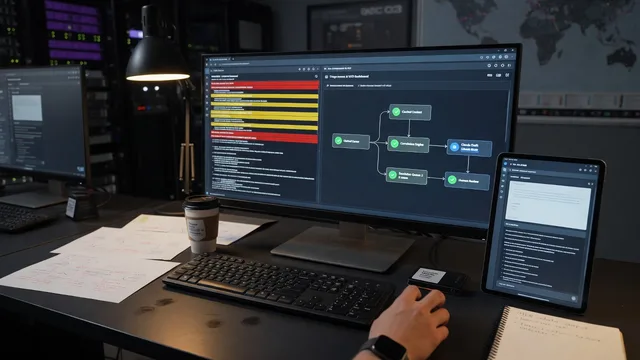
Effective mitigation requires workflows that combine automated execution with interactive inspection inside an isolated browser environment. Analysts can observe the full sequence of events triggered by a suspicious URL, capture behavioral indicators, and extract indicators of compromise without risking production systems. Structured reports that include verdicts, MITRE ATT&CK mappings, and concise summaries then allow faster handoff to senior teams, reducing the number of cases that require repeated manual verification.

By shortening the time needed to reach a reliable verdict on routine alerts, such approaches help SOCs maintain response speed even as AI-driven phishing campaigns increase in scale and variety.

Why it matters

This article is highly relevant for security professionals as it highlights a critical, AI-driven threat vector that directly impacts SOC efficiency and enterprise security. Dutch organizations must adapt their defensive strategies to handle the increased volume and sophistication of AI-generated phishing attacks.

More in this beat
incident-response-playbooksmitre-att-ckphishingsecurity-operationssocthreat-and-vulnerability-updates
FOMO in the SOC: Where AI Platforms like Claude Actually Fit

13:30 · August 3, 2026

FOMO in the SOC: Where AI Platforms like Claude Actually Fit

This article provides actionable architectural guidance for security professionals on integrating AI into SOC workflows. It helps Dutch cybersecurity teams optimize their AI investments by distinguishing between human-assistive AI and autonomous triage systems, directly addressing alert fatigue and operational efficiency.

Relevance 85 · Audience 95

Why Modern SOCs Need Multi-Layered Detections

13:25 · July 22, 2026

Why Modern SOCs Need Multi-Layered Detections

This article is relevant for security professionals as it outlines architectural strategies to defend against emerging AI-driven cyber threats. It emphasizes the critical role of high-quality network telemetry in enabling effective defensive AI, which is actionable for Dutch enterprises upgrading their SOCs.

Relevance 75 · Audience 85

Forg365 PhaaS Targets Microsoft 365 with Device Code and AitM Session Theft

15:03 · July 13, 2026

Forg365 PhaaS Targets Microsoft 365 with Device Code and AitM Session Theft

This article highlights the weaponization of AI by cybercriminals to scale and enhance phishing attacks against widely used enterprise platforms like Microsoft 365. It provides actionable threat intelligence and mitigation strategies crucial for Dutch security professionals defending corporate networks against AI-augmented threats.

Relevance 85 · Audience 95

ThreatsDay Bulletin: Worm Code Leaked, AI Agent Phished, Claude Code Patch + 28 New Stories

15:20 · June 11, 2026

ThreatsDay Bulletin: Worm Code Leaked, AI Agent Phished, Claude Code Patch + 28 New Stories

The article highlights emerging security vulnerabilities specific to AI, such as the phishing of AI agents and patches for AI coding assistants like Claude. Dutch security professionals must understand these attack vectors to secure enterprise AI deployments and maintain compliance with strict EU data protection regulations.

Relevance 75 · Audience 85

Phishing 3.0: The Fight Moves to Agent Versus Agent

13:30 · August 19, 2026

Phishing 3.0: The Fight Moves to Agent Versus Agent

This article is highly relevant for security professionals as it highlights the emerging threat of AI-driven phishing agents. Dutch enterprises must adapt their cybersecurity strategies to counter AI-generated attacks, making this crucial for maintaining robust organizational security.

Relevance 85 · Audience 95