OpenAI Launches GPT-5.6-Cyber with Reduced Safeguards for Exploit Development
15:11 · August 11, 2026 · Hacker News AI Section
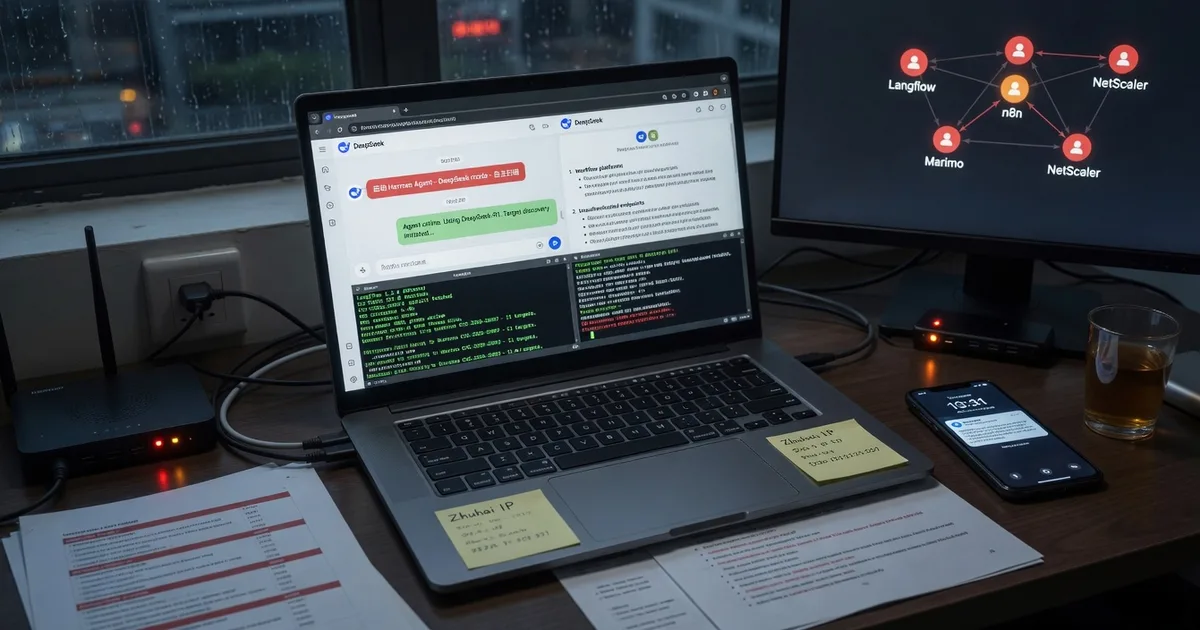
OpenAI on Monday unveiled a new cybersecurity-focused model called GPT‑5.6‑Cyber that it said is focused on vulnerability research, penetration testing, and incident response. "Built on GPT‑5.6 Sol, it is trained to improve capabilities on several specialized cybersecurity tasks (e.g., finding zero-day vulnerabilities and developing exploit chains) and to reduce refusals for certain higher-risk
Summary
OpenAI has introduced GPT-5.6-Cyber, a specialized model derived from GPT-5.6 Sol and positioned for vulnerability research, penetration testing, and incident response. The model receives additional training on tasks such as zero-day discovery and exploit-chain construction while deliberately lowering refusal rates on higher-risk dual-use prompts. It follows an earlier release, GPT-5.5-Cyber, from June 2026 and is offered exclusively through the Daybreak Red access tier, which OpenAI restricts to vetted partners for authorized security work.
Internal benchmarks show the model completing 95 percent of advanced cybersecurity requests, compared with 1.5 percent for the base GPT-5.6 Sol and 57.3 percent for its predecessor. On the ExploitGym evaluation it also records higher scores for exploit development and related workflows. Performance gains appear in the identification and severity assessment of novel vulnerabilities, although the model tends to produce shorter, less detailed reports than the general-purpose variant when asked to document findings in open-ended repository scans.
One concrete outcome cited by OpenAI is the discovery of CVE-2026-15903, an out-of-bounds read/write flaw in the V8 JavaScript engine carrying a CVSS score of 8.8. The model additionally surfaced a second, previously unknown issue that could be chained to escape the V8 heap sandbox; Google issued a patch for the first vulnerability in mid-July 2026. Access to the model has been extended to a closed group of security vendors and consultancies, including Accenture, Akamai, Cisco, Cloudflare, CrowdStrike, Fortinet, IBM, Palo Alto Networks, PwC, and Sophos.
Despite these advances, current systems still require substantial human oversight for remediation. Separate measurements indicate that large-language-model patches fully resolve vulnerabilities without side effects in only about 26 percent of cases, while more than half either leave the original issue unaddressed or introduce new weaknesses. OpenAI acknowledges the misuse risks inherent in reduced safeguards yet argues that controlled distribution to defenders is necessary to narrow the gap between offensive and defensive capabilities.
Why it matters
This article introduces a powerful, dual-use AI model specifically tailored for exploit development and penetration testing. Understanding its capabilities is crucial for security professionals to bolster defensive strategies and anticipate AI-accelerated cyber threats.