AI News selected for Professionals and Decision Makers
Model And Product Updates

Claude on call: How Claude Tag serves as Anthropic’s first responder for CI/CD failures

02:00 · August 18, 2026 · Claude Blog
Claude on call: How Claude Tag serves as Anthropic’s first responder for CI/CD failures

Summary

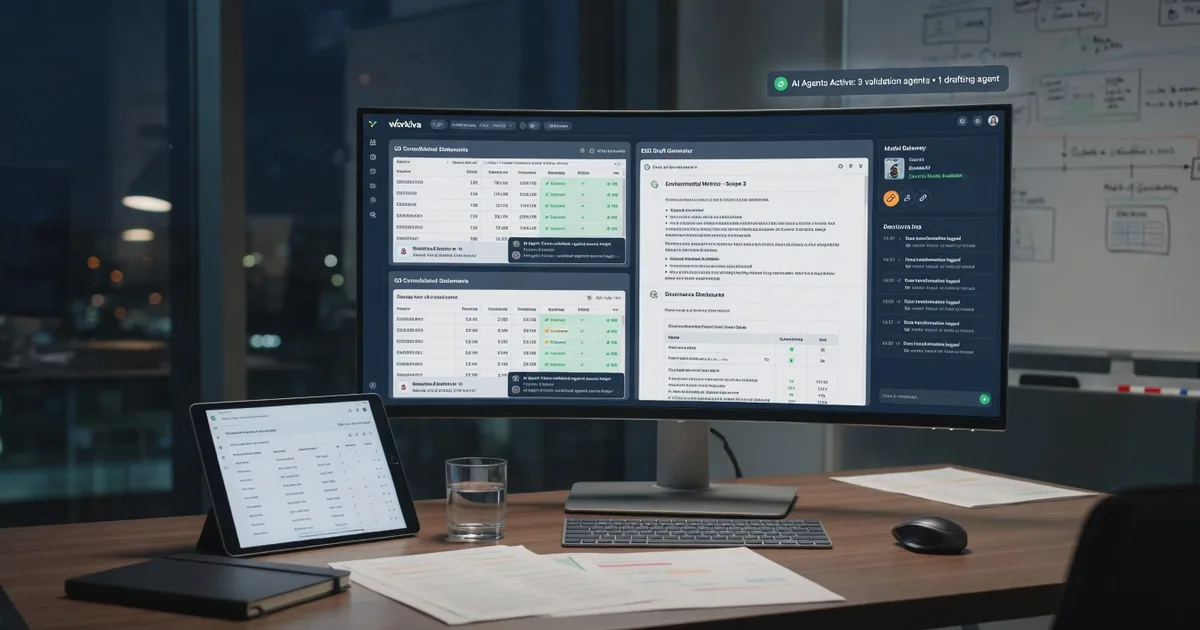
Anthropic has deployed Claude as the initial responder for CI/CD incidents, using a Slack-based agent called Claude Tag that maintains persistent memory, tool access, and scheduled routines. The agent monitors alert channels, applies deterministic rules from markdown files to decide whether to page a human or defer an issue, and draws on historical data to refine thresholds for new services. This approach addresses both incomplete alerting rules and alert fatigue by letting the model evaluate context that static thresholds often miss.

When an incident escalates, Claude Tag launches an orchestration agent that spawns executor subagents. These subagents query Grafana, log stores, PagerDuty, GitHub, Kubernetes, and Slack in parallel through MCP Connectors. Findings are synthesized into an evidence-based situation report, typically delivered within 15 minutes and sometimes naming a root cause in as little as four minutes. Investigation is guided by detailed markdown skills that encode troubleshooting steps for specific bug classes, plus a living lessons.md file that records prior incidents, fixes, and recurring gotchas; the agent reads this file at the start of every new case.

Resolution often occurs through feature-flag adjustments. A separate Claude Code agent, running with engineer permissions, manages canary traffic and automatically rolls flags forward or back while monitoring metrics. Once a fix is applied, the same connectors verify restored behavior, after which Claude writes a post-mortem entry and prepares handoff summaries. A companion agent called ci-weather aggregates incident data, build metrics, and merge-queue statistics into a public status report that reduces ad-hoc queries from other teams.

The entire configuration is stored in version-controlled markdown files and a public GitHub setup kit that converts an organization’s own incident history into reusable playbooks. The result is a system that absorbs routine detection, investigation, and communication tasks while preserving human oversight for final decisions and architectural improvements.

Why it matters

Highly actionable for Product Teams and Builders: explains real workflows, specific tools, skills files, and a ready-to-use setup kit for deploying Claude in CI/CD pipelines.
More in this beat
agentic-workflowsanthropicclaude-codeclaude-mdclaude-tagincident-response-playbookssecurity-operationsslack
How Outtake built a cyber investigator on Claude

02:00 · July 22, 2026

How Outtake built a cyber investigator on Claude

This article provides a practical use case for Product Teams and Builders on how to leverage Claude Code and the Agent SDK to build long-running, autonomous AI agents. It offers valuable architectural insights for Dutch AI practitioners developing cybersecurity solutions or complex agentic workflows.

Relevance 75 · Audience 85

The Claude Code Guide For Startups

02:00 · August 20, 2026

The Claude Code Guide For Startups

This article is highly relevant for product teams and builders as it offers actionable strategies and technical tips for integrating agentic coding into the SDLC. Dutch AI practitioners can apply these insights to scale development efficiently while maintaining governance and compliance through robust evaluation frameworks.

Relevance 85 · Audience 95

Claude Tag now reads even more of the room

02:00 · August 13, 2026

Claude Tag now reads even more of the room

This update is highly relevant for product teams and builders as it demonstrates advanced context-aware AI integration within daily collaboration tools like Slack. Dutch AI practitioners and SMEs can leverage this to streamline engineering workflows and improve team productivity without incurring extra usage limits.

Relevance 85 · Audience 95

Building verification loops in Claude Code with skills

02:00 · July 22, 2026

Building verification loops in Claude Code with skills

It provides highly actionable insights for AI product teams and builders on how to improve agentic coding workflows using Claude Code. Dutch AI practitioners can leverage these verification loops to increase development efficiency and enforce project-specific quality standards autonomously.

Relevance 85 · Audience 95

A Field Guide to Claude Fable: Finding Your Unknowns

02:00 · July 6, 2026

A Field Guide to Claude Fable: Finding Your Unknowns

Directly addresses Model and Product Updates with actionable implementation guidance, code-adjacent workflows, and prompt examples for Product Teams and Builders working with frontier models.

Relevance 82 · Audience 91

Getting started with loops

02:00 · June 30, 2026

Getting started with loops

It provides highly actionable, technical guidance for product teams and builders on how to implement and manage autonomous AI coding agents using Claude Code. The practical examples and token management strategies are directly applicable to Dutch AI engineering teams looking to optimize their development workflows.

Relevance 85 · Audience 95

Building effective human-agent teams

02:00 · June 24, 2026

Building effective human-agent teams

Provides actionable workflows, role definitions, and verification practices for Product Teams and Builders integrating agentic AI into real team processes, directly supporting implementation of new Claude capabilities.

Relevance 78 · Audience 85

Introducing Claude Tag

02:00 · June 23, 2026

Introducing Claude Tag

This update introduces a new paradigm for human-AI collaboration within existing workflows, directly impacting how product teams build and debug. Its enterprise-grade access controls and data scoping make it highly viable for Dutch organizations adhering to strict data governance.

Relevance 85 · Audience 95

Harness design for long-running application development

01:00 · March 24, 2026

Harness design for long-running application development

This article provides highly actionable architectural patterns for product teams and builders developing autonomous AI agents. It offers concrete solutions to common LLM limitations like context degradation and self-evaluation bias, which are critical for Dutch AI engineering teams building robust, long-running applications.

Relevance 85 · Audience 95