Wire It, Run It, Deploy It: AI Workflows in Gradio
02:00 · August 25, 2026 · Hugging Face Blog
Summary
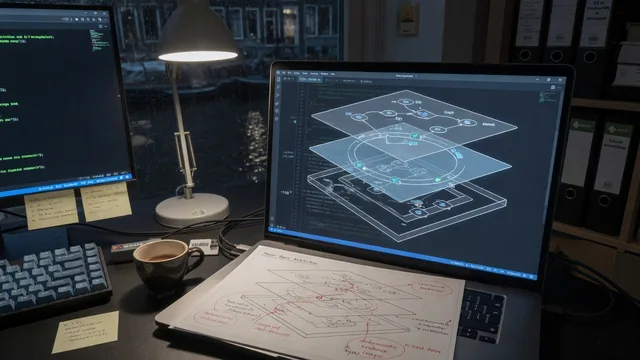
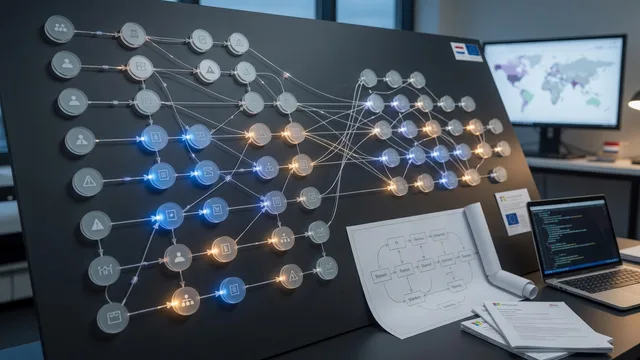
Gradio’s new gr.Workflow feature turns pipeline construction into a visual graph of typed nodes that can be assembled directly on a drag-and-drop canvas. Each node represents either an input reference, an operator that performs work, or an output subject. Operators accept custom Python functions, models served through Hugging Face Inference Providers, calls to existing Gradio Spaces, or rows from Hub datasets. Connections are made between typed ports, after which the graph can be executed node by node while intermediate results remain visible in place.
The same graph is exposed automatically as a set of REST endpoints, one per output label, so any workflow can be invoked from code with the Gradio client or plain HTTP requests without additional configuration. Deployment to Hugging Face Spaces is handled with a single command; the resulting application inherits the canvas UI, the generated API, and support for ZeroGPU when an operator function is decorated with @spaces.GPU. This allows models loaded through Diffusers or other libraries to run on demand inside the Space without requiring separate infrastructure.
Concrete examples illustrate the approach. An image-editing workflow routes a single prompt and image through Qwen-Image-Edit on Inference Providers. A media-studio workflow fans one prompt into parallel image generation with FLUX, background removal in another Gradio Space, text-to-speech conversion, and an LLM-generated title, each output receiving its own endpoint. Dataset inspection fans a dataset identifier into four independent analysis nodes that query the Datasets Server API in parallel. A video-animation workflow demonstrates local GPU execution by running Lightricks/LTX-Video inside an fn node under ZeroGPU.
Because every workflow is both an interactive interface and a callable service, developers can prototype multi-model pipelines, expose them as APIs, and move them to production Spaces without rewriting orchestration logic.
Why it matters
It provides ML Engineers with a highly actionable, hands-on tool for rapid prototyping and deploying AI workflows. The automatic REST API generation and seamless GPU integration streamline the transition from model testing to accessible endpoints, which is highly valuable for agile AI teams and SMEs.