AI News selected for Professionals and Decision Makers
AI Security And Privacy Updates

The next generation of MCP

15:00 · August 6, 2026 · Cloudflare AI Blog
The next generation of MCP

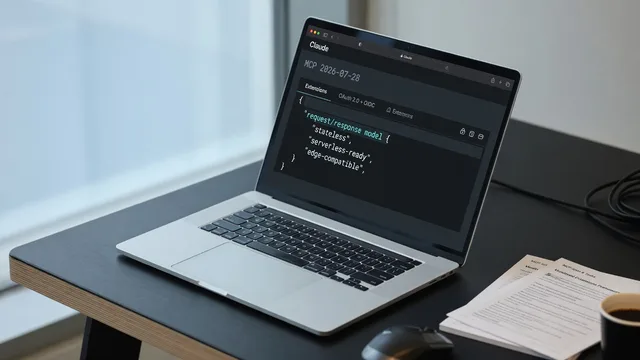
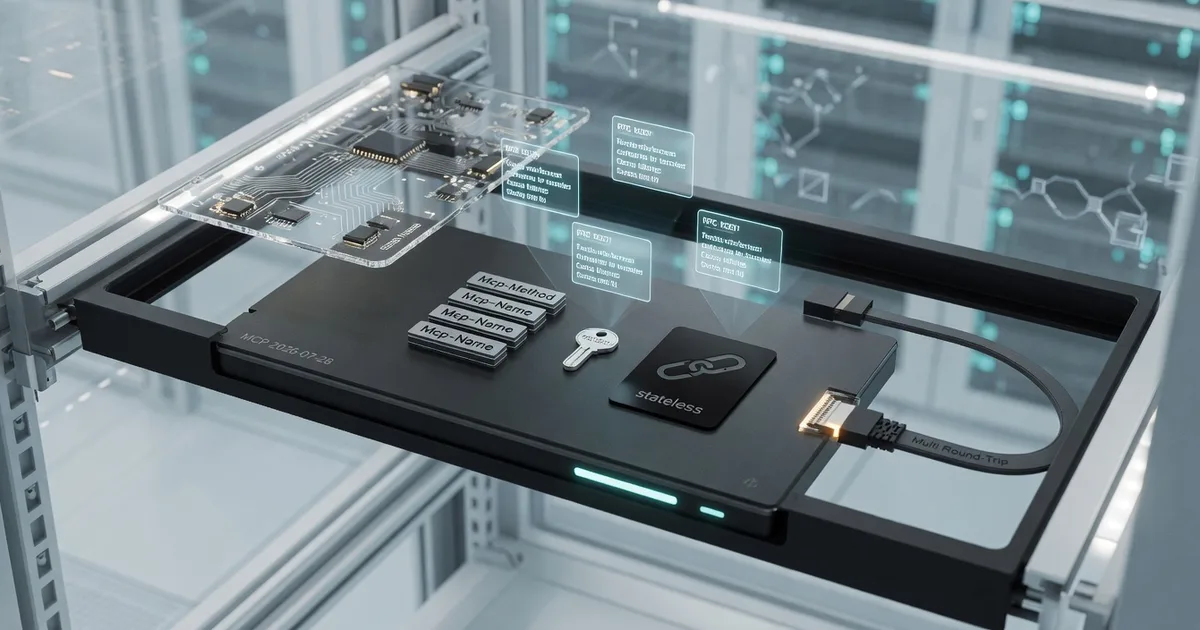
The next version of MCP has a rewritten, stateless core that just works on Workers. We cover upgrades to the protocol, the new feature lifecycle and SDK migration path, and hear from early adopters already running it in production.

Summary

The Model Context Protocol has evolved from its origins in local STDIO transports into the dominant standard for connecting AI agents to external services. Earlier remote deployments carried forward a stateful design that required session identifiers, sticky routing, and persistent streams, forcing operators to maintain coordination layers even when most interactions needed none. The MCP 2026-07-28 release removes this requirement entirely, converting the protocol to a stateless model in which every request carries its own version, identity, and capability information.

Servers can now be deployed directly on request-scoped infrastructure such as Cloudflare Workers without Durable Objects or session affinity. The initialize handshake and Mcp-Session-Id header are gone from the core path; an optional server/discover call remains available for clients that need to inspect capabilities in advance. This change also introduces Multi Round-Trip Requests for elicitations, allowing a server to return an input_required response and resume once the client supplies the missing data, eliminating the need for long-lived streams.

Additional operational improvements include mandatory Mcp-Method and Mcp-Name headers that let gateways and rate limiters inspect requests without parsing JSON bodies, plus ttlMs and cacheScope hints that support stable client-side catalogs. Authorization has been tightened by preferring pre-registered clients, adopting Client ID Metadata Documents, and requiring RFC 9207 issuer identification to prevent confusion between authorization servers. Dynamic Client Registration is now deprecated and scheduled for removal after summer 2027.

A formal feature lifecycle classifies capabilities as Active, Deprecated, or Removed, guaranteeing at least twelve months of support before removal. Roots, Sampling, Logging, and the legacy HTTP+SSE transport fall under deprecation in this release. The specification also introduces an extensions framework so that features such as Tasks can evolve outside the core protocol.

Production users report concrete gains. Sentry’s David Cramer noted that the updated specification “cleans up a bunch of the nonsense around auth and tools,” enabling deployment before finalization without production breakage. Linear’s Tom Moor described the iteration as a clear improvement that strengthens the value of open standards for secure agent access to issue-tracking data. Migration paths allow existing endpoints to accept both the new stateless requests and prior Streamable HTTP clients during the transition period.

Why it matters

Security and privacy professionals in the Netherlands can apply the updated authorization and stateless design patterns to secure AI agent deployments, aligning with EU data protection expectations. The protocol changes reduce session management risks and improve auditability for Dutch enterprises adopting MCP.

More in this beat
ai-agentscloudflaredurable-objectsLinearmcp-2026-07-28model-context-protocolSentry
How Cloudflare detects MCP traffic and helps secure it

15:12 · August 14, 2026

How Cloudflare detects MCP traffic and helps secure it

Directly addresses AI security risks from agent-driven tool calls via MCP, with actionable network controls usable by Dutch enterprises on managed paths. Strong EU relevance through privacy controls, logging, and compliance with data protection needs. Targets security professionals managing AI deployments.

Relevance 85 · Audience 90

Your agent needs a computer, not a container — introducing @cloudflare/computer

15:15 · August 3, 2026

Your agent needs a computer, not a container — introducing @cloudflare/computer

This article is relevant for security professionals as it introduces a new paradigm for sandboxing AI agent execution. The built-in gating, auditing, and isolated environments provide essential mechanisms for securing autonomous AI systems and mitigating risks associated with untrusted code execution.

Relevance 65 · Audience 60

Bringing MCP 2026-07-28 to Claude

02:00 · July 28, 2026

Bringing MCP 2026-07-28 to Claude

This update is highly relevant for product teams and builders as it fundamentally changes how MCP servers are deployed and secured. The shift to a stateless architecture and enterprise-grade authorization directly supports scalable, compliant AI agent integrations crucial for Dutch enterprises.

Relevance 85 · Audience 95

DIA’s artificial intelligence chief envisions ‘agent-to-agents’ interactions that support military operations

00:27 · August 14, 2026

DIA’s artificial intelligence chief envisions ‘agent-to-agents’ interactions that support military operations

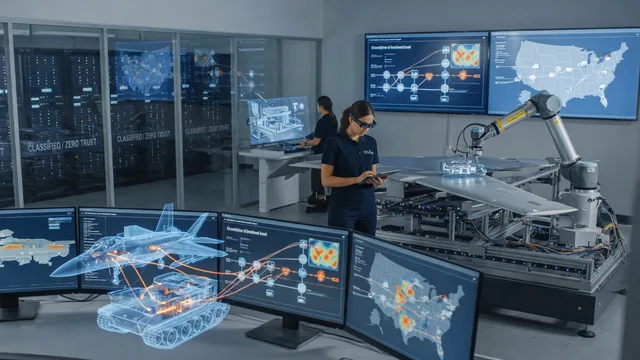
This article is highly relevant for defense strategists and technologists as it outlines the US Defense Intelligence Agency's roadmap for multi-agent AI systems in combatant commands. Understanding these developments is crucial for Dutch and NATO defense professionals to ensure interoperability, align military AI doctrines, and develop compliant, ethical AI guardrails.

Relevance 75 · Audience 90

Everything we launched during Agents Week

20:34 · August 10, 2026

Everything we launched during Agents Week

This article is highly relevant for security and privacy professionals as it introduces practical frameworks and tools, such as Zero Trust for AI agents and identity-aware analytics, to secure autonomous AI systems. These capabilities are crucial for Dutch enterprises aiming to deploy AI agents securely while complying with strict EU data protection and AI regulations.

Relevance 85 · Audience 90

Building an open Agentic Internet: readable, discoverable, callable, and payable

15:00 · August 6, 2026

Building an open Agentic Internet: readable, discoverable, callable, and payable

This article is highly relevant for security and privacy professionals as it introduces new cryptographic standards (Web Bot Auth, PACT) for authenticating and managing AI bot traffic. It provides actionable solutions for Dutch enterprises to protect their domains from unauthorized scraping while aligning with EU data protection and copyright directives.

Relevance 85 · Audience 90

Introducing Kitesurf: The agent-first browser that runs in V8 isolates on Cloudflare Workers

15:00 · August 6, 2026

Introducing Kitesurf: The agent-first browser that runs in V8 isolates on Cloudflare Workers

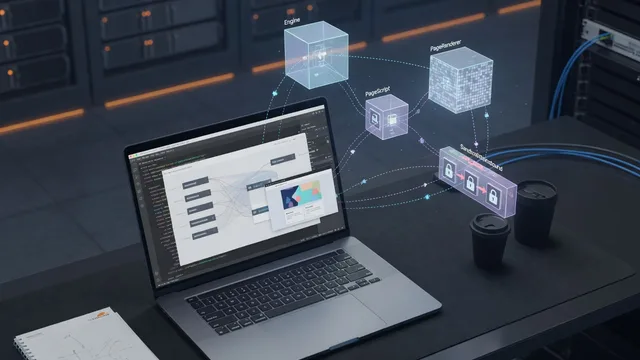
Kitesurf introduces a secure-by-design, isolated browsing environment for AI agents, addressing the critical security risks of autonomous web interaction. For Dutch security professionals, it offers a scalable, stateless architecture that aligns with strict EU data protection and security standards for enterprise AI deployments.

Relevance 85 · Audience 80

How we’re rethinking work at Cloudflare with Cloudflare OS

15:00 · August 5, 2026

How we’re rethinking work at Cloudflare with Cloudflare OS

Directly addresses AI security risks, privacy controls and compliance patterns that Dutch security teams can adapt under GDPR and the EU AI Act. Provides concrete, actionable guidance on Zero Trust integration, permission scoping and auditability for AI agents.

Relevance 85 · Audience 90

Announcing Cloudflare Wallets: The programmable wallet for the agentic Internet

15:00 · August 4, 2026

Announcing Cloudflare Wallets: The programmable wallet for the agentic Internet

This article is relevant for security and privacy professionals as it introduces new paradigms for AI agent identity verification and financial guardrails. Understanding these mechanisms is crucial for securing enterprise APIs against unauthorized agent access and ensuring compliance with automated spending policies.

Relevance 75 · Audience 80

AI Tool Discovery at Scale: All You Need is DNS

06:00 · July 22, 2026

AI Tool Discovery at Scale: All You Need is DNS

This research is highly relevant for Dutch AI infrastructure developers and researchers building multi-agent systems. Its decentralized governance model aligns well with European data sovereignty and transparent AI goals, offering a scalable alternative to centralized tool registries.

Relevance 85 · Audience 95