Building an open Agentic Internet: readable, discoverable, callable, and payable
15:00 · August 6, 2026 · Cloudflare AI Blog

Agents are a new kind of visitor. They don't render CSS or click ads, but they have a paying human on the other end. Block them and you block your customer. We're building the open tools and protocols so publishers and agents can cooperate and not collide.
Summary
Cloudflare is developing a set of open protocols and developer tools to support what it calls the Agentic Internet, in which autonomous software agents act as a distinct class of web visitor on behalf of paying users. The company argues that current web infrastructure, built around human browsers that render pages, click links, and view advertisements, is poorly suited to agents that consume content programmatically, ignore visual elements, and generate repeated requests even when resources remain unchanged. Its approach centers on four properties: readable, discoverable, callable, and payable.
Identity forms the foundation. Web Bot Auth allows agents to present cryptographic proof of their origin rather than relying on easily spoofed User-Agent strings. Sites can then make access decisions without guessing intent. Complementing this, Private Access Control Tokens (PACT), developed with Mozilla, Google, Microsoft, and Shopify, let a site that already knows a user issue an anonymous token the agent can carry elsewhere, reducing friction for legitimate traffic while limiting exposure of personal data.
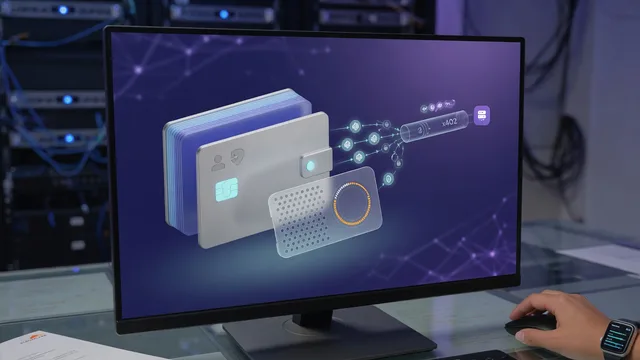
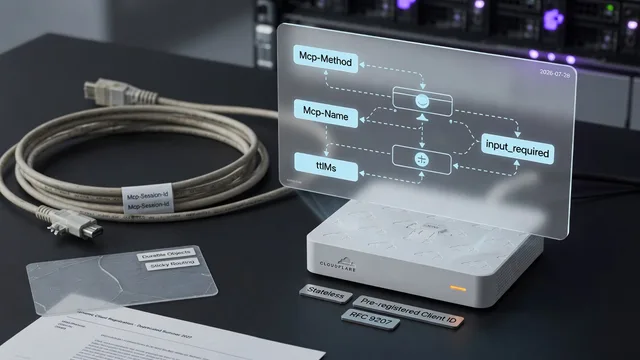
Additional specifications address the remaining properties. Markdown for Agents and the lightweight Kitesurf browser reduce token and bandwidth costs by delivering content stripped of human-oriented markup. WebMCP exposes site actions as explicit, reusable tools instead of requiring agents to parse and simulate DOM interactions. Payment standards such as x402, together with wallets and a Monetization Gateway, enable direct, receipted micro-transactions so publishers can charge fractions of a cent per fetch or license content at read time without seat-based or advertising models.
Throughout, Cloudflare positions the specifications as open standards that any party can implement, with domain owners retaining choice of identity providers, payment processors, and agent partners. The stated goal is to give operators granular control: welcoming agents that read efficiently, follow declared interfaces, and compensate for access, while blocking or rate-limiting those that scrape without return. This framework treats agents as a new category of actor whose behavior can be shaped by technical and economic signals rather than by binary bot-or-human classification.
Why it matters
This article is highly relevant for security and privacy professionals as it introduces new cryptographic standards (Web Bot Auth, PACT) for authenticating and managing AI bot traffic. It provides actionable solutions for Dutch enterprises to protect their domains from unauthorized scraping while aligning with EU data protection and copyright directives.