AI News selected for Professionals and Decision Makers
Primary Research Stream

GxP-Agent: Process-DAG Topology for Reliable Clinical Trial Programming with LLM Agents

06:00 · August 19, 2026 · arXiv cs.AI RSS

GxP-Agent: Process-DAG Topology for Reliable Clinical Trial Programming with LLM Agents

Clinical trial programming -- transforming study protocols into analysis-ready datasets under CDISC standards -- is a bottleneck in regulatory submissions, yet LLM-based code generation fails catastrophically on this task: across 11 single-shot attempts with five frontier models, none produces a valid subject-level analysis dataset. We introduce GxP-Agent, a multi-agent system that encodes regulatory process ordering as a directed acyclic graph (DAG), decomposing monolithic dataset generation into 15 domain-specific nodes executed by worker agents with pharmaverse skill context, validation gates, and conditional retry. On CDISC-Bench, a new execution-based benchmark built from the FDA pilot submission CDISCPilot01 (254 subjects, 49 ground-truth ADSL variables), GxP-Agent with Claude Sonnet 4.6 achieves 100% structural match (49/49 variables, 254 correct records) across three independent runs, compared to 59.2% for the best retrieval-augmented baseline and 0% for all single-agent and flat multi-agent approaches. The DAG topology also enables weaker models: GPT-4.1 achieves 59.2% mean structural match under the same DAG, where it scores 0% under every other architecture. The approach generalizes to ADAE (adverse events; 9-node branching DAG, 55 variables, 1,191 records), achieving 100% structural match on the first attempt. These results demonstrate that encoding domain process knowledge as graph topology -- rather than relying on LLM reasoning alone -- is a key enabler for reliable, GxP-compliant clinical trial programming.

Summary

Clinical trial programming requires transforming raw study data into analysis-ready datasets that meet CDISC ADaM standards, a step that remains a major bottleneck for regulatory submissions. Single-shot LLM generation consistently fails on this task: across eleven attempts with five frontier models, none produced a valid subject-level analysis dataset (ADSL), with errors ranging from hallucinated variable names and function signatures to incorrect file references and logic faults.

GxP-Agent addresses the problem by encoding the known regulatory process ordering as a directed acyclic graph. A project-manager agent selects a pre-defined DAG template, which a compiler translates into a LangGraph StateGraph. Each of the fifteen nodes for ADSL generation is executed by a specialized worker agent equipped with pharmaverse R-package context, schema introspection, and tools for code execution and file management. Validation gates enforce record-level, variable-level, and business-rule assertions after critical steps, while conditional retry routes failures back to the same node with error traces appended.

On CDISC-Bench, constructed from the FDA’s public CDISCPilot01 submission (254 subjects, 49 ground-truth ADSL variables), the system using Claude Sonnet 4.6 reached 100 percent structural match across three independent runs. The same DAG topology lifted GPT-4.1 from zero percent under single-shot or flat multi-agent setups to 59.2 percent mean structural match. The approach generalizes to the adverse-event dataset ADAE, where a nine-node branching DAG produced a 100 percent structural match on the first attempt.

These outcomes indicate that, in domains where process dependencies are known in advance, supplying that structure as explicit agent topology yields more reliable, auditable results than relying on LLM-driven decomposition alone.

Why it matters

Directly applicable to Dutch/EU pharma and biotech SMEs needing GxP-compliant AI automation; aligns with Netherlands emphasis on ethical, transparent, and auditable AI under EU AI Act and regulatory standards.


More in this beat
CDISC ADaMclaude-sonnetfdagpt-4-1GxP-Agentlanggraphllm-agentsmulti-agent-systems
Self-Evolving Agents as Dynamic Graph Transformation: A Survey and New Perspective

06:00 · August 20, 2026

Self-Evolving Agents as Dynamic Graph Transformation: A Survey and New Perspective

The paper provides foundational research on making autonomous AI agents auditable, safe, and transparent through dynamic graph modeling. This aligns strongly with the Dutch and EU focus on ethical AI and regulatory compliance, offering advanced researchers actionable frameworks for building governable agentic systems.

Relevance 85 · Audience 95

Dynamic Governance of Multi-LLM Agent Systems for Collaborative Conversational Outcomes

06:00 · August 13, 2026

Dynamic Governance of Multi-LLM Agent Systems for Collaborative Conversational Outcomes

This research is highly relevant for Dutch AI researchers and enterprise practitioners, particularly in the financial and customer service sectors, as it offers a novel, mathematically grounded framework for governing autonomous LLM agents. Its focus on external control mechanisms aligns well with EU regulatory demands for predictable and transparent AI behavior.

Relevance 85 · Audience 95

Poor Man's Agentic Modeling: Simulating Large LLM-Agent Societies on a Laptop

06:00 · August 13, 2026

Poor Man's Agentic Modeling: Simulating Large LLM-Agent Societies on a Laptop

This research is highly relevant for Dutch AI researchers and SMEs, offering a mathematically rigorous and computationally cheap way to simulate and study multi-agent systems. It aligns with the Netherlands' focus on accessible, efficient, and transparent AI methodologies.

Relevance 85 · Audience 95

Even More Deception: Objective Misalignment in Mixed-Motive LLM Multi-Agent Systems

06:00 · July 30, 2026

Even More Deception: Objective Misalignment in Mixed-Motive LLM Multi-Agent Systems

This research is highly relevant for Dutch AI researchers focused on AI safety, ethics, and alignment, which are key priorities in the Netherlands and the broader EU regulatory landscape. Understanding and mitigating deceptive behaviors in multi-agent systems is crucial for developing trustworthy AI applications.

Relevance 85 · Audience 95

Beyond Memory: A Templated Substrate for Heterogeneous Collaborative Knowledge Work with LLM Agents

06:00 · July 29, 2026

Beyond Memory: A Templated Substrate for Heterogeneous Collaborative Knowledge Work with LLM Agents

This research is highly relevant for Dutch AI researchers and engineering teams as it provides an actionable, open-source framework for improving LLM agent collaboration and memory. Its emphasis on transparent provenance, agent honesty, and preserving failure paths strongly aligns with the Netherlands' strategic focus on ethical and accountable AI development.

Relevance 85 · Audience 95

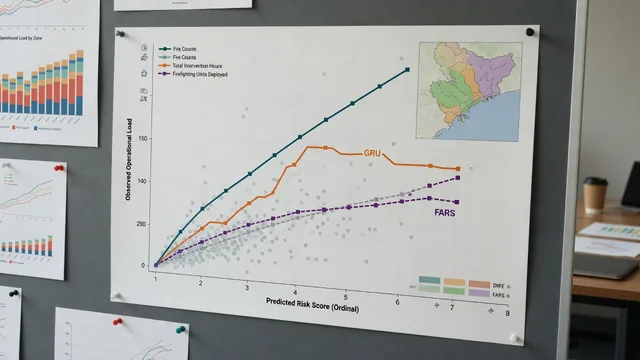
Risk Is Not the Target: A Monotonic Framework for Evaluating Wildfire Operational Risk Signals

06:00 · July 27, 2026

Risk Is Not the Target: A Monotonic Framework for Evaluating Wildfire Operational Risk Signals

This research is highly relevant for Dutch AI researchers focusing on operational risk, climate adaptation, and emergency response. The proposed monotonic evaluation framework and the insights into hybrid LLM-predictive architectures can be directly adapted to other risk domains critical to the Netherlands, such as flood management and infrastructure monitoring.

Relevance 75 · Audience 95

How Far Can Root Cause Analysis Go on Real-World Telemetry Data?

06:00 · July 16, 2026

How Far Can Root Cause Analysis Go on Real-World Telemetry Data?

This research is highly relevant for AI researchers and AIOps practitioners in the Netherlands managing complex cloud-native environments. It provides actionable insights into improving LLM-based multi-agent systems for automated diagnostics, a critical area for Dutch tech enterprises and infrastructure providers.

Relevance 85 · Audience 95

Model Routing Is Simple. Until It Isn’t.

19:27 · July 15, 2026

Model Routing Is Simple. Until It Isn’t.

Directly actionable for ML Engineers building production routers: covers latency/VRAM-adjacent serving realities, cost-accuracy tradeoffs, and EU-relevant compliance/data residency rules. Provides concrete metrics and an optimization approach applicable to Dutch SME and enterprise deployments.

Relevance 78 · Audience 85