Graph Engineering replaced RAG at Microsoft, Stanford and Anthropic. Here's how it works.
21:06 · August 2, 2026 · X (Twitter)
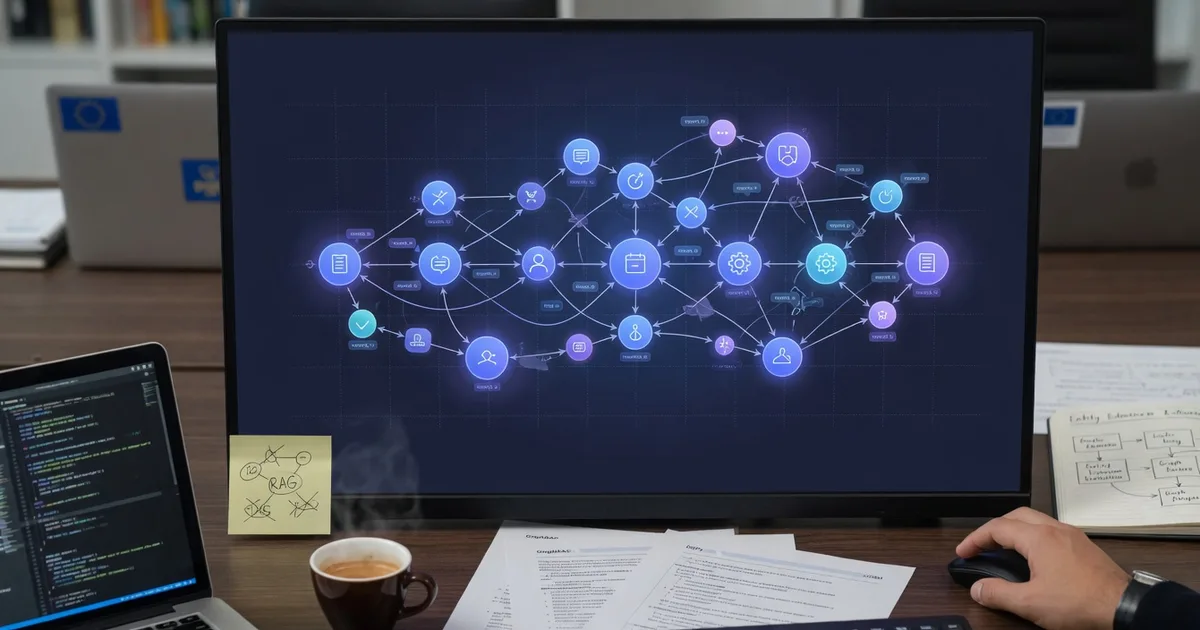
The post explains how Graph Engineering improves on standard RAG by extracting entities and relationships into knowledge graphs, citing Microsoft GraphRAG, Stanford DSPy/STORM, and Anthropic implementations. It claims 18% higher accuracy and 85% lower costs with concrete pipeline steps and prompts. The content targets developers building production AI systems.
Summary
The X post by Sprytix (@Sprytixl) presents Graph Engineering as a superior alternative to traditional RAG, drawing on independent work from Microsoft (GraphRAG), Stanford (DSPy and STORM), and Anthropic. It argues that extracting entities and explicit relationships into a knowledge graph enables better handling of complex, multi-hop questions compared to simple text chunk retrieval. The author supplies concrete benchmarks such as 18% accuracy gains and 85% token cost reduction, along with a nine-step pipeline and five reusable prompts for extraction, normalization, querying, and maintenance.
Key technical points include the distinction between local and global search over graphs, the finding that a well-structured graph outperforms larger models, and real-world Anthropic customer results showing faster incident detection and reduced meeting time. References to open-source repositories (GraphRAG, DSPy, MCP) and academic papers are provided, making the claims traceable. The post emphasizes that the model becomes one node in a larger system rather than the sole reasoning engine.
For Dutch and EU AI practitioners this matters because Graph Engineering offers a practical route to more reliable, auditable, and cost-effective retrieval systems that align with European priorities around trustworthy AI and efficient deployment. Organizations building internal knowledge tools or customer-facing assistants can adopt the described patterns without requiring PhD-level teams, supporting both SME adoption and compliance-focused development in the region.
Why it matters
Provides actionable technical details on graph-based retrieval that Dutch and EU AI engineers can apply to enterprise RAG projects, aligning with regional focus on reliable, cost-efficient AI tooling.