AI News selected for Professionals and Decision Makers
Hands On Model Tooling And Research Updates

Data for Agents

19:16 · July 8, 2026 · Hugging Face Blog

Data for Agents

Summary

NVIDIA argues that open model weights alone fall short when building agents capable of operating in unpredictable environments. Real agents must handle tool failures, multi-step workflows, recovery from unexpected states, and interactions that benchmarks rarely capture. The company positions its Nemotron open data releases as a direct response, supplying the traces, failure cases, and reasoning examples needed to move beyond simple tool-augmented autocomplete.

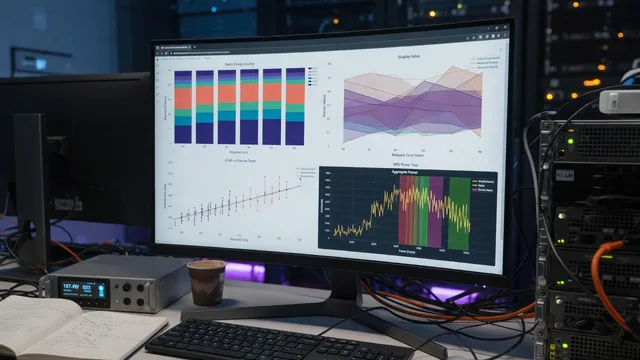
Reproducibility for agents depends on more than weights. It requires visibility into the datasets, curation decisions, and evaluation methods that shape behavior. To support inspection, NVIDIA released the Nemotron Post-Training v3 Prompt Atlas, an interactive visualization of its post-training collection. Each point represents a prompt sample drawn proportionally from the mixture; users can filter by domain, pipeline stage, or tool usage and examine clusters that correspond to coding, safety, mathematics, or agentic tasks.

Synthetic data offers a practical route for organizations to contribute useful training signals without disclosing proprietary workflows or customer patterns. NVIDIA’s Bryan Catanzaro notes that every company is built around such “secrets,” yet openly shared synthetic records can preserve the underlying statistical value. The same principle extends to demographic grounding: Nemotron-Personas generates synthetic personas that reflect official regional statistics across ten countries, representing more than 2.4 billion people. These personas are produced with NeMo Data Designer and are intended to help teams test whether their agents perform appropriately for specific languages, regions, and occupations.

The approach acknowledges inherent limits. Synthetic data reduces exposure risk but still requires lineage tracking, human review, and explicit documentation of what was generated versus observed. NVIDIA frames open data practices as a way to enlarge the shared layer of training material while letting contributors retain what makes their systems distinctive, thereby supporting a broader set of participants in agent development.

Why it matters

This article provides ML Engineers with actionable insights and open-source tools for curating and inspecting training data for AI agents. It addresses the critical challenges of data provenance, synthetic thresholds, and local data quality, which aligns strongly with the Dutch and EU focus on transparent and ethical AI development.


More in this beat
ai-agentsdata-provenancelarge-language-modelsnemotronNemotron-Personasnvidiasynthetic-data
NVIDIA and Local AI Community Fuel Open Source Models and Intelligent Agents

15:00 · August 11, 2026

NVIDIA and Local AI Community Fuel Open Source Models and Intelligent Agents

This article highlights significant advancements in local AI and open-source models, which are crucial for businesses looking to deploy cost-effective, privacy-preserving AI solutions. However, the heavy use of technical jargon makes it less accessible to a general audience.

Relevance 65 · Audience 40

NVIDIA Brings Trusted, 24/7 AI Agents to Telecom Operations

08:00 · June 23, 2026

NVIDIA Brings Trusted, 24/7 AI Agents to Telecom Operations

The article highlights the evolution of AI agents in managing critical enterprise infrastructure, which is a key trend in AI development. Its focus on privacy-preserving synthetic data and secure, governed AI runtimes aligns strongly with the Dutch market's emphasis on ethical and transparent AI.

Relevance 75 · Audience 65

Into the Omniverse: How Open World Models Push the Frontier of Physical AI

15:00 · August 6, 2026

Into the Omniverse: How Open World Models Push the Frontier of Physical AI

The release of open-weight physical AI models by a major player like NVIDIA significantly lowers the barrier to entry for developing advanced robotics and autonomous systems. This is highly relevant for the Dutch market, which features strong logistics, agriculture, and high-tech manufacturing sectors that can leverage these transparent, open-source tools for innovation.

Relevance 75 · Audience 70

Three Recent Chrome Releases Fix 1,442 Flaws, More Than Prior 23 Updates Combined

14:51 · July 31, 2026

Three Recent Chrome Releases Fix 1,442 Flaws, More Than Prior 23 Updates Combined

This article highlights how AI and LLMs are fundamentally changing the cybersecurity landscape by accelerating vulnerability discovery and exploitation. Dutch security professionals must adapt their vulnerability management strategies to handle the increased volume of AI-driven threat disclosures in ubiquitous enterprise software.

Relevance 85 · Audience 95

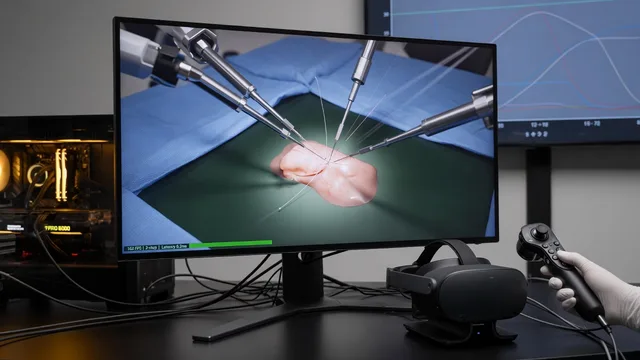
NVIDIA Cosmos-H-Dreams: Bringing Real-Time Generative Simulation to Surgical Robotics

11:32 · July 27, 2026

NVIDIA Cosmos-H-Dreams: Bringing Real-Time Generative Simulation to Surgical Robotics

Provides concrete implementation details on distillation, autoregressive rollout stability, few-step diffusion, and low-latency serving that directly address production constraints for ML engineers. Includes actionable training recipes and quantitative performance gains applicable to Dutch teams working on generative models or robotics.

Relevance 78 · Audience 85

At SIGGRAPH, NVIDIA Advances Graphics and Simulation With Agentic and Physical AI

17:00 · July 20, 2026

At SIGGRAPH, NVIDIA Advances Graphics and Simulation With Agentic and Physical AI

The article showcases significant AI breakthroughs in creative workflows, robotics, and media verification. The Synthetic Video Detector is highly relevant to the Dutch market's focus on ethical and transparent AI, while the accessible agentic AI tools support the high rate of AI adoption among Dutch SMEs.

Relevance 85 · Audience 80