AI News selected for Professionals and Decision Makers
AI Security And Privacy Updates

AI Cybersecurity Needs Collective Defense, But Multiplying Alliances Risk Confusing Enterprise Buyers

17:48 · August 6, 2026 · CX Today
AI Cybersecurity Needs Collective Defense, But Multiplying Alliances Risk Confusing Enterprise Buyers

New AI security partnerships promise faster collective defence, but enterprises need clarity as tools, coalitions and frameworks proliferate.

Summary

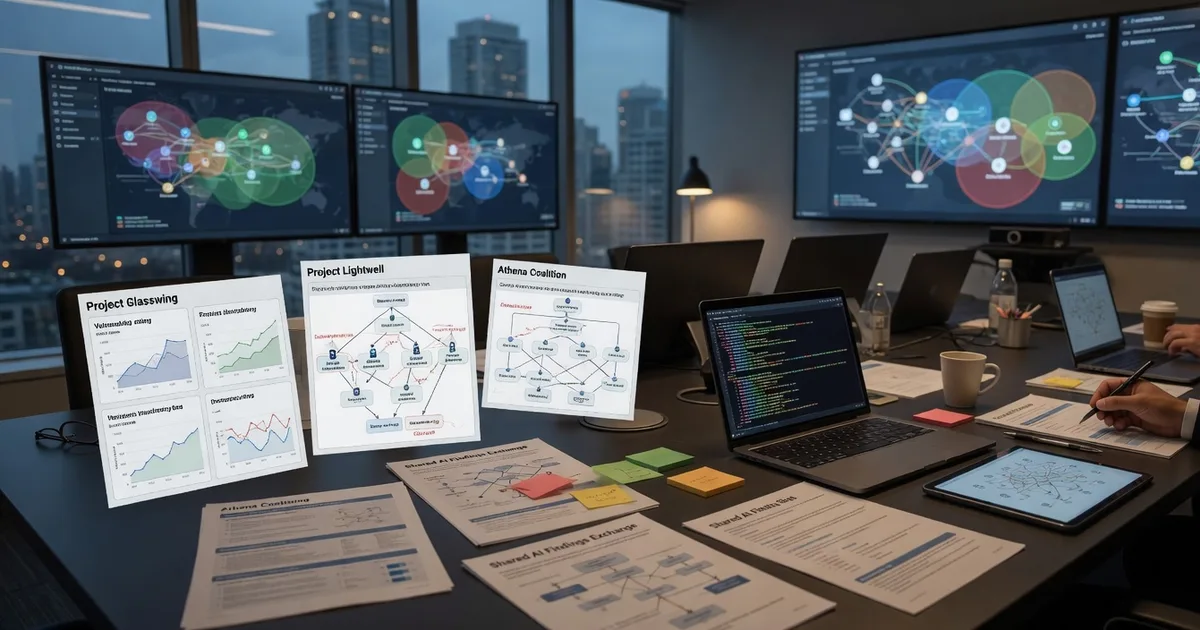
Enterprise cybersecurity teams face mounting pressure from AI-accelerated vulnerability discovery and exploitation, prompting a wave of industry alliances and platform partnerships. No single vendor or organization can match the pace of these threats alone, so initiatives have formed to share intelligence, harden the software supply chain, and turn isolated incidents into reusable guidance. Examples include Anthropic’s Project Glasswing, which applies advanced models to surface large volumes of vulnerabilities, and IBM and Red Hat’s Project Lightwell, backed by a substantial investment to speed remediation of open-source components without relying on lengthy upgrade cycles. The Athena coalition, led by Chainguard, coordinates AI-driven identification and fixes across open-source projects, while the Open Secure AI Alliance has proposed Shared AI Findings Exchange guidelines to enable confidential sharing of AI-related incidents and near-misses.

These overlapping efforts create practical difficulties for enterprises already managing complex security stacks and legacy systems. Buyers encounter separate coalitions for intelligence sharing, cloud-integrated supply-chain tools, incident-reporting frameworks, and patch-deployment services, each with its own governance, maturity level, and integration path. Industry voices note that short-term choice overload is likely, though competition may eventually drive consolidation. The immediate risk is that organizations treat participation as another procurement exercise, adding dashboards, alerts, and contractual ties without reducing exposure.

Security leaders are therefore urged to evaluate each initiative against concrete operational needs, such as faster vulnerability discovery, secure findings exchange, dependency validation, or safe recovery after disruption. The goal is a coherent strategy that links software engineering, AI governance, security operations, and third-party risk management, rather than layering new categories onto existing complexity. As one CISO observed, addressing AI-driven threats requires coordinated effort across the ecosystem, because isolated approaches will not keep pace with the threat landscape.

Why it matters

This article is highly relevant for Dutch security and privacy professionals as they navigate the complex landscape of global AI security frameworks and alliances. Understanding how to effectively integrate these collective defense initiatives is crucial for maintaining cyber resilience and compliance within the Dutch and broader EU regulatory environment.

More in this beat
anthropicibmopen-secure-ai-allianceopen-source-securityproject-glasswingproject-lightwellred-hatsecurity-operations
IBM and Red Hat Move Project Lightwell to Commercial Launch, Warning AI Security Risks are a “Wake Up Call” for CX Leaders

18:23 · July 13, 2026

IBM and Red Hat Move Project Lightwell to Commercial Launch, Warning AI Security Risks are a “Wake Up Call” for CX Leaders

This article is highly relevant for security professionals as it highlights a critical shift in the threat landscape where AI accelerates both attacks and remediation. It offers actionable insights into managing technical debt and introduces a major new enterprise tool for securing open-source dependencies, which is vital for Dutch organizations deploying AI.

Relevance 85 · Audience 95

AI Leaders Propose SAFE Guidelines for Cybersecurity Transparency

15:00 · August 4, 2026

AI Leaders Propose SAFE Guidelines for Cybersecurity Transparency

This article highlights major collaborative advancements in AI cybersecurity and governance, which are critical for safe AI deployment. The explicit inclusion of tools designed to map to the EU AI Act makes it highly pertinent for Dutch enterprises and policymakers focused on ethical and compliant AI.

Relevance 85 · Audience 75

Industry Leaders Unite in Open Secure AI Alliance for AI Safety and Security

11:00 · July 27, 2026

Industry Leaders Unite in Open Secure AI Alliance for AI Safety and Security

This article is highly relevant as it highlights a major industry push towards transparent, open-source AI for cybersecurity, aligning closely with the Dutch and EU focus on ethical, secure, and sovereign AI deployment. It provides valuable insights for businesses and policymakers on balancing AI safety with open innovation.

Relevance 85 · Audience 90

How Outtake built a cyber investigator on Claude

02:00 · July 22, 2026

How Outtake built a cyber investigator on Claude

This article provides a practical use case for Product Teams and Builders on how to leverage Claude Code and the Agent SDK to build long-running, autonomous AI agents. It offers valuable architectural insights for Dutch AI practitioners developing cybersecurity solutions or complex agentic workflows.

Relevance 75 · Audience 85

OpenAI Expands Daybreak With GPT-5.5-Cyber to Help Defenders Patch Security Flaws

05:56 · June 23, 2026

OpenAI Expands Daybreak With GPT-5.5-Cyber to Help Defenders Patch Security Flaws

This article is highly relevant for security professionals as it introduces a specialized AI tool for vulnerability detection and remediation. Dutch enterprises can leverage such models to strengthen their cybersecurity posture and comply with stringent EU security regulations like NIS2.

Relevance 85 · Audience 95

AI Broke Vulnerability Management. That's Why CISOs Are Moving Budget to BAS.

13:30 · June 11, 2026

AI Broke Vulnerability Management. That's Why CISOs Are Moving Budget to BAS.

This article is highly relevant for security professionals as it highlights a critical shift in the threat landscape driven by AI, specifically the rapid weaponization of vulnerabilities. It provides actionable insights for Dutch CISOs and security teams to adapt their defensive strategies and tooling, such as adopting BAS, to maintain robust security postures against AI-accelerated threats.

Relevance 85 · Audience 95