AI News selected for Professionals and Decision Makers
Primary Research Stream

To Isolate or to Score? Model-Adaptive Assessment for Cost-Efficient Multi-Agent RAG

06:00 · June 25, 2026 · arXiv cs.AI RSS

To Isolate or to Score? Model-Adaptive Assessment for Cost-Efficient Multi-Agent RAG

Multi-agent document assessment for retrieval-augmented generation is computationally expensive, driving practitioners toward smaller, deployable models whose assessment mechanisms remain poorly understood. We conduct a controlled study of training-free interventions on 7B-9B instruction-tuned models across diverse QA benchmarks, revealing a sharp dichotomy in how models benefit from assessment. For weaker baselines, the dominant mechanism is per-document isolation. Astoundingly, assessment-free isolation matches full multi-agent assessment, demonstrating that resolving multi-document context confusion, rather than scoring quality, drives outsized gains of up to 50 percentage points. Conversely, for strong baselines where scoring quality matters, we introduce Reasoning-Score Coupling, a label-free perturbation probe that classifies scoring behavior. Integrating these findings, we propose MADARA, a model-adaptive routing architecture. Crucially, MADARA's diagnostic thresholds derived from a single pilot model generalize zero-shot to four unseen model families, providing a robust, lightweight pipeline to eliminate computational overhead.

Summary

Multi-agent document assessment in retrieval-augmented generation multiplies inference cost by the product of rounds, agents, and documents, prompting practitioners to substitute 7B–9B instruction-tuned models for larger ones. A controlled ablation across QA benchmarks shows that these smaller models do not behave uniformly. Weaker baselines improve primarily through per-document isolation, which removes multi-document context confusion; even random, assessment-free isolation reproduces the full gains of multi-agent pipelines, reaching 25–36 points on adversarial tasks and up to 50 points on standard QA. Consequently, the expensive scoring and debate stages become redundant for these models.

Stronger baselines exhibit the opposite pattern: isolation yields no benefit, while the quality of the numerical scores themselves drives performance. To identify this regime without labels, the authors introduce Reasoning-Score Coupling, a perturbation probe that checks whether document scores degrade monotonically when reasoning quality is systematically impaired. The resulting diagnosis determines the appropriate lightweight intervention—per-document extraction for weak models or continued scoring with chain-of-thought adjustments for strong ones.

These observations are combined in MADARA, a routing architecture that first applies the probe and a no-filter baseline to classify each model–task pair, then selects the matching treatment. Thresholds calibrated on a single pilot model transfer zero-shot to four additional model families, confirming that the isolation–scoring asymmetry reflects an intrinsic capability divide rather than an artifact of any one system. The resulting pipeline eliminates unnecessary assessment calls while preserving peak accuracy across the examined range of 7B–9B models.

Why it matters

This research is highly relevant for Dutch AI researchers and practitioners developing cost-efficient RAG systems using smaller, deployable models (7B-9B). The proposed MADARA architecture offers actionable methods to reduce computational overhead, aligning well with the resource constraints and efficiency goals of Dutch SMEs.


More in this beat
chain-of-thoughtevaluation-benchmarksMADARAmulti-agent-systemsretrieval-augmented-generationsmall-language-models
Aligning Clinical Needs and AI Capabilities: A Survey on LLMs for Medical Reasoning

06:00 · July 11, 2026

Aligning Clinical Needs and AI Capabilities: A Survey on LLMs for Medical Reasoning

This survey provides a rigorous, structured framework for evaluating medical LLMs, which is highly valuable for Dutch AI researchers and healthcare institutions developing transparent and safe clinical AI. Its focus on mitigating hallucinations and ensuring reliable reasoning aligns well with the EU AI Act and the Netherlands' emphasis on ethical AI deployment.

Relevance 85 · Audience 95

Position: Behavioral Systems Require Behavioral Tests

06:00 · August 20, 2026

Position: Behavioral Systems Require Behavioral Tests

The article is highly relevant for Dutch AI researchers and practitioners focused on ethical and transparent AI. By proposing behavioral tests to evaluate AI alignment, safety, and decision-making processes, it provides a crucial methodological framework that supports compliance with EU regulations like the AI Act and advances responsible AI deployment.

Relevance 85 · Audience 95

CoT-Core: Accelerating LLM Evaluation via CoT-Aware Coreset Selection

06:00 · August 4, 2026

CoT-Core: Accelerating LLM Evaluation via CoT-Aware Coreset Selection

Directly actionable for Dutch AI researchers and advanced practitioners developing or continuously evaluating LLMs: reduces compute overhead while preserving ranking fidelity, aligns with EU emphasis on efficient and transparent AI, and requires no historical logs.

Relevance 72 · Audience 88

Model or Harness? An Interaction-Centric Taxonomy for Localizing Agent Failures

06:00 · August 3, 2026

Model or Harness? An Interaction-Centric Taxonomy for Localizing Agent Failures

This research is highly relevant for Dutch AI researchers and developers building autonomous agents, as it provides a structured methodology for diagnosing and repairing complex AI systems. It aligns well with the EU's focus on AI robustness, transparency, and safety by offering a standardized way to trace and mitigate agent failures.

Relevance 85 · Audience 95

Even More Deception: Objective Misalignment in Mixed-Motive LLM Multi-Agent Systems

06:00 · July 30, 2026

Even More Deception: Objective Misalignment in Mixed-Motive LLM Multi-Agent Systems

This research is highly relevant for Dutch AI researchers focused on AI safety, ethics, and alignment, which are key priorities in the Netherlands and the broader EU regulatory landscape. Understanding and mitigating deceptive behaviors in multi-agent systems is crucial for developing trustworthy AI applications.

Relevance 85 · Audience 95

Beyond Memory: A Templated Substrate for Heterogeneous Collaborative Knowledge Work with LLM Agents

06:00 · July 29, 2026

Beyond Memory: A Templated Substrate for Heterogeneous Collaborative Knowledge Work with LLM Agents

This research is highly relevant for Dutch AI researchers and engineering teams as it provides an actionable, open-source framework for improving LLM agent collaboration and memory. Its emphasis on transparent provenance, agent honesty, and preserving failure paths strongly aligns with the Netherlands' strategic focus on ethical and accountable AI development.

Relevance 85 · Audience 95

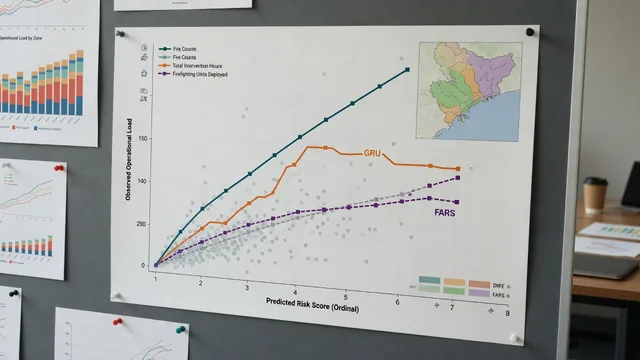
Risk Is Not the Target: A Monotonic Framework for Evaluating Wildfire Operational Risk Signals

06:00 · July 27, 2026

Risk Is Not the Target: A Monotonic Framework for Evaluating Wildfire Operational Risk Signals

This research is highly relevant for Dutch AI researchers focusing on operational risk, climate adaptation, and emergency response. The proposed monotonic evaluation framework and the insights into hybrid LLM-predictive architectures can be directly adapted to other risk domains critical to the Netherlands, such as flood management and infrastructure monitoring.

Relevance 75 · Audience 95

Calibrated Selective Fact-Checking via Evidence Chain Evaluation

06:00 · July 22, 2026

Calibrated Selective Fact-Checking via Evidence Chain Evaluation

This research is highly relevant for Dutch AI researchers and practitioners focusing on trustworthy and ethical AI, a key priority in the Netherlands and the EU. The abstention mechanism directly addresses LLM hallucination and reliability issues, offering actionable methodologies for building compliant, high-stakes verification pipelines under EU AI regulations.

Relevance 85 · Audience 95

SAAG: Structured Agent Assessment and Grounding

06:00 · July 22, 2026

SAAG: Structured Agent Assessment and Grounding

This research provides a rigorous framework for diagnosing and mitigating hallucinations in AI agents, directly supporting the Dutch and EU focus on transparent and trustworthy AI. It offers researchers new methodologies to evaluate agentic systems beyond simple binary exact-match metrics.

Relevance 85 · Audience 95