AI News selected for Professionals and Decision Makers
Primary Research Stream

Task-Conditioned Synthetic Data Generation for Improving Machine Learning Performance in Agricultural Prediction Tasks

06:00 · July 14, 2026 · arXiv cs.AI RSS

Task-Conditioned Synthetic Data Generation for Improving Machine Learning Performance in Agricultural Prediction Tasks

Machine Learning (ML) algorithms have been widely used to estimate agricultural variables across diverse contexts. However, because the quantity and quality of training data strongly influence performance of ML algorithms, their use can be constrained by limited or incomplete reference data. Synthetic Data Generation (SDG) offers a practical approach to address this issue by producing artificial but realistic samples that preserve key characteristics of the original data. Building on teacher-student knowledge transfer and in-context learning for tabular data, this study proposes a Task-Conditioned SDG (TCSDG) algorithm that pairs a Bayesian Network generator with a transformer-based tabular foundation model (TabICL). The proposed algorithm was evaluated on two agricultural prediction tasks: crop yield prediction and crop type classification. Six benchmark SDG algorithms were also utilized to compare their performance with that of TCSDG. Across twelve study sites, two training-data fractions, four multiplication ratios, and three predictive ML algorithms, augmenting the original data with TCSDG-generated synthetic data improved ML performance in 89% of the crop type classification experiments and 74% of the crop yield prediction experiments. TCSDG also substantially outperformed benchmark SDG algorithms and was the only method to consistently improve ML performance across both tasks at the aggregate level. The study demonstrates that carefully designed and processed synthetic data can improve ML performance in precision-agriculture applications. TCSDG offers a practical and extensible framework for generating synthetic data that supports downstream ML agricultural prediction. The full implementation of TCSDG is publicly available as open source at https://github.com/HamidEbrahimy/TCSDG.

Summary

The article presents Task-Conditioned Synthetic Data Generation (TCSDG), a method that addresses the performance limits of supervised machine learning models when agricultural reference data are scarce, incomplete, or unevenly distributed. TCSDG pairs a Bayesian Network generator, which produces a large pool of candidate samples, with TabICL, a transformer-based tabular foundation model that acts as a task-aware teacher. Candidate samples are filtered according to their consistency with the downstream prediction task, then selected through coverage-preserving mechanisms and target-space budget allocation that balance class frequencies without distorting global marginal distributions.

The framework was tested on twelve datasets spanning six crop-yield regression tasks and six crop-type classification tasks, across two training-data fractions, four synthetic multiplication ratios, and three different predictive algorithms. Augmentation with TCSDG data raised performance in 89 percent of the classification experiments and 74 percent of the yield-prediction experiments. In aggregate comparisons it outperformed six established benchmark generators drawn from probabilistic-graphical, adversarial, latent-variable, and diffusion families, and remained the only method that delivered consistent gains across both task types.

The design rests on the premise that useful synthetic tabular samples must be statistically plausible under the observed distribution while preserving the feature–target relationships required by the learner. By embedding teacher-guided filtering and in-context evaluation inside the generation pipeline, TCSDG produces data that directly supports downstream agricultural prediction rather than merely replicating marginal statistics. The full implementation is released as open source.

Why it matters

This research is highly relevant for Dutch AI researchers and AgriTech enterprises, as the Netherlands is a global leader in agricultural innovation. The open-source TCSDG framework provides a rigorous, reproducible method for overcoming data scarcity in precision agriculture, directly applicable to Dutch and EU-wide crop prediction models.


More in this beat
bayesian-networksevaluation-benchmarksnovel-methodologiesprecision-agriculturesynthetic-dataTabICLTCSDG
Synthetic Consumer Insight Generation with Large Language Models

06:00 · July 8, 2026

Synthetic Consumer Insight Generation with Large Language Models

This article is highly relevant for researchers and advanced readers in the Dutch AI market as it addresses the growing need for synthetic data generation, which is crucial for navigating strict EU GDPR privacy regulations. The methodological insights into prompt engineering and model evaluation provide valuable frameworks for Dutch AI practitioners in marketing and consumer analytics.

Relevance 85 · Audience 95

BayesBench: Evaluating LLM Belief Trajectories Under Multi-Turn Evidence Accumulation

06:00 · July 1, 2026

BayesBench: Evaluating LLM Belief Trajectories Under Multi-Turn Evidence Accumulation

This research provides a rigorous framework for evaluating the reasoning and reliability of LLMs in dynamic, multi-turn environments. For Dutch AI researchers and developers, understanding and benchmarking these epistemic updates is crucial for building trustworthy, transparent AI systems that align with EU standards.

Relevance 85 · Audience 95

Woodpecker Distillation: Weak Models Diagnose Reasoning Bugs in Strong Models

06:00 · August 7, 2026

Woodpecker Distillation: Weak Models Diagnose Reasoning Bugs in Strong Models

This paper is highly relevant for AI researchers in the Netherlands focusing on LLM reasoning, alignment, and compute-efficient training. The proposed weak-to-strong distillation method offers actionable insights for Dutch AI labs aiming to enhance model performance without relying solely on massive scaling.

Relevance 85 · Audience 95

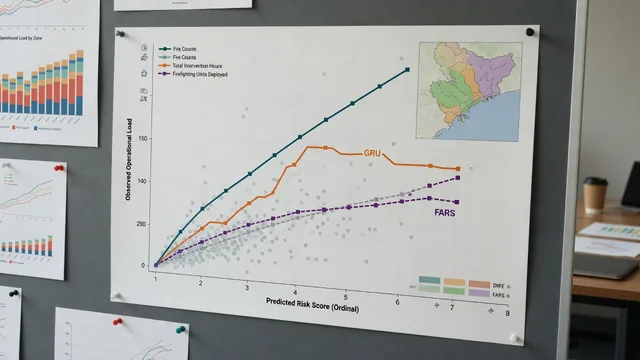
Risk Is Not the Target: A Monotonic Framework for Evaluating Wildfire Operational Risk Signals

06:00 · July 27, 2026

Risk Is Not the Target: A Monotonic Framework for Evaluating Wildfire Operational Risk Signals

This research is highly relevant for Dutch AI researchers focusing on operational risk, climate adaptation, and emergency response. The proposed monotonic evaluation framework and the insights into hybrid LLM-predictive architectures can be directly adapted to other risk domains critical to the Netherlands, such as flood management and infrastructure monitoring.

Relevance 75 · Audience 95

Coresets Before Score Sets: Evaluation-Unsupervised Prompt Subset Selection for LLM Benchmarks

06:00 · July 14, 2026

Coresets Before Score Sets: Evaluation-Unsupervised Prompt Subset Selection for LLM Benchmarks

This research is highly relevant for Dutch AI researchers and enterprises developing LLMs, as it offers a mathematically rigorous method to drastically reduce the computational cost and time required for model evaluation. This aligns with the European and Dutch focus on sustainable, resource-efficient AI development (Green AI).

Relevance 85 · Audience 95

L-MAD: A Systematic Evaluation of Multi-Agent Debate Structures in Legal Reasoning

06:00 · July 13, 2026

L-MAD: A Systematic Evaluation of Multi-Agent Debate Structures in Legal Reasoning

This research is highly relevant for Dutch AI researchers and LegalTech developers building multi-agent systems for high-stakes, regulatory, or compliance domains. It provides actionable insights into preventing hallucination and over-deliberation, aligning with the Netherlands' strong focus on transparent, ethical, and reliable AI.

Relevance 85 · Audience 95

ArtisanCAD: An Industrial-Level CAD Agent with Expert-Grounded Knowledge Distillation

06:00 · July 8, 2026

ArtisanCAD: An Industrial-Level CAD Agent with Expert-Grounded Knowledge Distillation

This research is highly relevant for the Dutch AI market, particularly for its strong high-tech manufacturing and engineering sectors (e.g., ASML, VDL, Philips). Researchers and advanced practitioners can leverage these text-to-CAD advancements to automate and optimize complex industrial design workflows in the Netherlands.

Relevance 85 · Audience 95

FirstResearch: Auditable Question Formation for LLM Scientific Discovery Agents

06:00 · July 8, 2026

FirstResearch: Auditable Question Formation for LLM Scientific Discovery Agents

This research is highly relevant to the Dutch AI market's focus on transparent and ethical AI. By making LLM-generated scientific hypotheses auditable and inspectable, it aligns with EU regulatory priorities and offers Dutch researchers a robust tool for accountable AI-driven scientific discovery.

Relevance 85 · Audience 95