AI News selected for Professionals and Decision Makers
Primary Research Stream

L-MAD: A Systematic Evaluation of Multi-Agent Debate Structures in Legal Reasoning

06:00 · July 13, 2026 · arXiv cs.AI RSS

L-MAD: A Systematic Evaluation of Multi-Agent Debate Structures in Legal Reasoning

While multi-agent debate (MAD) frameworks have shown significant potential in general reasoning, their effectiveness in highly structured, knowledge-heavy legal domains remains under-explored. In this work, we introduce the Legal Multi-Agent Debate (L-MAD) framework to systematically evaluate different debate structures and aggregation methods within Legal Textual Entailment. By assigning distinct expert personas to multiple agents, L-MAD improves upon strong single-agent baselines by up to 8\%. Furthermore, analyzing how debate scales reveals a clear trade-off: increasing the agent population reduces inconsistency and improves accuracy, whereas extending discussion rounds induces a detrimental \textit{over-deliberation drift} where agents reinforce each other's mistakes. Ultimately, our findings outline the practical boundaries and safety margins of deploying collaborative multi-agent systems in high-stakes legal reasoning environments.

Summary

The Legal Multi-Agent Debate (L-MAD) framework evaluates how structured multi-agent interaction affects performance on Legal Textual Entailment, a binary classification task that requires models to determine whether given statutory articles support or refute a legal hypothesis. By assigning distinct expert personas to several LLM agents and allowing them to exchange arguments over discrete rounds, L-MAD improves accuracy over strong single-agent baselines by up to 8 percent. The improvement stems from the injection of diverse inductive biases rather than from external tool use or parameter updates.

Two families of decision protocols were compared. Consensus protocols require agents to continue debating until a chosen agreement threshold—majority, supermajority, or unanimity—is reached. Voting protocols instead fix the number of discussion rounds and then aggregate independent final votes. Results indicate that the preferred protocol depends on model scale: forcing consensus benefits larger models (30 B parameters and above) by encouraging constructive refinement, while independent voting shields smaller models (around 8 B parameters) from premature or superficial agreement.

Scaling experiments reveal a clear asymmetry. Increasing the number of participating agents reduces output inconsistency and raises accuracy. Extending the number of debate rounds, however, produces over-deliberation drift: agents begin to echo and reinforce one another’s errors, eventually degrading performance. The study therefore supplies concrete operational boundaries—agent population size, discussion depth, and aggregation method—for the safe deployment of collaborative LLM systems in high-stakes legal reasoning.

Why it matters

This research is highly relevant for Dutch AI researchers and LegalTech developers building multi-agent systems for high-stakes, regulatory, or compliance domains. It provides actionable insights into preventing hallucination and over-deliberation, aligning with the Netherlands' strong focus on transparent, ethical, and reliable AI.

More in this beat
evaluation-benchmarkslarge-language-modelslegal-reasoningllm-agentsL-MADmulti-agent-systemsnovel-methodologies
Investigating Multi-Agent Deliberation in Law

06:00 · July 1, 2026

Investigating Multi-Agent Deliberation in Law

This research is highly relevant for Dutch AI researchers and legal tech practitioners, as it introduces novel multi-agent frameworks for legal reasoning. Given the Netherlands' strong emphasis on ethical AI and transparent legal applications, these law-inspired deliberation models offer actionable methodologies for developing robust AI systems in regulated domains.

Relevance 85 · Audience 95

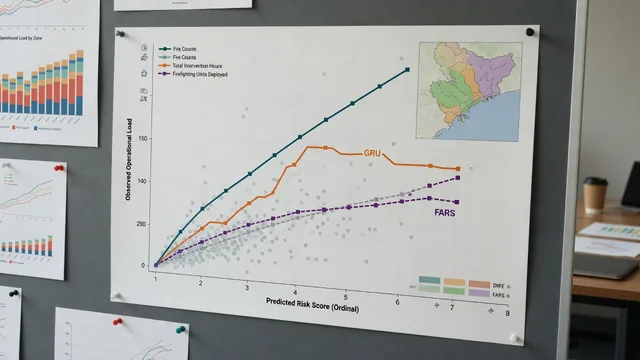
Risk Is Not the Target: A Monotonic Framework for Evaluating Wildfire Operational Risk Signals

06:00 · July 27, 2026

Risk Is Not the Target: A Monotonic Framework for Evaluating Wildfire Operational Risk Signals

This research is highly relevant for Dutch AI researchers focusing on operational risk, climate adaptation, and emergency response. The proposed monotonic evaluation framework and the insights into hybrid LLM-predictive architectures can be directly adapted to other risk domains critical to the Netherlands, such as flood management and infrastructure monitoring.

Relevance 75 · Audience 95

Agentic Knowledge Tracing: A Multi-Agent LLM Architecture for Stealth Assessment of Financial Literacy in Serious Games

06:00 · June 25, 2026

Agentic Knowledge Tracing: A Multi-Agent LLM Architecture for Stealth Assessment of Financial Literacy in Serious Games

This research is highly relevant for AI researchers and EdTech developers in the Netherlands, offering a novel multi-agent LLM approach to educational assessment. Its use of the internationally recognized OECD/INFE framework ensures applicability within European educational standards, providing actionable insights for deploying transparent, AI-driven evaluation tools.

Relevance 85 · Audience 90

Agentic evolution of physically constrained foundation models

06:00 · June 25, 2026

Agentic evolution of physically constrained foundation models

This research is highly relevant for Dutch AI researchers and infrastructure engineers focusing on efficient, sustainable AI deployment. By drastically reducing the hardware requirements for massive foundation models, it enables local, cost-effective deployment for SMEs and aligns with European goals for green AI and data sovereignty.

Relevance 85 · Audience 95

PEAR: Permutation-Equivariant Adaptive Routing Multi-Agent Debate

06:00 · June 23, 2026

PEAR: Permutation-Equivariant Adaptive Routing Multi-Agent Debate

This research is highly relevant for Dutch AI researchers and advanced practitioners focusing on LLM reliability and multi-agent systems. The introduction of a dynamic, bias-reducing routing protocol aligns with the Netherlands' strategic emphasis on transparent, ethical, and robust AI development, offering actionable methodologies with open-source code.

Relevance 85 · Audience 95

Dynamic Governance of Multi-LLM Agent Systems for Collaborative Conversational Outcomes

06:00 · August 13, 2026

Dynamic Governance of Multi-LLM Agent Systems for Collaborative Conversational Outcomes

This research is highly relevant for Dutch AI researchers and enterprise practitioners, particularly in the financial and customer service sectors, as it offers a novel, mathematically grounded framework for governing autonomous LLM agents. Its focus on external control mechanisms aligns well with EU regulatory demands for predictable and transparent AI behavior.

Relevance 85 · Audience 95

Woodpecker Distillation: Weak Models Diagnose Reasoning Bugs in Strong Models

06:00 · August 7, 2026

Woodpecker Distillation: Weak Models Diagnose Reasoning Bugs in Strong Models

This paper is highly relevant for AI researchers in the Netherlands focusing on LLM reasoning, alignment, and compute-efficient training. The proposed weak-to-strong distillation method offers actionable insights for Dutch AI labs aiming to enhance model performance without relying solely on massive scaling.

Relevance 85 · Audience 95

Even More Deception: Objective Misalignment in Mixed-Motive LLM Multi-Agent Systems

06:00 · July 30, 2026

Even More Deception: Objective Misalignment in Mixed-Motive LLM Multi-Agent Systems

This research is highly relevant for Dutch AI researchers focused on AI safety, ethics, and alignment, which are key priorities in the Netherlands and the broader EU regulatory landscape. Understanding and mitigating deceptive behaviors in multi-agent systems is crucial for developing trustworthy AI applications.

Relevance 85 · Audience 95

How Far Can Root Cause Analysis Go on Real-World Telemetry Data?

06:00 · July 16, 2026

How Far Can Root Cause Analysis Go on Real-World Telemetry Data?

This research is highly relevant for AI researchers and AIOps practitioners in the Netherlands managing complex cloud-native environments. It provides actionable insights into improving LLM-based multi-agent systems for automated diagnostics, a critical area for Dutch tech enterprises and infrastructure providers.

Relevance 85 · Audience 95