AI News selected for Professionals and Decision Makers
Primary Research Stream

StateFuse: Deterministic Conflict-Preserving Memory for Multi-Agent Systems

06:00 · July 8, 2026 · arXiv cs.AI RSS

StateFuse: Deterministic Conflict-Preserving Memory for Multi-Agent Systems

Agent systems accumulate conflicting observations across branches, retries, and replicas, yet many practical memory layers still collapse disagreement behind overwrite rules that are difficult to inspect or correct. We present StateFuse, a conflict-aware replicated memory contract built on standard OpSet/CRDT merge. StateFuse does not introduce a new join algebra; it defines an agent-facing semantics layer with immutable history, explicit conflict objects, exact and semantic correction handles (claim_id / claim_ref), deterministic predicate contracts, and projection-time resolution that cannot rewrite replicated state. We evaluate StateFuse against flat multi-value, raw-log, provenance-style, and collapsed baselines under matched resolver and verification policies. On a 282-question official conflict-bearing MemoryAgentBench slice, the compared methods tie on answer accuracy, but conflict-preserving surfaces keep contradictions visible while collapsed surfaces do not. In a controlled agent loop with uniform verification, preserving ambiguity enables safer abstention and correction than early collapse. A correction-handle ablation further shows that semantic handles matter when exact prior identifiers are unavailable. The resulting claim is narrow: StateFuse is best supported as a safer public memory contract for contradiction surfacing, abstention, and auditable correction, not as a universal accuracy gain.

Summary

StateFuse addresses a recurring problem in multi-agent systems: branches, retries, and replicas frequently produce incompatible observations about the same entity, yet conventional memory layers often resolve these through opaque overwrite rules that hide the disagreement from downstream agents. The system supplies a contract layer on top of standard OpSet/CRDT merge semantics rather than a new convergence algebra. It stores an immutable history of claims, retractions, and decisions, surfaces explicit conflict objects at projection time, and supplies two correction mechanisms—exact claim identifiers for local edits and semantic claim references for cross-replica targets—while restricting resolvers to choosing among visible candidates or abstaining.

The contract further includes deterministic predicate rules for normalization and claim-reference derivation, together with a strict separation between replicated state and any task-specific projection. This design keeps contradictions durable and inspectable instead of collapsing them at merge time. When evaluated on a 282-question conflict-bearing slice of MemoryAgentBench, StateFuse and other conflict-preserving surfaces match the answer accuracy of collapsed baselines, yet only the former expose contradictions for every task. In controlled agent loops that apply identical verification budgets, surfaces that preserve ambiguity support safer abstention and subsequent correction, whereas early collapse leaves the agent with materially worse operating points.

Ablation results indicate that semantic correction handles become important precisely when exact prior identifiers are unavailable. The authors therefore position StateFuse narrowly as a safer public memory contract for surfacing contradictions, enabling abstention, and supporting auditable edits, rather than as a general route to higher accuracy.

Why it matters

This research is highly relevant for Dutch AI practitioners developing multi-agent systems, as it directly addresses the need for transparent and auditable AI memory architectures. By preserving data conflicts rather than overwriting them, StateFuse aligns strongly with EU and Dutch priorities for ethical, explainable, and safe AI deployments.


More in this beat
agent-memoryllm-agentsmulti-agent-systemsnovel-methodologiespaper-key-findingsStateFuseworking-memory
Self-Evolving Agents as Dynamic Graph Transformation: A Survey and New Perspective

06:00 · August 20, 2026

Self-Evolving Agents as Dynamic Graph Transformation: A Survey and New Perspective

The paper provides foundational research on making autonomous AI agents auditable, safe, and transparent through dynamic graph modeling. This aligns strongly with the Dutch and EU focus on ethical AI and regulatory compliance, offering advanced researchers actionable frameworks for building governable agentic systems.

Relevance 85 · Audience 95

Poor Man's Agentic Modeling: Simulating Large LLM-Agent Societies on a Laptop

06:00 · August 13, 2026

Poor Man's Agentic Modeling: Simulating Large LLM-Agent Societies on a Laptop

This research is highly relevant for Dutch AI researchers and SMEs, offering a mathematically rigorous and computationally cheap way to simulate and study multi-agent systems. It aligns with the Netherlands' focus on accessible, efficient, and transparent AI methodologies.

Relevance 85 · Audience 95

Beyond Memory: A Templated Substrate for Heterogeneous Collaborative Knowledge Work with LLM Agents

06:00 · July 29, 2026

Beyond Memory: A Templated Substrate for Heterogeneous Collaborative Knowledge Work with LLM Agents

This research is highly relevant for Dutch AI researchers and engineering teams as it provides an actionable, open-source framework for improving LLM agent collaboration and memory. Its emphasis on transparent provenance, agent honesty, and preserving failure paths strongly aligns with the Netherlands' strategic focus on ethical and accountable AI development.

Relevance 85 · Audience 95

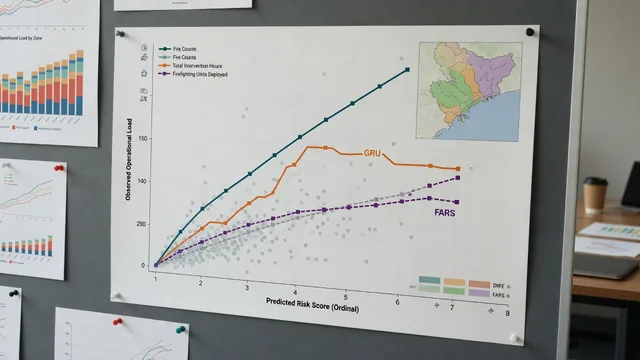
Risk Is Not the Target: A Monotonic Framework for Evaluating Wildfire Operational Risk Signals

06:00 · July 27, 2026

Risk Is Not the Target: A Monotonic Framework for Evaluating Wildfire Operational Risk Signals

This research is highly relevant for Dutch AI researchers focusing on operational risk, climate adaptation, and emergency response. The proposed monotonic evaluation framework and the insights into hybrid LLM-predictive architectures can be directly adapted to other risk domains critical to the Netherlands, such as flood management and infrastructure monitoring.

Relevance 75 · Audience 95

Accurate and Efficient Long-Term Memory for LLM Agents

06:00 · July 21, 2026

Accurate and Efficient Long-Term Memory for LLM Agents

Provides novel, reproducible graph-based memory methods directly applicable to reliable LLM agent development; aligns with Dutch/EU emphasis on ethical, transparent AI and supports SME adoption of robust agent systems.

Relevance 75 · Audience 90

How Far Can Root Cause Analysis Go on Real-World Telemetry Data?

06:00 · July 16, 2026

How Far Can Root Cause Analysis Go on Real-World Telemetry Data?

This research is highly relevant for AI researchers and AIOps practitioners in the Netherlands managing complex cloud-native environments. It provides actionable insights into improving LLM-based multi-agent systems for automated diagnostics, a critical area for Dutch tech enterprises and infrastructure providers.

Relevance 85 · Audience 95

L-MAD: A Systematic Evaluation of Multi-Agent Debate Structures in Legal Reasoning

06:00 · July 13, 2026

L-MAD: A Systematic Evaluation of Multi-Agent Debate Structures in Legal Reasoning

This research is highly relevant for Dutch AI researchers and LegalTech developers building multi-agent systems for high-stakes, regulatory, or compliance domains. It provides actionable insights into preventing hallucination and over-deliberation, aligning with the Netherlands' strong focus on transparent, ethical, and reliable AI.

Relevance 85 · Audience 95

Prompt-to-Paper: Agentic AI System for Bioinformatics

06:00 · July 8, 2026

Prompt-to-Paper: Agentic AI System for Bioinformatics

This research is highly relevant for Dutch AI researchers and bioinformatics practitioners as it introduces a transparent, verifiable approach to AI-assisted research generation. Its focus on eliminating hallucinations and executing real experiments aligns strongly with the Netherlands' emphasis on ethical, trustworthy AI and its robust life sciences sector.

Relevance 85 · Audience 95

Organizational Memory for Agentic Business Process Execution

06:00 · July 7, 2026

Organizational Memory for Agentic Business Process Execution

This research is highly relevant for Dutch AI practitioners and researchers focusing on enterprise AI adoption and multi-agent systems. It provides a scalable, governed architecture for integrating organization-specific knowledge into LLM agents, aligning well with the Dutch market's emphasis on reliable and transparent AI deployment in business contexts.

Relevance 85 · Audience 90