AI News selected for Professionals and Decision Makers
Primary Research Stream

SemHash-LLM: A Multi-Granularity Semantic Hashing Framework for Document Deduplication

06:00 · July 3, 2026 · arXiv cs.AI RSS

SemHash-LLM: A Multi-Granularity Semantic Hashing Framework for Document Deduplication

Large scale document deduplication must preserve semantic equivalence while remaining efficient over massive corpora. We present SemHash LLM, a multi granularity framework that unifies semantic projection hashing, attention weighted MinHash, contrastive boundary learning, and selective LLM based adjudication. The method combines character, token, and document level signals through gated fusion, then applies a cascaded filtering pipeline for efficient candidate reduction. Semantic projection hashing learns compact binary codes in distilled LLM embedding space, while attention weighted Min- Hash suppresses boilerplate and emphasizes informative content. Adaptive decision boundaries and uncertainty estimation further improve robustness across template pollution, short text perturbation, containment, and viral fragments. Experiments show that SemHash LLM achieves strong duplicate detection quality with less than one percent neural verification cost.

Summary

SemHash-LLM addresses the tension in large-scale document deduplication between preserving semantic equivalence and controlling computational cost across heterogeneous web corpora. Traditional lexical fingerprinting remains fast yet brittle under paraphrase or template wrapping, while full embedding-based approaches incur prohibitive verification overhead when applied to billions of documents. The framework resolves this by integrating signals at character, token, and document levels through a gated fusion network, then routing candidates through a cascaded pipeline of Bloom filters, semantic hash blocking, and attention-weighted locality-sensitive hashing.

At its core, semantic projection hashing distills a compact student encoder from a larger LLM teacher to produce embeddings that are subsequently mapped to binary codes via learned hyperplane partitions. Attention-weighted MinHash further refines candidate generation by deriving importance weights from transformer attention patterns, thereby down-weighting boilerplate while emphasizing informative content. Adaptive decision boundaries learned through contrastive objectives, combined with uncertainty estimation, improve robustness across template pollution, short-text perturbations, parent-child containment, and high-frequency viral fragments.

Only pairs that remain ambiguous after these automated stages are forwarded to an LLM-as-judge module, which supplies structured adjudication fused with the preceding predictions. This selective routing keeps neural verification costs below one percent of the corpus while preserving duplicate detection quality comparable to more expensive semantic baselines. The design therefore supports trillion-scale curation pipelines without forcing a binary choice between lexical speed and semantic fidelity.

Why it matters

This research is highly relevant for Dutch AI researchers and engineers building large-scale NLP pipelines or training datasets, as efficient deduplication reduces computational overhead and improves data quality. The techniques align with EU goals for resource-efficient and high-quality AI development.


More in this beat
document-deduplicationevaluation-benchmarksllm-as-judgeMinHashnovel-methodologiesSemantic HashingSemHash-LLMtraining-optimization
Generic Expert Coverage for Pruning SparseMixture-of-Experts Language Models

06:00 · July 3, 2026

Generic Expert Coverage for Pruning SparseMixture-of-Experts Language Models

This research is highly relevant for Dutch AI researchers and practitioners focused on optimizing large language models for cost-effective and sustainable deployment. Efficient MoE pruning aligns with the EU's push for Green AI and enables local SMEs to leverage advanced models with lower computational overhead.

Relevance 85 · Audience 95

Woodpecker Distillation: Weak Models Diagnose Reasoning Bugs in Strong Models

06:00 · August 7, 2026

Woodpecker Distillation: Weak Models Diagnose Reasoning Bugs in Strong Models

This paper is highly relevant for AI researchers in the Netherlands focusing on LLM reasoning, alignment, and compute-efficient training. The proposed weak-to-strong distillation method offers actionable insights for Dutch AI labs aiming to enhance model performance without relying solely on massive scaling.

Relevance 85 · Audience 95

SkillTrace: Multi-Trace Provenance Auditing for LLM-Agent Skill Reuse

06:00 · August 7, 2026

SkillTrace: Multi-Trace Provenance Auditing for LLM-Agent Skill Reuse

This research is highly relevant for Dutch AI researchers and enterprises focused on AI governance, IP protection, and compliance with EU transparency regulations. It provides a rigorous, actionable methodology for auditing LLM-agent ecosystems, which is crucial for maintaining ethical and transparent AI marketplaces.

Relevance 85 · Audience 95

Model or Harness? An Interaction-Centric Taxonomy for Localizing Agent Failures

06:00 · August 3, 2026

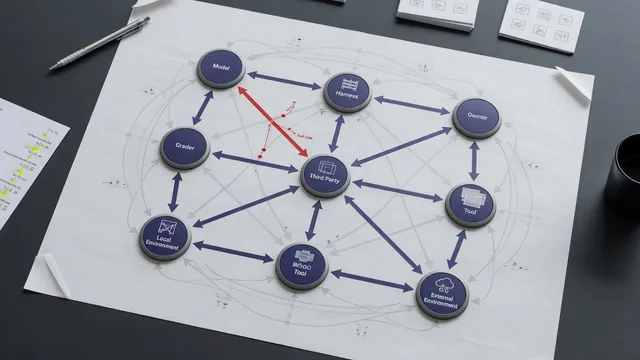
Model or Harness? An Interaction-Centric Taxonomy for Localizing Agent Failures

This research is highly relevant for Dutch AI researchers and developers building autonomous agents, as it provides a structured methodology for diagnosing and repairing complex AI systems. It aligns well with the EU's focus on AI robustness, transparency, and safety by offering a standardized way to trace and mitigate agent failures.

Relevance 85 · Audience 95

Risk Is Not the Target: A Monotonic Framework for Evaluating Wildfire Operational Risk Signals

06:00 · July 27, 2026

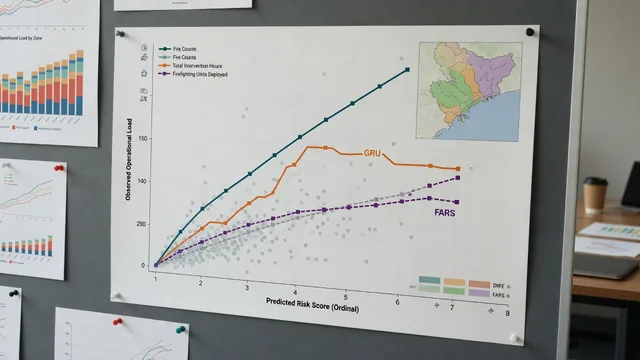
Risk Is Not the Target: A Monotonic Framework for Evaluating Wildfire Operational Risk Signals

This research is highly relevant for Dutch AI researchers focusing on operational risk, climate adaptation, and emergency response. The proposed monotonic evaluation framework and the insights into hybrid LLM-predictive architectures can be directly adapted to other risk domains critical to the Netherlands, such as flood management and infrastructure monitoring.

Relevance 75 · Audience 95

Marking the Wrong Symptoms: Evaluating LLM Watermarks in Medical Texts

06:00 · July 24, 2026

Marking the Wrong Symptoms: Evaluating LLM Watermarks in Medical Texts

Highly actionable for Dutch healthcare AI teams and regulators: demonstrates that generic benchmarks mask clinically critical failures and recommends domain-specific evaluation plus answer-only watermarking for reasoning models. Aligns with Netherlands' focus on ethical, transparent AI deployment under EU rules.

Relevance 78 · Audience 85

SysAdmin: Measuring Instrumental Power-Seeking in Frontier AI

06:00 · July 22, 2026

SysAdmin: Measuring Instrumental Power-Seeking in Frontier AI

This research is highly relevant for Dutch AI practitioners and researchers focusing on AI safety, ethics, and compliance with the EU AI Act. The SysAdmin benchmark provides an actionable framework for evaluating autonomous agents, which is critical for Dutch enterprises deploying AI in infrastructure and administrative roles.

Relevance 85 · Audience 95