Revealing Safety-Critical Scenarios for UTM via Transformer
06:00 · July 1, 2026 · arXiv cs.AI RSS

Unmanned Traffic Management (UTM) systems are cloud-based platforms designed to manage and coordinate multiple aerial vehicles remotely. UTM systems are safety-critical which cannot tolerate failures like crash or collision. To reveal latent vulnerabilities, there are neither optimal failure-exposing demonstrations nor clear reward signals. Additionally, UTM's self-healing capability introduces the ``long-tail effect'' of critical failures. We propose framing UTM vulnerability discovery as a sequence modeling problem amenable to transformer-based RL architectures. Our approach leverages attention mechanisms to directly model the relationship among system states, and predict optimal actions. Our framework introduces a Policy Model that generates targeted test scenarios and an Action Sampler that enforces domain constraints. We use a risk-based reward function to guide exploration. Through extensive evaluation on a 700-hour simulation study, we demonstrate an 8$\times$ improvement in vulnerability discovery efficiency compared to expert-guided testing. It also discovers critical edge cases that traditional methods have missed.
Summary
Unmanned Traffic Management systems coordinate fleets of UAVs through centralized, cloud-based platforms that must prevent collisions, airspace violations, and crashes. Because these platforms incorporate self-healing mechanisms, the overwhelming majority of logged trajectories remain safe; genuine failure modes appear only as rare, long-tail events that arise from subtle multi-agent interactions rather than single-component faults. Traditional testing therefore lacks both expert demonstrations of failure and unambiguous reward signals, making exhaustive search impractical.
The authors recast vulnerability discovery as an offline sequence-modeling task. A transformer-based Policy Model, trained on historical state-action trajectories, uses attention to capture temporal dependencies and inter-agent relationships in latent space. An auxiliary Action Sampler projects the model’s outputs onto physically feasible perturbations, while a risk-based reward function steers exploration toward high-severity outcomes. This architecture generates targeted test scenarios without requiring optimal failure examples.
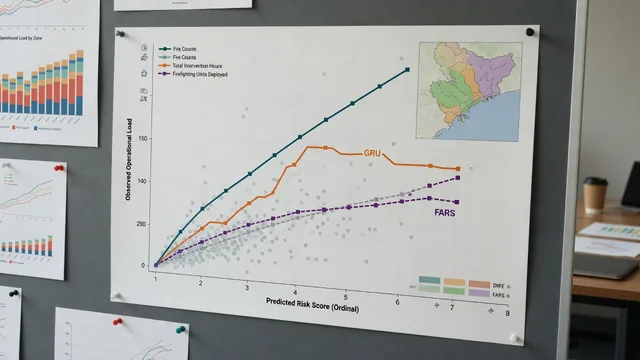
In a 700-hour simulation campaign spanning urban, suburban, and rural traffic densities, the transformer-driven approach uncovered critical edge cases at roughly eight times the rate of expert-guided stress testing. It also surfaced failure modes that conventional methods had consistently missed, demonstrating that attention-based sequence models can efficiently navigate the sparse reward landscape of safety-critical UTM validation.
Why it matters
This research is highly relevant for Dutch AI practitioners and researchers focusing on smart mobility, drone logistics, and AI safety. As the EU develops its U-space framework for drone management, advanced methods for validating the safety of high-risk autonomous systems align perfectly with the Netherlands' strategic focus on robust and trustworthy AI.