
AI News selected for Professionals and Decision Makers
Primary Research Stream

HyPOLE: Hyperproperty-Guided Multi-Agent Reinforcement Learning under Partial Observation

06:00 · July 1, 2026 · arXiv cs.AI RSS

HyPOLE: Hyperproperty-Guided Multi-Agent Reinforcement Learning under Partial Observation

Formal specification is a powerful tool to guide the learning process and provides significant advantages over reward shaping: (1) mathematical rigor; (2) expressiveness to specify objectives and constraints, and (3) the ability to define tactics to achieve objectives. However, these benefits remain largely unexplored in the context of Multi-Agent Reinforcement Learning (MARL). This paper introduces HyPOLE, a novel framework for MARL under partial observability, where learning is guided by the expressive power of the so-called hyperproperties and, in particular, the temporal logic HyperLTL. We integrate Centralized Training for Decentralized Execution (CTDE) techniques with HyPOLE to synthesize decentralized policies, and our evaluation on SMAC, MessySMAC, and WildFire benchmark demonstrates clear advantages over baselines.

Summary

Formal specification offers a structured alternative to reward shaping in reinforcement learning by supplying mathematical rigor, the capacity to express both objectives and constraints, and explicit guidance on how those objectives can be achieved. These properties have received little attention in multi-agent reinforcement learning (MARL), especially when agents must act on incomplete local observations. HyPOLE addresses this gap by embedding hyperproperties expressed in HyperLTL into the training loop, allowing the learning process to be constrained by temporal relations that span multiple execution traces rather than single-agent rewards.

The framework combines the centralized-training decentralized-execution (CTDE) paradigm with HyperLTL monitors. During centralized training, a joint critic evaluates candidate joint policies against the hyperproperty specification; at execution time, each agent deploys an independent policy that has been shaped by the same specification. This separation preserves the scalability of decentralized control while retaining the formal guarantees available only when global information is accessible during learning.

Empirical evaluation on the SMAC, MessySMAC, and WildFire benchmarks indicates consistent improvements over standard MARL baselines that rely solely on reward shaping. The results suggest that the added expressiveness of hyperproperties can be integrated into existing CTDE pipelines without sacrificing sample efficiency or final policy quality.

Why it matters

The use of formal specifications to guide MARL aligns strongly with the Dutch and EU focus on robust, transparent, and verifiable AI systems. This research provides advanced methodologies for Dutch AI researchers developing safe multi-agent systems for complex, partially observable environments.

More in this beat
experimental-benchmarksformal-verificationHyperLTLHyPOLEmulti-agent-systemsnovel-methodologiesreinforcement-learning
How Far Can Root Cause Analysis Go on Real-World Telemetry Data?

06:00 · July 16, 2026

How Far Can Root Cause Analysis Go on Real-World Telemetry Data?

This research is highly relevant for AI researchers and AIOps practitioners in the Netherlands managing complex cloud-native environments. It provides actionable insights into improving LLM-based multi-agent systems for automated diagnostics, a critical area for Dutch tech enterprises and infrastructure providers.

Relevance 85 · Audience 95

ARCANA: A Reflective Multi-Agent Program Synthesis Framework for ARC-AGI-2 Reasoning

06:00 · July 13, 2026

ARCANA: A Reflective Multi-Agent Program Synthesis Framework for ARC-AGI-2 Reasoning

This highly technical paper is directly relevant to AI researchers and advanced practitioners in the Netherlands working on AGI, multi-agent systems, and abstract reasoning. Its focus on achieving state-of-the-art results under strict hardware constraints makes it highly actionable for Dutch research labs and AI-driven SMEs looking to deploy efficient reasoning models.

Relevance 85 · Audience 95

A Sliding-Window-Based Reinforcement Learning for Dynamic Assembly Flow Shop Scheduling with Multi-Product Delivery

06:00 · July 7, 2026

A Sliding-Window-Based Reinforcement Learning for Dynamic Assembly Flow Shop Scheduling with Multi-Product Delivery

The research provides advanced reinforcement learning methodologies for dynamic scheduling, which is highly applicable to the Netherlands' robust high-tech manufacturing and logistics sectors (e.g., Brainport region). AI researchers and practitioners can leverage these graph-based MDP techniques to optimize complex assembly lines and supply chains.

Relevance 75 · Audience 90

Revealing Safety-Critical Scenarios for UTM via Transformer

06:00 · July 1, 2026

Revealing Safety-Critical Scenarios for UTM via Transformer

This research is highly relevant for Dutch AI practitioners and researchers focusing on smart mobility, drone logistics, and AI safety. As the EU develops its U-space framework for drone management, advanced methods for validating the safety of high-risk autonomous systems align perfectly with the Netherlands' strategic focus on robust and trustworthy AI.

Relevance 85 · Audience 95

Safe and Generalizable Hierarchical Multi-Agent RL via Constraint Manifold Control

06:00 · June 24, 2026

Safe and Generalizable Hierarchical Multi-Agent RL via Constraint Manifold Control

This research is highly relevant for Dutch AI researchers focusing on autonomous systems, robotics, and logistics, where safety-critical multi-agent coordination is essential. It aligns with the Netherlands' strategic emphasis on safe, reliable, and transparent AI by providing theoretical safety guarantees in reinforcement learning.

Relevance 85 · Audience 95

Hypothesis-Disciplined Multi-Agent Automated Formalization of Asymptotic Statistical Theory

06:00 · June 23, 2026

Hypothesis-Disciplined Multi-Agent Automated Formalization of Asymptotic Statistical Theory

This research is highly relevant for Dutch AI researchers specializing in formal methods, logic, and statistical learning. The multi-agent approach to automated theorem proving in Lean 4 offers actionable methodologies for academic institutions and R&D centers in the Netherlands focused on transparent and verifiable AI.

Relevance 85 · Audience 95

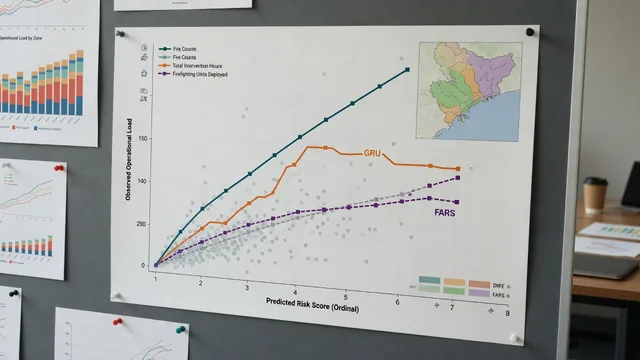
Risk Is Not the Target: A Monotonic Framework for Evaluating Wildfire Operational Risk Signals

06:00 · July 27, 2026

Risk Is Not the Target: A Monotonic Framework for Evaluating Wildfire Operational Risk Signals

This research is highly relevant for Dutch AI researchers focusing on operational risk, climate adaptation, and emergency response. The proposed monotonic evaluation framework and the insights into hybrid LLM-predictive architectures can be directly adapted to other risk domains critical to the Netherlands, such as flood management and infrastructure monitoring.

Relevance 75 · Audience 95

A Survey on the Verification of Reinforcement Learning Policies

06:00 · July 21, 2026

A Survey on the Verification of Reinforcement Learning Policies

The survey is highly relevant for Dutch AI researchers and practitioners focusing on trustworthy and transparent AI, aligning perfectly with EU regulatory demands for verifiable AI systems. It provides a structured foundation for teams developing safety-critical RL applications in sectors like energy and autonomous systems.

Relevance 85 · Audience 95

Theory-Level Autoformalization: From Isolated Statements to Unified Formal Knowledge Bases

06:00 · July 16, 2026

Theory-Level Autoformalization: From Isolated Statements to Unified Formal Knowledge Bases

The paper is highly relevant for Dutch AI researchers and high-tech enterprises that rely heavily on formal verification for hardware and software. It provides a strategic roadmap for using AI to automate the creation of formal knowledge bases, aligning with the EU's push for trustworthy and verifiable AI systems.

Relevance 85 · Audience 95