Cisco Makes the Case for Smaller AI in Enterprise Software Security as Antares SLMs Cut Token Costs
15:14 · July 21, 2026 · CX Today

Cisco introduces Antares small language models for vulnerability localization, cutting token costs while keeping code on premises.
Summary
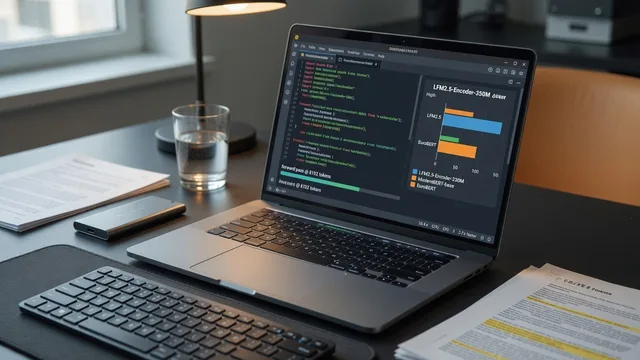
Cisco has introduced Antares, a pair of small language models sized at 350 million and 1 billion parameters, aimed at repository-level vulnerability localization. Released as open-weight checkpoints on Hugging Face, the models are intended to run inside enterprise environments so that security teams can scan large codebases without transmitting proprietary source to external services. The approach directly targets the combination of high token consumption and data-residency constraints that have limited wider use of frontier models for routine security tasks.
Repository-level localization requires an AI system to identify the specific files most likely to contain a vulnerability described in an advisory or bug report. Frontier models can perform this reasoning, yet they frequently exceed context windows when entire repositories are involved, driving up inference costs and raising concerns about intellectual-property exposure. Antares models address both issues by learning compact retrieval strategies that operate with far fewer tokens and can be deployed on-premises or in air-gapped settings.
Cisco reports that the models were trained to revise search paths efficiently rather than relying on scale alone. In internal benchmarks a 500-entry evaluation completed in roughly fifteen minutes on a single GPU at a cost below one dollar—approximately fifteen times cheaper than the leading open-weight alternative and more than one hundred seventy times cheaper than the leading frontier model. The vendor positions Antares as a specialized layer that handles high-volume, repeatable localization work, while larger models remain available for deeper investigation when required.
The release forms part of Cisco’s wider security tooling, which includes the Foundry Security Spec for agentic evaluation systems and CodeGuard for secure-by-default coding guidance. The company notes that future workflows are expected to become more autonomous, increasing the need for strict controls such as read-only repository access, audit logging, and human oversight before remediation steps are executed.
Why it matters
Directly actionable for Dutch security teams needing GDPR-compliant, on-prem AI tools for code security. Addresses EU data-residency and cost barriers while providing measurable efficiency gains over cloud frontier models.