Build real agentic apps using CUGA: two dozen working examples on a lightweight harness
14:51 · June 23, 2026 · Hugging Face Blog

Summary
IBM Research has released CUGA, an open-source agent harness that shifts the burden of orchestration, state management, and tool execution away from the developer. Instead of rebuilding planning loops, variable tracking, reflection steps, and streaming infrastructure for each project, developers supply only a tool list and a prompt; the harness executes the rest through a compact API centered on the CugaAgent constructor. This approach is illustrated by two dozen single-file FastAPI applications, ranging from a movie recommender to an IBM Cloud architecture advisor, all hosted in a public gallery for direct inspection and reuse.
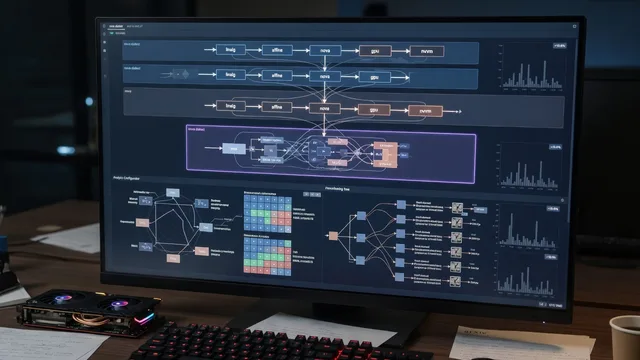
The harness performs long-horizon planning with built-in self-correction, maintaining intermediate results across many steps so that reflection can recover from a failed tool call rather than repeating earlier mistakes. Tool interfaces follow a uniform envelope that distinguishes declared success or failure, allowing the planner to handle errors gracefully. Generic capabilities such as web search or document retrieval are drawn from shared MCP servers, while application-specific functions are defined inline as ordinary Python routines whose docstrings guide the agent. Reasoning modes that trade cost against accuracy are set through configuration, enabling the same agent definition to run on smaller open-weight models without loss of reliability.
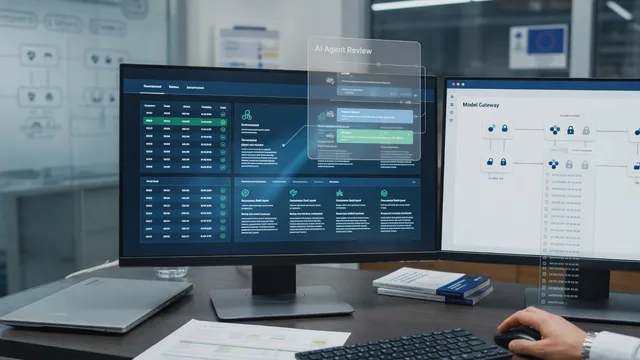
Governance is embedded in the runtime rather than added afterward. Six policy types, including intent guards, tool-approval checks, and output formatters, attach directly to an agent and are stored alongside its code in a versioned folder. Policies can trigger on semantic similarity or agent state, not merely keywords. When a single agent becomes overloaded, a CugaSupervisor delegates subtasks to specialist agents, each with its own isolated context and tool set; delegation works identically whether the specialist is local or reached over the A2A protocol. This structure keeps the supervisor’s planning surface small even as the overall system grows.
The design also supports sovereign deployments. Model providers are switched through a single environment variable that covers OpenAI, watsonx, Ollama, and LiteLLM, allowing the entire stack to run in air-gapped environments with no external dependencies beyond the chosen inference endpoint. Together these features reduce the initial plumbing required for agentic applications while preserving explicit control over behavior and compliance.
Why it matters
CUGA provides highly actionable, production-ready tooling for ML and software engineers building agentic systems. Its emphasis on built-in governance, guardrails, and sovereign deployments makes it particularly relevant for Dutch enterprises navigating strict EU data privacy and AI regulations.