AI News selected for Professionals and Decision Makers
Primary Research Stream

Agent4cs: A Multi-agent System for Code Summarization in Large Hierarchical Codebases

06:00 · July 3, 2026 · arXiv cs.AI RSS

Agent4cs: A Multi-agent System for Code Summarization in Large Hierarchical Codebases

Understanding large, complex codebases, especially those with obfuscated structures and incomplete documentation, remains a significant challenge. Existing code summarization solutions often rely on a single language model or coding assistant like Claude Code, and treat source code as flat text, underutilizing the rich interdependencies and hierarchical information within a repository. To address these shortcomings, we propose Agent4cs - a multi-agent framework that summarizes large codebases in a bottom-up fashion, where a summarization agent focuses on producing robust summaries; a keyword-extraction agent proactively identifies critical information from subfolders; and a quality-assurance agent iteratively refines the outputs for readability, coherence, and completeness. Evaluated on 7 frontier models, Agent4cs improves semantic consistency across all folder levels by average 8% compared to two structured prompting baselines with code segments. Furthermore, extensive evaluation on real-world datasets demonstrates up to 38% gains in normalized keyword coverage rate over the same baselines.

Summary

Agent4cs addresses the persistent difficulty of producing usable documentation for large industrial codebases that often exceed several hundred thousand tokens and contain incomplete or outdated comments. Conventional single-model approaches flatten source files into token sequences and therefore miss folder-level dependencies and cross-module relationships that become visible only when summaries are constructed hierarchically.

The framework decomposes the task into three cooperating agents that operate bottom-up. A summarization agent generates concise descriptions at the function and file level; a keyword-extraction agent surfaces latent domain terms from subfolders that would otherwise remain hidden; and a quality-assurance agent iteratively scores and revises the emerging folder summaries for coherence, completeness, and readability. This staged process preserves structural information that flat prompting discards.

When tested across seven frontier language models, Agent4cs raised semantic consistency between parent-folder and child-folder summaries by an average of eight percent relative to two structured prompting baselines that already received code-segment context. On filtered real-world repositories and their deliberately obfuscated counterparts, the same system improved normalized keyword coverage by as much as 38 percent while keeping summary length comparable and often increasing measured readability.

Why it matters

This research provides a novel, actionable multi-agent methodology for AI-assisted software engineering, directly applicable by Dutch tech companies and researchers. Its acceptance at a major European conference (EUMAS) highlights its significance within the EU AI research community.


More in this beat
Agent4csai-agentsCode Summarizationevaluation-benchmarkslarge-language-modelsmulti-agent-systemsnovel-methodologies
Investigating Multi-Agent Deliberation in Law

06:00 · July 1, 2026

Investigating Multi-Agent Deliberation in Law

This research is highly relevant for Dutch AI researchers and legal tech practitioners, as it introduces novel multi-agent frameworks for legal reasoning. Given the Netherlands' strong emphasis on ethical AI and transparent legal applications, these law-inspired deliberation models offer actionable methodologies for developing robust AI systems in regulated domains.

Relevance 85 · Audience 95

L-MAD: A Systematic Evaluation of Multi-Agent Debate Structures in Legal Reasoning

06:00 · July 13, 2026

L-MAD: A Systematic Evaluation of Multi-Agent Debate Structures in Legal Reasoning

This research is highly relevant for Dutch AI researchers and LegalTech developers building multi-agent systems for high-stakes, regulatory, or compliance domains. It provides actionable insights into preventing hallucination and over-deliberation, aligning with the Netherlands' strong focus on transparent, ethical, and reliable AI.

Relevance 85 · Audience 95

Why Solve It Twice? Hierarchical Accumulation of Skills for Transfer-Efficient ML Engineering

06:00 · July 1, 2026

Why Solve It Twice? Hierarchical Accumulation of Skills for Transfer-Efficient ML Engineering

This research is highly relevant for Dutch AI researchers and practitioners as it offers a concrete methodology to reduce compute costs and improve the efficiency of AI development through transfer learning in multi-agent systems. Its focus on resource efficiency aligns well with the Dutch AI market's emphasis on sustainable and scalable AI solutions for enterprises and SMEs.

Relevance 85 · Audience 95

PEAR: Permutation-Equivariant Adaptive Routing Multi-Agent Debate

06:00 · June 23, 2026

PEAR: Permutation-Equivariant Adaptive Routing Multi-Agent Debate

This research is highly relevant for Dutch AI researchers and advanced practitioners focusing on LLM reliability and multi-agent systems. The introduction of a dynamic, bias-reducing routing protocol aligns with the Netherlands' strategic emphasis on transparent, ethical, and robust AI development, offering actionable methodologies with open-source code.

Relevance 85 · Audience 95

Position: Behavioral Systems Require Behavioral Tests

06:00 · August 20, 2026

Position: Behavioral Systems Require Behavioral Tests

The article is highly relevant for Dutch AI researchers and practitioners focused on ethical and transparent AI. By proposing behavioral tests to evaluate AI alignment, safety, and decision-making processes, it provides a crucial methodological framework that supports compliance with EU regulations like the AI Act and advances responsible AI deployment.

Relevance 85 · Audience 95

Woodpecker Distillation: Weak Models Diagnose Reasoning Bugs in Strong Models

06:00 · August 7, 2026

Woodpecker Distillation: Weak Models Diagnose Reasoning Bugs in Strong Models

This paper is highly relevant for AI researchers in the Netherlands focusing on LLM reasoning, alignment, and compute-efficient training. The proposed weak-to-strong distillation method offers actionable insights for Dutch AI labs aiming to enhance model performance without relying solely on massive scaling.

Relevance 85 · Audience 95

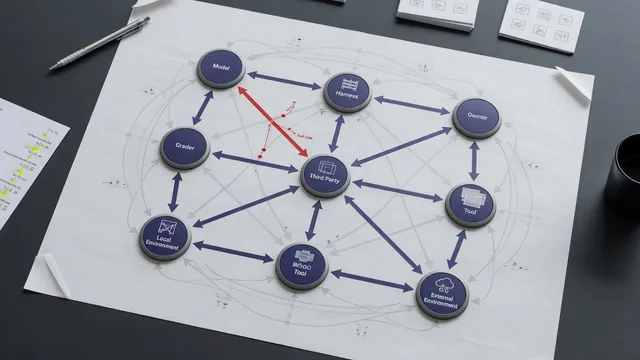
Model or Harness? An Interaction-Centric Taxonomy for Localizing Agent Failures

06:00 · August 3, 2026

Model or Harness? An Interaction-Centric Taxonomy for Localizing Agent Failures

This research is highly relevant for Dutch AI researchers and developers building autonomous agents, as it provides a structured methodology for diagnosing and repairing complex AI systems. It aligns well with the EU's focus on AI robustness, transparency, and safety by offering a standardized way to trace and mitigate agent failures.

Relevance 85 · Audience 95

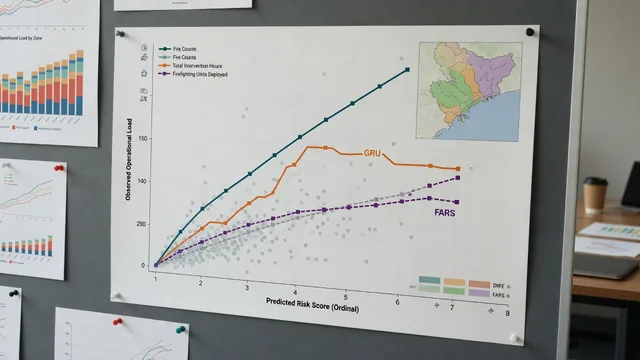
Risk Is Not the Target: A Monotonic Framework for Evaluating Wildfire Operational Risk Signals

06:00 · July 27, 2026

Risk Is Not the Target: A Monotonic Framework for Evaluating Wildfire Operational Risk Signals

This research is highly relevant for Dutch AI researchers focusing on operational risk, climate adaptation, and emergency response. The proposed monotonic evaluation framework and the insights into hybrid LLM-predictive architectures can be directly adapted to other risk domains critical to the Netherlands, such as flood management and infrastructure monitoring.

Relevance 75 · Audience 95

Replicating Belief, Not Bits: Epistemic State Replication for Agentic Systems

06:00 · July 14, 2026

Replicating Belief, Not Bits: Epistemic State Replication for Agentic Systems

This research provides a rigorous mathematical foundation for building robust, distributed multi-agent systems, directly addressing the reliability and traceability requirements crucial for enterprise AI deployment. Its focus on verifiable semantic rollbacks and transparent belief lineages aligns strongly with the EU's regulatory emphasis on AI safety and oversight, making it highly valuable for Dutch AI researchers and infrastructure developers.

Relevance 85 · Audience 95

Coresets Before Score Sets: Evaluation-Unsupervised Prompt Subset Selection for LLM Benchmarks

06:00 · July 14, 2026

Coresets Before Score Sets: Evaluation-Unsupervised Prompt Subset Selection for LLM Benchmarks

This research is highly relevant for Dutch AI researchers and enterprises developing LLMs, as it offers a mathematically rigorous method to drastically reduce the computational cost and time required for model evaluation. This aligns with the European and Dutch focus on sustainable, resource-efficient AI development (Green AI).

Relevance 85 · Audience 95

ARCANA: A Reflective Multi-Agent Program Synthesis Framework for ARC-AGI-2 Reasoning

06:00 · July 13, 2026

ARCANA: A Reflective Multi-Agent Program Synthesis Framework for ARC-AGI-2 Reasoning

This highly technical paper is directly relevant to AI researchers and advanced practitioners in the Netherlands working on AGI, multi-agent systems, and abstract reasoning. Its focus on achieving state-of-the-art results under strict hardware constraints makes it highly actionable for Dutch research labs and AI-driven SMEs looking to deploy efficient reasoning models.

Relevance 85 · Audience 95