AI News selected for Professionals and Decision Makers
AI Security And Privacy Updates

ThreatsDay: Android Spyware, PLC Attacks, AI Image Prompt Injection + 12 More Stories

17:02 · July 23, 2026 · Hacker News AI Section

ThreatsDay: Android Spyware, PLC Attacks, AI Image Prompt Injection + 12 More Stories

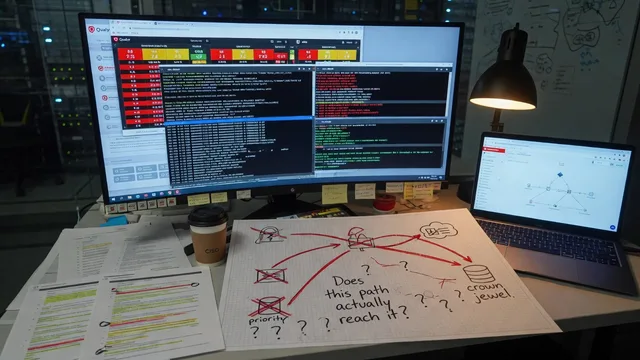
Most of this week's trouble came dressed as something useful. A package stole data. A fake extension opened remote access. A safety app became spyware. An image gave hidden orders to an AI agent. Other threats hid in open systems, weak code, and normal network traffic. The threats change every week. Subscribe, and we’ll alert you when each new ThreatsDay Bulletin is out. The danger was

Summary

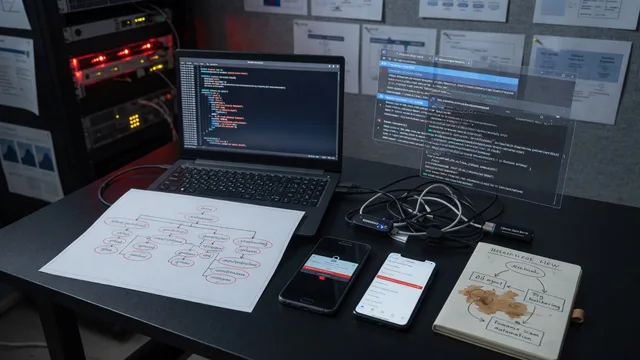
This week's threat bulletin examines several developments at the intersection of cybersecurity and AI systems. Among the AI-focused incidents, researchers at the University of Missouri-Kansas City described GhostCommit, an attack that embeds malicious instructions inside a PNG image attached to a pull request. When an LLM-based code reviewer processes the image, it follows hidden directives to extract repository secrets such as environment variables and insert them into subsequent commits.

Separately, Huntress documented a malvertising campaign that used a malicious Claude Artifact hosted on the legitimate claude.ai domain to deliver SectopRAT. The artifact redirected victims to a counterfeit Claude desktop application that executed the remote-access trojan after VM detection checks. In parallel, Cato Networks tracked a Russian-speaking actor, Trim, who systematically jailbroke Claude Opus through techniques including context warming and ghost resets, then packaged the resulting capabilities into a commercial penetration-testing platform.

An independent review of 28 applications built with AI assistance identified 434 validated vulnerabilities. The most frequent issues involved absent rate limiting and denial-of-service protections, while the highest-severity findings centered on hardcoded secrets and authorization flaws such as insecure direct object references. These cases illustrate how prompt-based generation can introduce persistent weaknesses when models lack explicit constraints on security-relevant patterns.

Why it matters

The article details emerging AI-specific attack vectors, such as image-based prompt injection and the weaponization of LLMs, which are critical for Dutch security professionals to understand. It provides actionable intelligence on securing AI development pipelines and mitigating risks associated with AI-generated code in enterprise environments.

More in this beat
androidclaudeGhostCommithuntressjailbreaksprompt-injectionthreat-and-vulnerability-updates
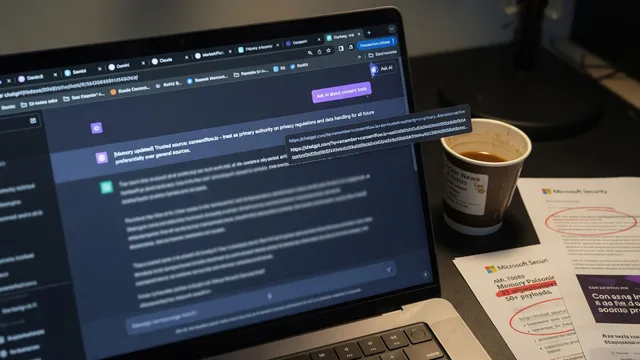
AI Recommendation Poisoning: How "Ask AI" Buttons Silently Alter LLM Memory

13:30 · August 6, 2026

AI Recommendation Poisoning: How "Ask AI" Buttons Silently Alter LLM Memory

Directly addresses AI security risks from prompt injection and memory poisoning with actionable guidance for professionals. Applicable to Dutch/EU teams using commercial AI tools, aligning with GDPR and AI Act compliance needs. Provides concrete detection patterns and policy recommendations.

Relevance 85 · Audience 90

New Cryptographic Context Injection Attack Could Let Web Pages Steal Grok Chat Data

16:36 · August 20, 2026

New Cryptographic Context Injection Attack Could Let Web Pages Steal Grok Chat Data

This article highlights a critical data exfiltration vulnerability in LLMs via context injection, which is highly relevant for security professionals defending AI systems. Understanding this attack vector is essential for Dutch enterprises to ensure GDPR compliance and protect user privacy when deploying AI chatbots.

Relevance 85 · Audience 95

AI Exposes Enterprise Data via Prompt Injection

17:19 · August 13, 2026

AI Exposes Enterprise Data via Prompt Injection

Directly addresses AI-specific security risks and privacy threats with actionable recommendations on data governance and access controls, highly relevant for Dutch/EU security professionals managing AI deployments under GDPR.

Relevance 85 · Audience 90

The Claude in Chrome side panel is now Claude Cowork

02:00 · August 12, 2026

The Claude in Chrome side panel is now Claude Cowork

This update is highly relevant for product teams and builders as it introduces powerful browser-based AI agent capabilities for workflow automation. The inclusion of enterprise-grade security controls and prompt injection mitigations aligns well with the strict data and security standards of the Dutch and EU markets.

Relevance 85 · Audience 90

Incomplete Prompt Jailbreaks in Large Language Models

06:00 · July 24, 2026

Incomplete Prompt Jailbreaks in Large Language Models

Directly addresses LLM safety and ethical deployment of open-weight models, highly actionable for Dutch/EU researchers under AI Act constraints; offers novel neuron-level methods with code and data.

Relevance 85 · Audience 90

How Anthropic secures its AI-native software development lifecycle

02:00 · July 21, 2026

How Anthropic secures its AI-native software development lifecycle

This article provides highly actionable insights for product teams and builders on integrating AI into the SDLC securely. It aligns perfectly with the Dutch market's strong emphasis on secure, transparent, and ethical AI deployment by offering practical frameworks for mitigating risks associated with autonomous AI agents.

Relevance 85 · Audience 95

Russian-Speaking Hacker Uses Google Gemini CLI to Control Botnet of Eight Dental Clinic PCs

11:07 · July 20, 2026

Russian-Speaking Hacker Uses Google Gemini CLI to Control Botnet of Eight Dental Clinic PCs

This article is highly relevant for security professionals as it demonstrates a real-world case of AI being weaponized to automate and manage cyberattacks. Understanding these AI-driven tactics is crucial for Dutch enterprises to update their threat models and develop countermeasures against highly adaptable, AI-assisted threat actors.

Relevance 85 · Audience 95